
Italian Neorealism: Postwar Cinema and Social Realism
Italian neorealism was a post‑World War II film movement emphasizing location shooting, nonprofessional actors and stories of ordinary people; it reshaped global cinema and influenced later movements.
Overview
Italian neorealism refers to a loose movement in postwar Italian filmmaking that favored stories about ordinary people and daily hardships over studio spectacle. Emerging in the years after World War II, it sought to reflect social realities with a stripped‑down aesthetic and moral urgency. Scholars and critics often describe it as both a set of artistic choices and a cultural response to wartime devastation and economic crisis; see treatments of the broader Italian neorealist movement for more.
Image gallery
9 Images


Characteristics
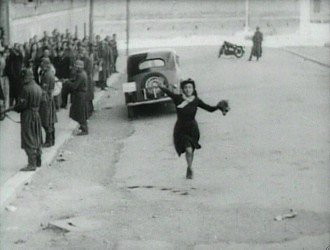
Neorealist films are recognizable by a number of recurring traits. Directors typically shot on location rather than in constructed sets, used natural light and sounds, and cast nonprofessional actors alongside trained performers. Narratives tended to be modest in scope—focusing on unemployment, poverty, family struggles, and the moral compromises forced by scarcity—rather than on melodrama or grand plot mechanics.
- On‑location shooting and an emphasis on everyday urban and rural environments (real locations).
- Use of nonprofessional actors and documentary techniques to increase authenticity.
- Simple, episodic plots centering working‑class protagonists and social issues.
- Economical production values reflecting postwar austerity.
History and development
The movement developed in the late 1940s during a period when Italy was rebuilding its institutions and cultural life. Filmmakers reacted against the glossy, state‑sanctioned studio fare of the fascist era and drew on neorealism’s affinities with documentary traditions and literary realism. Key early works date from the 1940s and were often produced under difficult financial conditions; many films were shot in streets and neighborhoods rather than in major studios associated with Italian cinema.
Notable directors and films
Some of the most cited masterpieces include Roberto Rossellini’s Rome, Open City and Vittorio De Sica’s Bicycle Thieves, which embodied the movement’s compassionate but unsentimental gaze. Other figures who began with or intersected the style include Luchino Visconti and later filmmakers who moved beyond neorealism, such as Michelangelo Antonioni and Federico Fellini, both of whom developed more personal, modernist directions after early encounters with realist concerns.
Influence and distinctions
Although the classical phase of Italian neorealism was relatively brief—most prominent roughly between the late 1940s and early 1950s—its impact was lasting. It influenced international art cinema, social realist traditions, and subsequent movements that sought to combine political awareness with stylistic economy. Important distinctions: neorealism is not a single school with a manifesto, but a cluster of practices; it differs from straightforward documentary by its use of fictional narratives, and from later auteur cinema by its communal emphasis and social aims.
Related articles
Author
AlegsaOnline.com Italian Neorealism: Postwar Cinema and Social Realism Leandro Alegsa
URL: https://en.alegsaonline.com/art/48600