
Federico Fellini: Italian filmmaker known for dreamlike cinema
Federico Fellini (1920–1993), Italian director and screenwriter celebrated for films that fuse memory, fantasy and spectacle; noted collaborator with Nino Rota and actress Giulietta Masina.
Federico Fellini (born 20 January 1920 in Rimini, died 31 October 1993 in Rome) was an Italian film director and screenwriter whose work reshaped post‑war cinema. His films are widely recognized for blending personal memory, dream logic and carnival‑like spectacle: a distinctive visual language that treats fantasy and recollection as equally valid ways of knowing. Over several decades Fellini moved from neorealist roots toward an increasingly baroque, autobiographical style that influenced generations of filmmakers and artists.
Fellini began his career not directly as a director but as a writer, cartoonist and contributor to radio and film scripts. He worked on screenplays and sketches for other directors, and produced numerous pencil drawings and caricatures which he sold and exhibited in Rome after the Second World War. During this formative period he collaborated with established filmmakers and developed a network of creative partners; among these early collaborations were contributions to Roberto Rossellini's wartime films and other projects that brought him into the Italian film community.
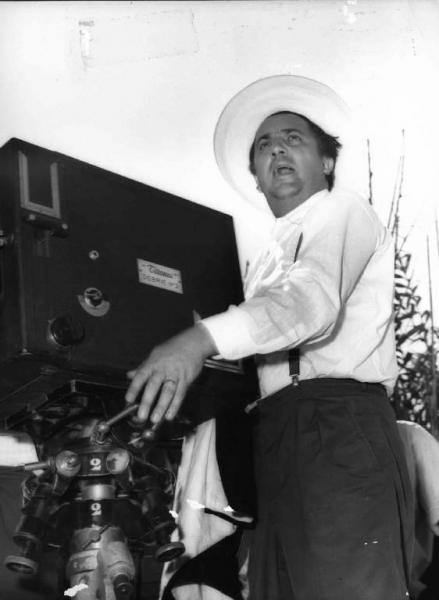
By the early 1950s Fellini made the transition to directing his own features. His first films attracted attention for their mix of comedy and human observation, and he soon found enduring collaborators: the composer Nino Rota provided memorable scores that matched Fellini's theatrical impulses, while his wife, the actress Giulietta Masina, and performers such as Marcello Mastroianni, Alberto Sordi and Anita Ekberg became associated with his most famous works. Across his career he moved between intimate character studies and larger, episodic tableaux that explored fame, desire and the tensions between memory and invention.
Image gallery
10 Images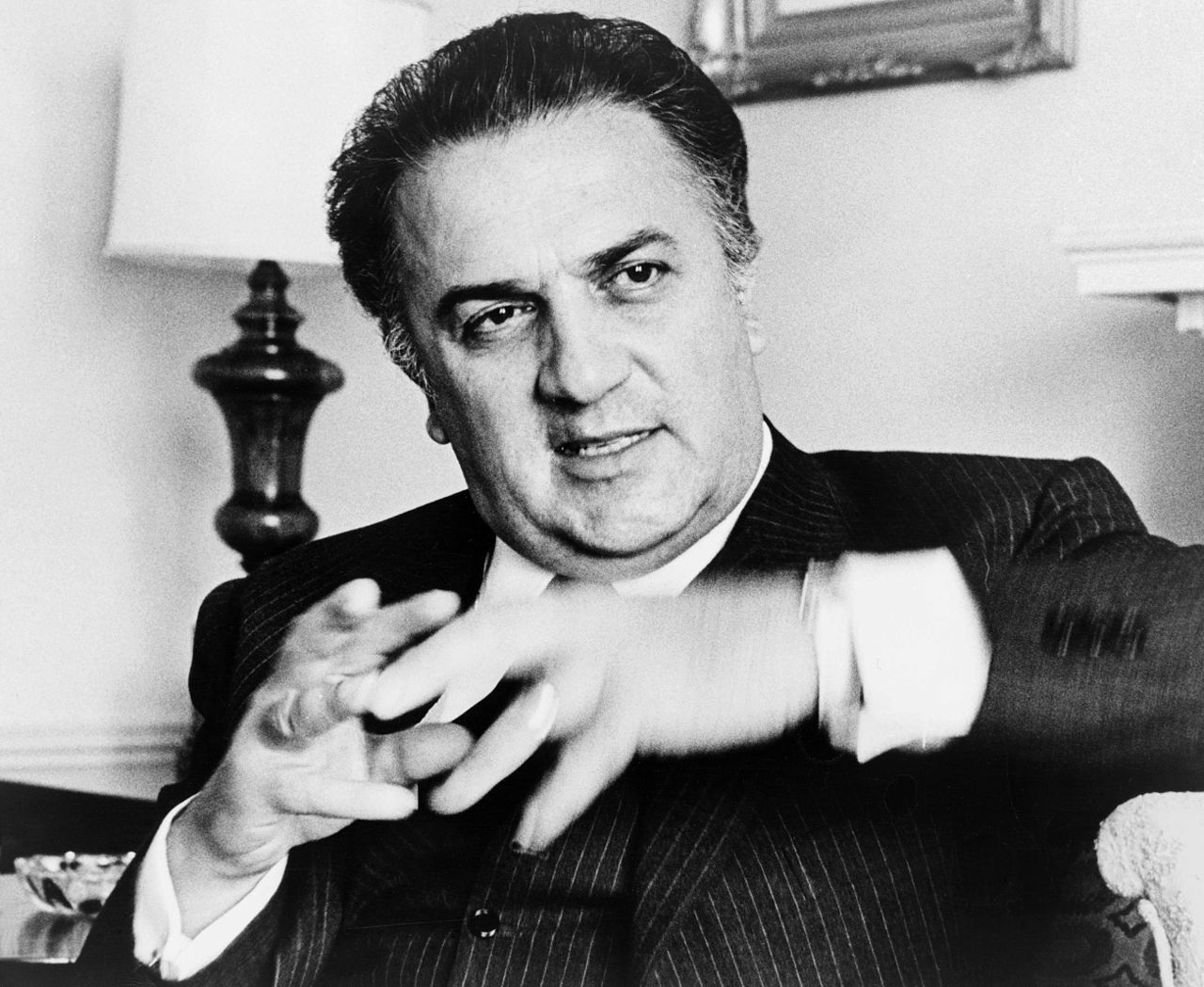



Style, themes and techniques
Fellini's cinematic voice combined vivid imagery with a sense of theatricality: dream sequences, surreal juxtapositions and ensemble scenes that resemble stage pageants are common features. He often used episodic narratives and unreliable points of view to emphasize subjectivity, and his films frequently dramatize the creative or psychological life of an artist. Costumes, grotesque characters and carnival motifs recur as expressions of social fantasy and inner turmoil. Alongside filmmaking he continued to draw and produce visual studies that reveal the same playful attention to faces, gestures and absurdity.
Notable collaborations and career highlights
Collaboration was central to Fellini's practice. His work with composer Nino Rota yielded some of cinema's most recognizable scores. He also maintained long professional relationships with editors, designers and actors who helped realize his evolving aesthetic. In addition to directing, Fellini continued to write for radio and cinema and to contribute ideas to other filmmakers. His films received international attention and he accumulated many honors over time, including recognition from institutions such as the British Academy and the Academy of Motion Picture Arts and Sciences.
Fellini's public profile was shaped by the unity of his life and art: his partnership with Giulietta Masina, his roots in the Adriatic town of Rimini, and his trajectory from post‑war Italian cinema to international prominence. Although he began within a film culture influenced by neorealism, he quickly pursued a more personal, symbolic register that often set him apart from strict documentary approaches and placed him in dialogue with modernist trends in art and literature.
Legacy
Federico Fellini left a lasting imprint on 20th‑century film through the invention of a recognizably poetic cinema. His influence appears in the work of directors who favor dream logic, elaborate mise‑en‑scène and a blending of autobiography with fiction. Museums and film institutions have preserved his drawings, scripts and production materials, and retrospectives of his films continue to draw attention. Official honors late in his life included the BAFTA Academy Fellowship in 1987 and an honorary Academy Award in 1993, testament to his international standing.
Related people, places and topics
- Rimini – Fellini's birthplace and frequent reference point in his work
- Rome – city where Fellini lived and worked
- Film – the medium through which Fellini expressed his major ideas
- Alberto Sordi – actor who appeared in some films of the period
- Michelangelo Antonioni – a contemporary Italian director who shared the international stage
- Giulietta Masina – Fellini's wife and frequent collaborator
- Marcello Mastroianni – actor closely associated with Fellini's major works
- Anita Ekberg – actress who became an iconic figure in one of Fellini's best‑known films
- Radio – one of the early media where Fellini wrote and contributed material
- Roberto Rossellini – influential director with whom Fellini collaborated early in his career
- Fascism – the political context of Italy during Fellini's youth
- Benito Mussolini – figure connected to the era and institutions that shaped Italy's film industry
- English – language often used in international discussions of Fellini's work
- BAFTA Academy Fellowship Award – one of the lifetime honors Fellini received
- Academy Award (Honorary) – Fellini was presented with a lifetime achievement award in 1993
For a fuller appreciation of Fellini's films it is useful to view them both as individual narratives and as parts of an evolving artistic project in which memory, fantasy and performance continually intersect.
Questions and answers
Q: When was Federico Fellini born?
A: Federico Fellini was born on 20 January 1920 in Rimini.
Q: Who wrote the script for Lo Sceicco Bianco, Fellini's first movie?
A: The script for Lo Sceicco Bianco was written by Michelangelo Antonioni and Ennio Flaiano.
Q: Who did Fellini collaborate with musically throughout his career?
A: Throughout his career, Fellini collaborated musically with Nino Rota.
Q: How long did Giulietta Masina and Federico Fellini stay married?
A: Giulietta Masina and Federico Fellini were married from 1943 until his death in 1993.
Q: What other actors did Fellini often work with?
A: In addition to Giulietta Masina, other actors that Federico Fellini often worked with included Marcello Mastroianni, Alberto Sordi, and Anita Ekberg.
Q: What type of drawings did he produce?
A:Federico Felliniproduced mostly humoristic pencil on paper drawings.
Q:What award did he receive in 1987 ?
A:In 1987, Federico Felling received the BAFTA Academy Fellowship Award as a lifetime achievement award.
Related articles
Author
AlegsaOnline.com Federico Fellini: Italian filmmaker known for dreamlike cinema Leandro Alegsa
URL: https://en.alegsaonline.com/art/118873