
Anton Mavretič — Slovenian electrical engineer and space instrumentation specialist
Anton Mavretič (1934–2019), Slovenian-born electrical engineer who developed space plasma instrumentation for Voyager, worked at MIT and Boston University, and founded the consulting firm SIAT of Boston.
Overview
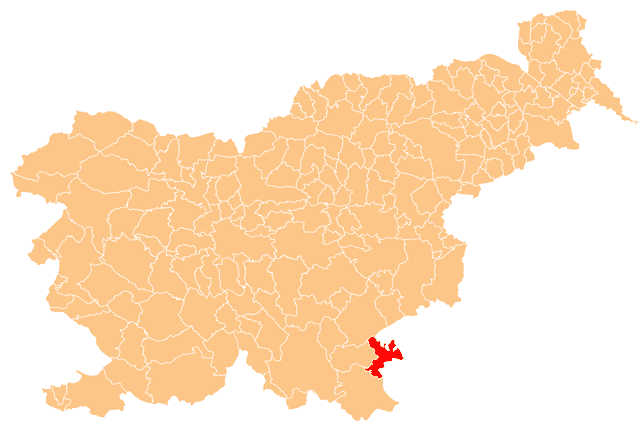
Anton Mavretič (11 December 1934 – 21 November 2019) was a Slovenian-born electrical engineer noted for his work on space science instruments in the United States. Born in Metlika, Slovenia, he built a career that combined applied engineering, experimental research and consulting to support space missions and long-term scientific observations of space plasmas. His professional life illustrates the close collaboration between academic research, government space programs and private engineering firms in the second half of the 20th century.
Image gallery
2 Images
Early life and background
Mavretič grew up in the region around Metlika, an area with a strong local heritage in what is now Slovenia. Like many engineers of his generation who contributed to international projects, he moved to the United States to work in research centers and industry that supported large-scale space programs. He maintained ties with his homeland and later became a corresponding member of the Slovenian Academy of Sciences and Arts.
Professional career
During the 1970s Mavretič worked at the Massachusetts Institute of Technology's Center for Space Research on projects under contract with the U.S. space agency, NASA. His work there involved the design and development of instruments used to measure charged particles and other properties of the space environment. Later he joined the Center for Space Physics at Boston University as a professor and research associate, contributing to both teaching and experimental programs. In 1985 he founded SIAT of Boston LLC, a consulting and engineering firm that provided services for instrument development and space-related projects.
Instrumentation and technical contributions
Mavretič was particularly associated with the design of plasma spectrometers and related sensors. Plasma spectrometers are instruments that sample ionized gas and determine quantities such as particle energy distributions, composition and flux. Such measurements are essential to map the behavior of the solar wind, planetary magnetospheres and the interplanetary medium. Effective instrument design requires expertise in electronics, vacuum and detector systems, signal processing and data calibration — all areas where Mavretič contributed practical engineering solutions.
Voyager missions
Among the best-known projects connected with his work are the plasma experiments on the Voyager spacecraft. Contributions to the plasma spectrometers aboard Voyager 1 and Voyager 2 supported observations of the outer planets and of the heliosphere as the probes moved toward interstellar space. The data returned by these instruments helped characterize the solar wind, magnetospheric boundaries and particle populations encountered by the spacecraft over many years.
Scientific importance and legacy
The engineering work that enables space science instruments is fundamental to the success of missions: precision in design, robust electronics and careful calibration translate scientific objectives into reliable measurements. Mavretič's efforts produced instruments and technical approaches that contributed to long-running datasets still used by researchers studying space plasmas and space weather. His career also exemplifies mentoring and collaboration across institutions and national boundaries.
Honors and affiliations
In recognition of his scientific ties to Slovenia, Mavretič became a corresponding member of the Slovenian Academy of Sciences and Arts in June 2007. He remained active professionally through academic affiliations and his consulting firm, fostering links between university research and applied engineering work for space missions.
Selected timeline and roles
- Born in Metlika, Slovenia: Metlika (11 December 1934)
- Research work at MIT Center for Space Research under NASA contract (1970s)
- Contributions to plasma spectrometers on Voyager 1 and Voyager 2
- Professor and research associate, Center for Space Physics, Boston University
- Founded SIAT of Boston LLC (1985) — engineering and consulting
- Corresponding member, Slovenian Academy of Sciences and Arts (from 2007)
- Died 21 November 2019
For readers seeking technical detail, mission pages and institutional archives typically host calibration papers, instrument descriptions and datasets produced by plasma experiments. These primary sources provide in-depth information on design choices, operational modes and scientific results associated with instruments to which Mavretič contributed. His work remains an example of how engineering underpins long-term scientific exploration of the space environment.
Related articles
Author
AlegsaOnline.com Anton Mavretič — Slovenian electrical engineer and space instrumentation specialist Leandro Alegsa
URL: https://en.alegsaonline.com/art/4721
Sources
- english.sta.si : "Slovenian Voyager engineer dies"
- bu.edu : bu.edu
- sazu.si : sazu.si/o-sazu/clani/anton-mavretic.html