
Income inequality in the United States: trends, causes, and impacts
Overview of rising income inequality in the U.S., how it is measured, historical trends since the 1970s, major causes, social and economic consequences, and common policy responses.
Overview
Income inequality in the United States refers to the unequal distribution of earnings, wages, and other income across households and individuals. Since the 1970s the share of national income going to higher‑income households has increased noticeably, while growth for many middle‑ and lower‑income families has been slower. Public attention often focuses on visible symbols such as executive pay, alongside persistent differences in pay by gender and race.
Image gallery
10 Images


How inequality is measured
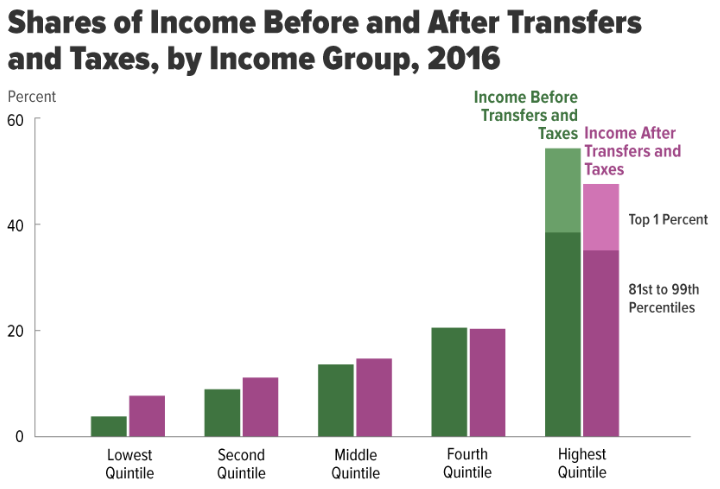
Economists and statisticians use several measures to describe inequality. Common indicators include the Gini coefficient, the income shares received by top percentiles, median versus mean income comparisons, and poverty rates. Analysts differentiate between pre‑tax and post‑tax incomes, and between income (flows received each year) and wealth (accumulated assets), because policy effects and social outcomes can differ depending on the measure. For data and technical descriptions see income data.
Historical development
For much of the first half of the 20th century and into the post‑World War II decades, income distribution in the United States was relatively stable by modern standards. Beginning in the 1970s and accelerating in subsequent decades, the distribution shifted: higher earners captured a larger share of total income. Multiple periods of growth, technological change, and financial market expansion coincide with widening gaps.
Causes and contributing factors
- Economic change: globalization and automation altered demand for skills, raising returns for high‑skill workers and reducing opportunities for some middle‑skill jobs.
- Labor institutions: declines in union membership and changes in labor market practices reduced bargaining power for many workers.
- Policy and taxation: changes in tax policy, regulation, and social spending influence after‑tax income distribution.
- Executive and financial compensation: growth in top executive pay and returns to capital have increased incomes at the top.
- Demographic and social factors: educational attainment, family structure, and regional differences also shape income outcomes.
Consequences and public importance
Rising inequality has repercussions for social mobility, public health, economic stability, and political dynamics. Critics argue that high inequality can depress long‑run growth by underinvesting in human capital and reducing aggregate demand; others emphasize the role of inequality in eroding trust and increasing polarization. Specific concerns include housing affordability, access to higher education, and disparities in life expectancy across income groups.
Policy responses and notable distinctions
Policy proposals to address inequality range from adjusting tax progressivity, strengthening the minimum wage and labor protections, expanding education and childcare access, to targeted transfers and social insurance. Debates center on tradeoffs between efficiency and equity, the best levers for mobility, and the distinction between income inequality (yearly earnings) and wealth inequality (accumulated assets). Gender and racial pay gaps remain distinct but overlapping issues: on average, women and many racial minorities earn less than comparable white male workers, reflecting a mix of occupational segregation, discrimination, and differences in work patterns.
Understanding income inequality requires attention to measurement choices, historical context, and the variety of economic and policy levers that influence who shares in economic gains.
Related articles
Author
AlegsaOnline.com Income inequality in the United States: trends, causes, and impacts Leandro Alegsa
URL: https://en.alegsaonline.com/art/47015