
Hyde Park on Hudson: 2012 biographical comedy‑drama about FDR
A 2012 British–American film directed by Roger Michell that dramatizes a weekend at Franklin D. Roosevelt’s Hyde Park estate, focusing on his relationship with Margaret Suckley and a royal visit on the eve of WWII.
Hyde Park on Hudson is a 2012 British–American biographical comedy‑drama film directed by Roger Michell. The story is set at President Franklin D. Roosevelt’s country estate in upstate New York in 1939 and frames a single weekend that combines private life and public duty. The picture juxtaposes intimate domestic moments with broader international concerns as Europe moves toward full‑scale war.
Image gallery
1 Image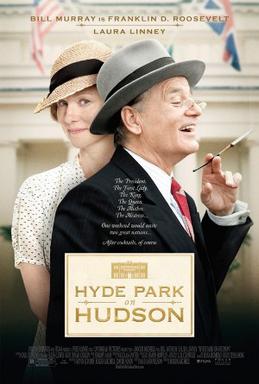
Overview and principal cast
The screenplay by Richard Nelson centers on the relationship between the president and his close friend and confidante, Margaret Suckley. The film stars Bill Murray as Franklin D. Roosevelt and Laura Linney as Margaret Suckley. Supporting cast members portray members of the Roosevelt household, administration figures and visiting British royalty. The production is commonly described as British–American because of its financing and creative personnel.
Plot and themes
The film follows the social and political choreography of a weekend in which the Roosevelts host a state visit by King George VI and Queen Elizabeth. Much of the drama is domestic: conversations, small rituals and the dynamics between public image and private vulnerability. Themes include companionship and solitude, the pressures of leadership, and how personal relationships intersect with diplomacy.
Historical basis and accuracy
The motion picture draws on archival material and memoirs but takes dramatic liberties. It emphasizes an intense friendship between Roosevelt and Suckley; some scenes imply a closer intimacy than many historians assert, while others reflect well‑documented moments of trust and disclosure. Viewers should regard the film as a character study rather than a comprehensive historical account.
Production and style
Hyde Park on Hudson uses period sets, costumes and location photography to evoke late 1930s domestic life. The direction favors close, conversational scenes and a restrained tone that foregrounds performance over spectacle. Cinematography and art direction aim to recreate the feel of a presidential household and rural estate life at Hyde Park.
Reception and legacy
On release the film drew mixed reviews. Critics frequently praised the lead performances while debating the balance between intimacy and historical context. Some reviewers welcomed the humane portrayal of an aging president; others questioned the emphasis placed on a personal relationship at the expense of wider political complexities. The film remains of interest to audiences who favor actor‑driven dramas and those curious about lesser‑known aspects of Roosevelt’s private life.
Further context and viewing suggestions
- For a fuller picture of the events and figures depicted, consult biographies of Roosevelt and documentary sources rather than relying solely on the dramatization.
- The film can be paired with historical accounts of Anglo‑American relations in 1939 to better understand the diplomatic backdrop of the visit.
- Readers seeking primary documents or more detail on Margaret Suckley should look for archival collections and specialist studies about presidential aides and intimate confidantes.
Because the movie blends fact and fiction, it is useful both as a cultural interpretation of a historical moment and as a starting point for further research into the people and events it portrays. References and further reading can be found via film databases and archival repositories linked from official pages and scholarly works.
Related articles
Author
AlegsaOnline.com Hyde Park on Hudson: 2012 biographical comedy‑drama about FDR Leandro Alegsa
URL: https://en.alegsaonline.com/art/46057