
Honi Soit — John Cale album (1981)
Honi Soit is the seventh studio album by Welsh multi-instrumentalist John Cale, released in March 1981 on A&M. Produced by Mike Thorne and featuring cover art by Andy Warhol, it reflects Cale's early-1980s turn in sound.
Overview
John Cale, the Welsh composer, producer and multi-instrumentalist best known for his role in the Velvet Underground, released Honi Soit in March 1981. Credited as his seventh studio album, it is notable as his only full-length record issued on A&M Records. The project was produced by Mike Thorne and packaged with cover art by pop artist Andy Warhol.
Image gallery
1 Image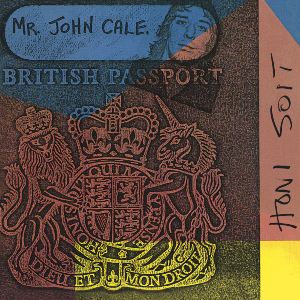
Musical character
Honi Soit reflects Cale's ability to fuse classical training, experimental instincts and rock sensibilities. The arrangements incorporate electric and acoustic instruments, synthesizers and contemporary production touches that align with early 1980s studio aesthetics. Vocals and instrumentation often alternate between intimate, restrained passages and more direct, assertive rock dynamics.
Context and development
Coming after a decade of diverse solo work, this album occupies a transitional moment in Cale's career as he adapted to changing popular music production while retaining a distinctive artistic voice. Producer Mike Thorne, known for working with artists who blended pop and avant-garde elements, steered the sessions toward a polished sound without erasing Cale's experimental edge.
Reception and significance
Contemporary listeners and later appraisals have treated Honi Soit as an example of Cale's versatility: it neither abandons his art-rock roots nor attempts purely commercial reinvention. The Andy Warhol sleeve underscores the record's connection to the visual art world and to Cale's longstanding ties with avant-garde creators.
Key features and notable facts
- Produced by Mike Thorne, whose approach emphasized contemporary studio techniques.
- Only full-length studio album Cale released for A&M Records.
- Cover art by Andy Warhol, highlighting the crossover between music and visual art in Cale's career.
- Links to Cale's broader musical identity as a composer, performer and former Velvet Underground member — see more by John Cale.
Honi Soit remains of interest to listeners who follow the intersections of art rock, post-punk and early-1980s production, and it is often revisited when surveying John Cale's wide-ranging solo output.
Related articles
Author
AlegsaOnline.com Honi Soit — John Cale album (1981) Leandro Alegsa
URL: https://en.alegsaonline.com/art/45011