
Honeymoon in Vegas (1992 film)
1992 romantic comedy directed by Andrew Bergman, starring Nicolas Cage, Sarah Jessica Parker and James Caan; a Las Vegas farce about love, temptation and loyalty.
Honeymoon in Vegas is a 1992 romantic comedy film directed by Andrew Bergman. Set against the flashy backdrop of Las Vegas, it blends farce, romantic dilemma and broad comedy. The movie follows a young couple whose plans for marriage are complicated when a wealthy gambler intervenes. Columbia Pictures released the film in August 1992; it attracted generally positive reviews and performed well commercially.
Image gallery
1 Image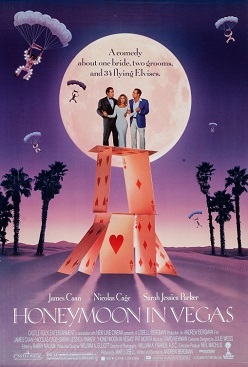
Plot and themes
The story centers on a devoted but hesitant groom-to-be and his fiancée as they travel to Las Vegas. What begins as a celebratory trip turns into a contest of wills when a charismatic, older gambler offers to marry the bride, promising her material luxury in exchange for her hand. The film plays with themes of commitment, temptation, the cultural mythology of Las Vegas, and the clash between idealism and pragmatism. Rather than presenting a straight drama, the screenplay favors comedic set pieces, misunderstandings and the energetic atmosphere of casinos and wedding chapels.
Cast and production
- Nicolas Cage stars as the lead male, portraying the anxious but earnest fiancé.
- Sarah Jessica Parker appears as his fiancée, who is torn between love and temptation.
- James Caan plays the smooth, wealthy gambler whose offer drives the plot.
The film was produced and distributed by Columbia Pictures. Its tone mixes screwball elements with romantic stakes, and its production makes deliberate use of iconic Las Vegas imagery—neon, casinos, and impromptu chapel weddings—to underscore the story's contrasts.
Release and reception
Released in late August 1992, the picture received generally favorable notices from critics who praised the cast chemistry and the brisk, witty script. Audiences responded well to the film's humor and star performances, and the movie earned solid box-office returns for its genre. Trade coverage and later summaries note its commercial success and its appeal as a lighthearted, adult-oriented comedy.
Legacy and notable facts
Honeymoon in Vegas is often remembered for its playful depiction of Las Vegas as a place where ordinary plans can be upended by excess and spectacle. The film helped consolidate the leading actors' profiles in the early 1990s and remains a reference point for romantic comedies that combine slapstick elements with sentimental themes. For further details on production notes, cast interviews and box-office figures, see related sources and databases (box office and reception).
Although it is principally a comedy, the movie's underlying questions about fidelity, compromise and personal courage give it more weight than a simple gag-driven picture. Over time it has retained a modest following among fans of Las Vegas-set cinema and 1990s romantic comedies.
Related articles
Author
AlegsaOnline.com Honeymoon in Vegas (1992 film) Leandro Alegsa
URL: https://en.alegsaonline.com/art/44994