
Honda Civic
Compact car produced by Honda since 1972, known for economy, durability, and a wide range of body styles and performance variants across multiple generations.
The Honda Civic is a compact automobile first introduced by the Japanese manufacturer Honda in the early 1970s. Designed to provide economical, reliable transportation during an era of rising fuel prices, the Civic grew from a small subcompact into a mainstream family car over successive redesigns. It is widely recognized for fuel efficiency, long-term dependability, and a broad aftermarket and enthusiast following.
Image gallery
10 Images


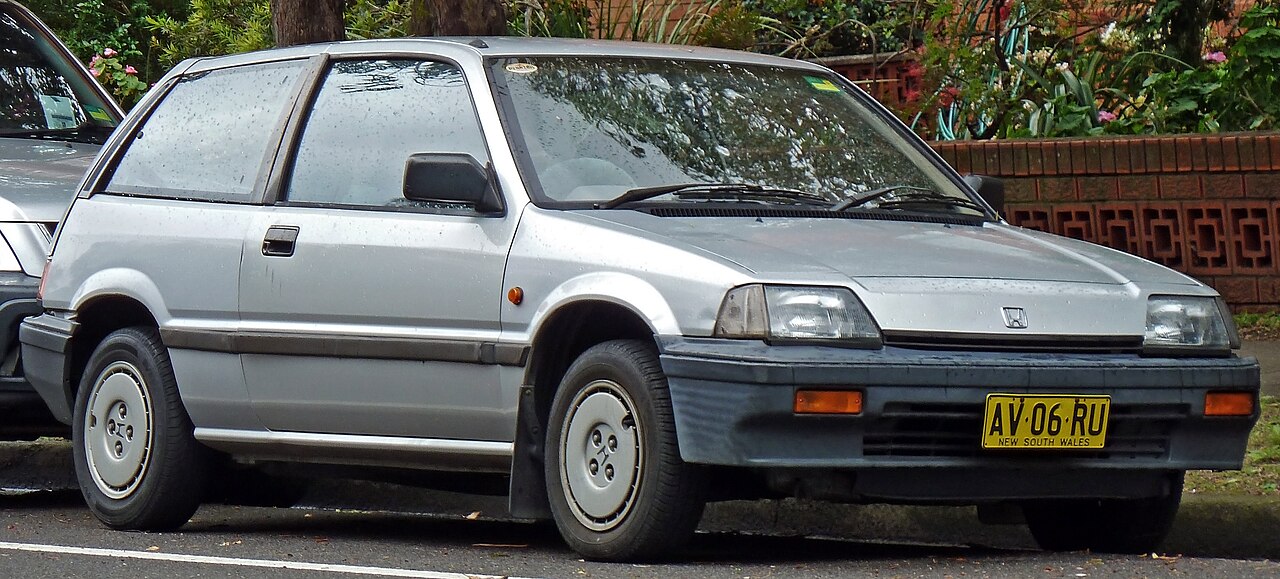


Design, layout and technical characteristics
Most generations of the Civic have used a front-engine, front-wheel-drive layout and four-cylinder gasoline engines, although hybrid, compressed natural gas and other alternative-power variants have also been offered at various times. Honda's engineering priorities for the Civic generally emphasize compact packaging, lightweight construction, and efficient use of interior space. Beginning in the late 1980s and early 1990s, variable valve timing technology (VTEC) began to appear in some Civic engines, improving performance and economy. Later generations added modern safety and convenience features, such as airbags, electronic stability aids, infotainment systems and, for some model years, digital instrument displays.
Body styles and trim levels
The Civic has been produced in multiple body styles over its history, including two- and four-door sedans, three- and five-door hatchbacks, coupes and wagon-like variants derived from the hatch. Trim levels have ranged from basic economy-focused editions to sport-oriented models. Common trim names used in various markets include:
- DX/LX/EX — mainstream trims offering a balance of features and value.
- Si — a sport-oriented model with firmer suspension and more powerful engines.
- Type R — a high-performance variant tuned for track-capable handling and power.
Automatic and manual transmissions have both been available; historically, the sportier Si and Type R versions have favored manual gearboxes. In some model years and markets, the instrument cluster or speedometer adopted digital displays.
History and development
Introduced at a time when demand for smaller, more fuel-efficient cars was increasing, the Civic established Honda in the small-car segment. Over the decades the model evolved through multiple generations, generally growing in physical size and adding modern safety and comfort features while retaining an emphasis on efficiency. The Civic spawned related models and derivatives, and in some markets closely related cars carried different nameplates. For example, a compact luxury cousin was sold under Honda's upscale brand in certain regions.
Uses, reputation and cultural impact
The Civic is popular with a wide range of buyers: commuters and families seeking economical transport, owners who prize longevity and low ownership cost, and automotive enthusiasts who modify Civics for increased performance. Its combination of a light platform, readily available parts and strong aftermarket support has made it a staple of amateur motorsport and tuning communities. Civic variants have also been offered with more eco-focused drivetrains to meet changing regulations and buyer preferences.
Notable distinctions and global production
Across its lifespan the Civic has been assembled in multiple countries to meet local demand and regulations. Model names and exact specifications vary by market and by generation, but the Civic's role as one of Honda's core global models has remained consistent. For official information and current specifications, consult the manufacturer's resources or regional dealers, for example the manufacturer's site at Honda.
Related articles
Author
AlegsaOnline.com Honda Civic Leandro Alegsa
URL: https://en.alegsaonline.com/art/44963