
Home theater
A home theater recreates the cinema experience at home using large displays or projectors, multi-channel audio, acoustic treatment, controlled lighting and source devices for movies, TV, gaming and music.
A home theater is a purpose-built or adapted room in a private residence intended to reproduce the experience of a commercial cinema. It brings together a large video display or projection screen, multi-channel audio, appropriate seating and environmental control so films, television, games and music can be enjoyed with higher fidelity and immersion than typical living-room setups.
Image gallery
1 Image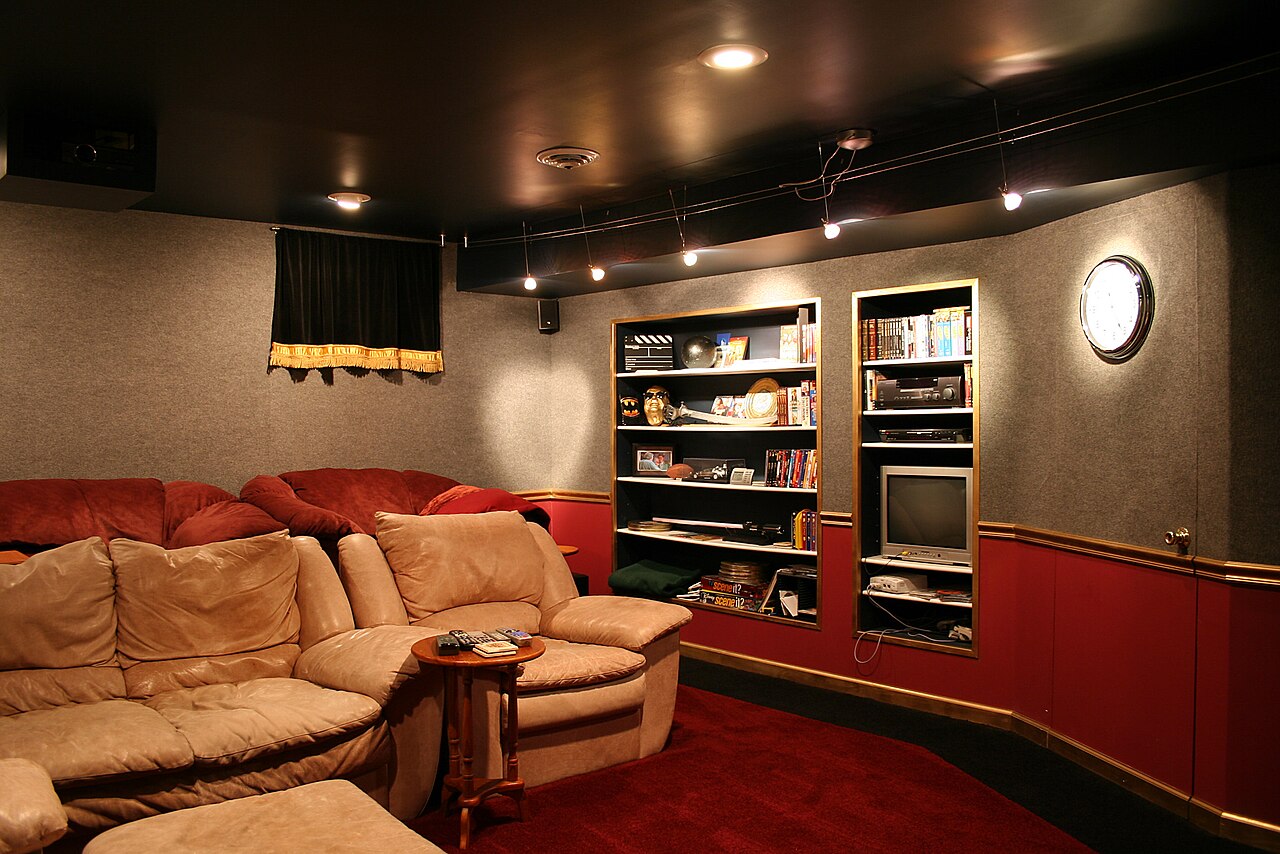
Core components
- Display: large flat-panel televisions or fixed/retractable projection screens paired with projectors; choices depend on room size, ambient light and viewing distance.
- Audio: multi-channel speaker systems (stereo, 5.1, 7.1 and beyond) with an AV receiver or amplifier; modern systems may add height or overhead channels for object-based audio formats such as Dolby Atmos and DTS:X.
- Sources: Blu-ray players, streaming devices, media servers, set‑top boxes and gaming consoles provide the program material.
- Processing and control: AV receivers, preamplifiers, room calibration tools and remote or automation systems centralize control and manage signal switching, decoding and equalization.
- Room treatment: absorbers, diffusers and bass traps minimize unwanted reflections and standing waves; blackout curtains and controllable lighting preserve contrast for projectors and displays.
Room design and acoustics
Acoustic performance depends heavily on room geometry, surface materials and speaker placement. Symmetrical layouts, controlled reverberation time and properly positioned speakers improve imaging and intelligibility. Flooring, furniture and wall treatments influence reflections and bass behavior; dedicated rooms often use custom-built enclosures and suspended platforms to reduce vibration and noise transmission. Isolation from household sounds and HVAC helps maintain low-noise floors for quiet passages.
Formats, placement and calibration
Speaker arrangements range from two-channel hi-fi to complex surround arrays; subwoofers handle very low frequencies and may require placement tuning. Video systems must consider viewing distance, screen size, projector throw ratio and screen gain. Display calibration—white point, color, gamma and brightness—along with audio level balancing, delay settings and equalization, yields accurate reproduction and is commonly performed with calibration discs, measurement microphones or professional services.
Seating, lighting and ergonomics
Comfortable seating and sightlines are important for long sessions. Tiered seating or staggered rows suit larger dedicated rooms. Lighting control, including dimmable fixtures and localized reading lights, reduces glare while preserving safety for movement. Accessible cabling and ventilation help maintain equipment life and user convenience.
Installation, costs and maintenance
Home theaters range from modest living-room improvements to professionally engineered dedicated cinemas. Costs vary with component quality, room treatments and installation complexity. Installation considerations include wiring pathways, speaker and equipment placement, power and surge protection, and future-proofing for new formats. Regular maintenance includes firmware updates, projector lamp or filter replacement, and occasional recalibration.
Uses and modern trends
Beyond films, home theaters are used for streaming, gaming, sports and music. Recent trends include immersive audio formats, high dynamic range (HDR) video, 4K and higher resolutions, compact powered speakers and integration with smart-home systems. Choices typically balance budget, space, aesthetic integration and whether the room is dedicated to media or shared with other household functions.
Related articles
Author
AlegsaOnline.com Home theater Leandro Alegsa
URL: https://en.alegsaonline.com/art/44883