
Anniviers: valley municipality in Valais, Switzerland
Anniviers is a large Swiss municipality in the Val d'Anniviers (canton of Valais), created by the 2009 merger of six villages; known for alpine landscapes, ski resorts and traditional mountain culture.
Overview
Anniviers is a mountain municipality located in the district of Sierre within the canton of Valais in Switzerland. It occupies much of the Val d'Anniviers, a steep, glaciated valley on the southern side of the Pennine Alps. The area combines high Alpine terrain, small villages, pastures and winter sports infrastructure, and it is recognized as one of the largest Swiss municipalities by surface area.
Image gallery
6 Images



Villages and geography
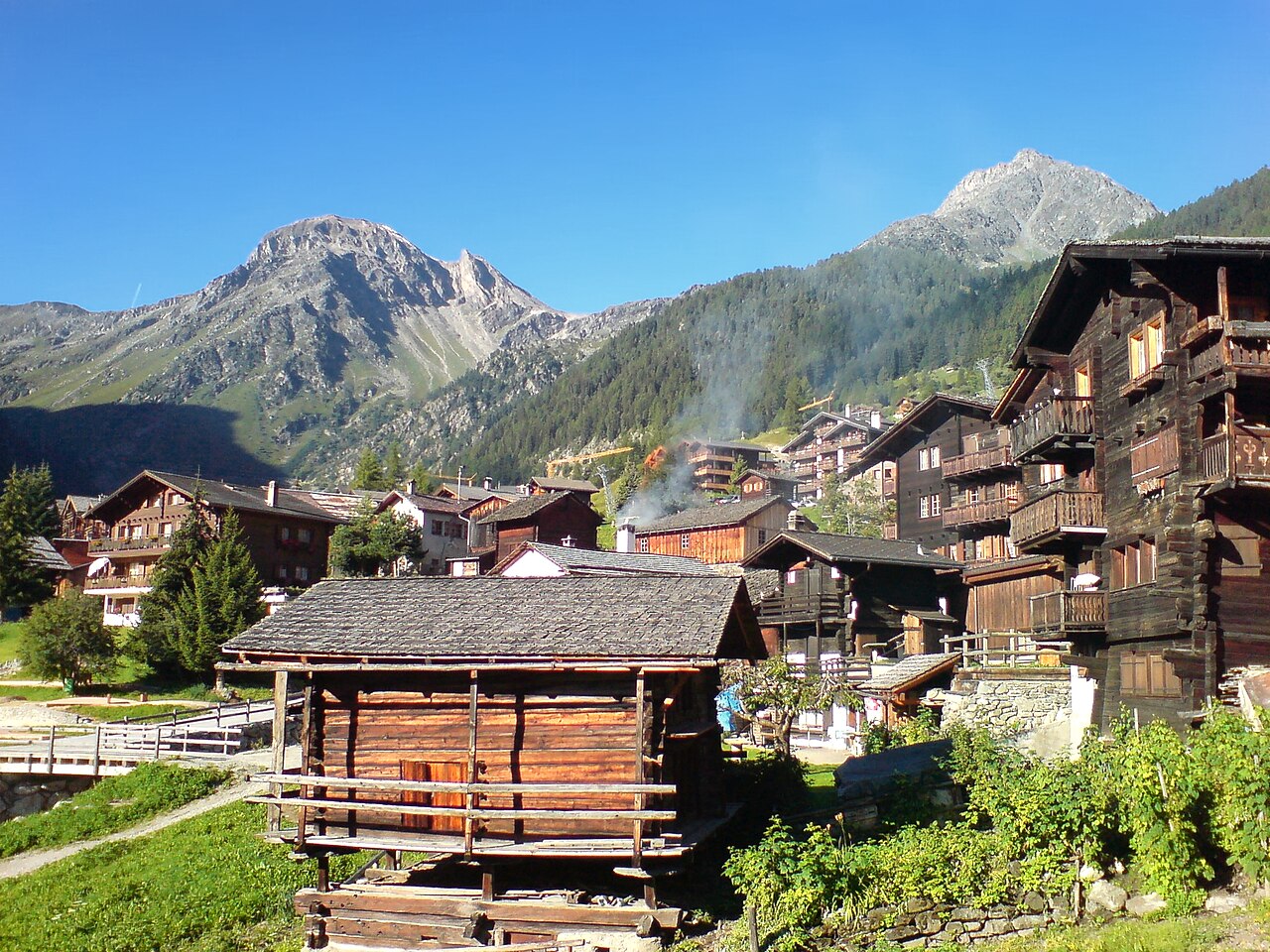
The modern municipality brings together several traditional high-altitude settlements, each with its own character. Among these are Ayer, a village known for access to mountain trails; Chandolin, noted for its high-elevation location and panoramic views; Grimentz, prized for its timber chalets and ski access; Saint-Jean; Saint-Luc, a compact alpine village popular with hikers; and Vissoie, which functions as a principal local service centre within the valley. The valley includes steep slopes, alpine meadows, and upper reaches shaped by glaciers and cirques.
History and municipal merger
Historically the Val d'Anniviers comprised small, largely self-sufficient communities linked by mountain paths and seasonal agriculture. On 1 January 2009 six former communes combined to form the present municipality, a reform intended to improve administrative coordination, streamline services and strengthen local development. The merger created one of Switzerland's largest municipalities by area and simplified governance across the valley.
Economy, tourism and land use
Anniviers' economy mixes tourism, agriculture and local services. Winter sports — downhill skiing, snowshoeing and alpine resorts — bring visitors in colder months, while summer attracts hikers, climbers and nature enthusiasts. Traditional alpine farming and seasonal pasture use remain part of the landscape, and many villages maintain heritage buildings and timber architecture that appeal to cultural tourism. Local businesses focus on hospitality, lift operations, artisan goods and basic services for residents and visitors.
Culture, language and access
French is the predominant language in the valley, and local customs reflect Valaisan mountain culture, with village festivals, religious traditions and preservation of rural architecture. Access to the valley is by road from the Rhone plain and by regional transport links to nearby urban centres; once inside the valley, cable cars and lifts connect several resort areas and higher hamlets. Conservation of the alpine environment and sustainable tourism are recurring themes in local planning.
Key facts
- Merged municipality formed in 2009 from six communes.
- Contains both winter resorts and summer mountain recreation.
- Characterized by traditional Valaisan villages and alpine landscapes.
- Local infrastructure combines road access with lifts and hiking paths.
Tags
Related articles
Author
AlegsaOnline.com Anniviers: valley municipality in Valais, Switzerland Leandro Alegsa
URL: https://en.alegsaonline.com/art/4472
Sources
- bfs.admin.ch : "Arealstatistik Standard - Gemeinden nach 4 Hauptbereichen"
- bfs.admin.ch : "Ständige Wohnbevölkerung nach Staatsangehörigkeitskategorie Geschlecht und Gemeinde; Provisorische Jahresergebnisse; 2018"