
Hevrin Khalaf: Kurdish‑Syrian politician and advocate for coexistence
Hevrin Khalaf (1984–2019) was a Kurdish‑Syrian civil engineer and politician who led the Future Syria Party and promoted multi‑ethnic cooperation in northeastern Syria until her killing during the 2019 Turkish military operation.
Hevrin Khalaf (Kurdish: Hevrîn Xelef; 15 November 1984 – 12 October 2019) was a Kurdish‑Syrian civil engineer and political leader known for work promoting dialogue and coexistence among Kurds, Arabs and Christians in Syria. She served as Secretary General of the Future Syria Party and was prominent in efforts to build inclusive local governance in areas of northeastern Syria during a period of intense conflict and political fragmentation.
Image gallery
2 Images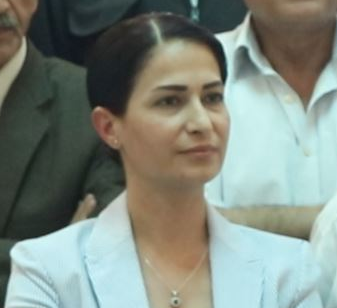

Background and political role
Khalaf trained and worked as a civil engineer before moving into political and civic organizing. As Secretary General of the Future Syria Party, she advocated a nonsectarian vision for post‑war Syria that emphasized shared administration, minority rights, and reconstruction. Her public profile combined practical governance concerns with a focus on reconciliation between diverse communities in the region often referred to as Rojava or the Autonomous Administration of North and East Syria.
Activities and positions
Within contested areas of northern and eastern Syria, Khalaf engaged in diplomatic outreach and local institution building. She worked with municipal councils, civil society groups, and tribal leaders to expand services and encourage cooperation across ethnic and religious lines. Observers noted her role as a calming, pragmatic voice who sought political solutions rather than military ones and who highlighted the participation of women in political life.
Killing during the 2019 offensive
On 12 October 2019, Khalaf was killed near the M4 motorway in northeastern Syria during a Turkish military operation against Syrian Democratic Forces (SDF) positions. Reports attributed responsibility to Turkish‑backed armed elements operating in the area; many outlets identified the group Ahrar al‑Sharqiya among those involved. The incident occurred in the context of a rapid and chaotic offensive following a change in international troop deployments.
Major international media examined the circumstances of her death and its legality. One prominent report concluded that the killing could almost certainly constitute a war crime under international law. The episode intensified calls for investigations into abuses committed during the offensive and raised questions about the protection of civilians and political figures in conflict zones. For broader context about the operation in northeastern Syria, see reporting on the 2019 operation in Rojava.
Reactions and legacy
Khalaf's killing prompted condemnation from a range of governments, human rights organizations and local actors who called for transparent inquiries and accountability. Memorials and statements emphasized her efforts to bridge divides and her role as a woman leader in a turbulent environment. Her death became a symbol for many of the vulnerabilities faced by civilian political figures in Syria's fragmented wartime landscape.
Key facts
- Born 15 November 1984; died 12 October 2019.
- Profession: civil engineer; later a political leader.
- Position: Secretary General of the Future Syria Party.
- Death occurred during the 2019 Turkish military operation in northeastern Syria; reporting suggested possible violations of international humanitarian law.
While details about many aspects of Khalaf's life and political work continue to be examined, she is widely remembered for advancing a vision of inclusive governance and for her efforts to give voice to women and minorities amid Syria's protracted conflict.
Related articles
Author
AlegsaOnline.com Hevrin Khalaf: Kurdish‑Syrian politician and advocate for coexistence Leandro Alegsa
URL: https://en.alegsaonline.com/art/43982
Sources
- indianexpress.com : Explained: The chilling murder of Kurdish leader Hevrin Khalaf
- relevantmagazine.com : "Hevrin Khalaf, Kurdish Politician Who Championed Christians, Executed in Syria"
- apnews.com : "Money, hatred for the Kurds drives Turkey's Syrian fighters"
- washingtonpost.com : "Turkish-led forces film themselves executing a Kurdish captive in Syria"