
Havensville, Kansas
Small city in Pottawatomie County, Kansas, United States. Overview of location, population (2010), local character, history, community life and distinctions.
Overview
Havensville is a small incorporated city in Pottawatomie County, in the U.S. state of Kansas. It is part of the broader region of north-central Kansas and lies within the political boundaries of the United States. According to the 2010 census, the city had 133 residents. The community exemplifies the small, rural settlements found across the American Midwest.
Image gallery
2 Images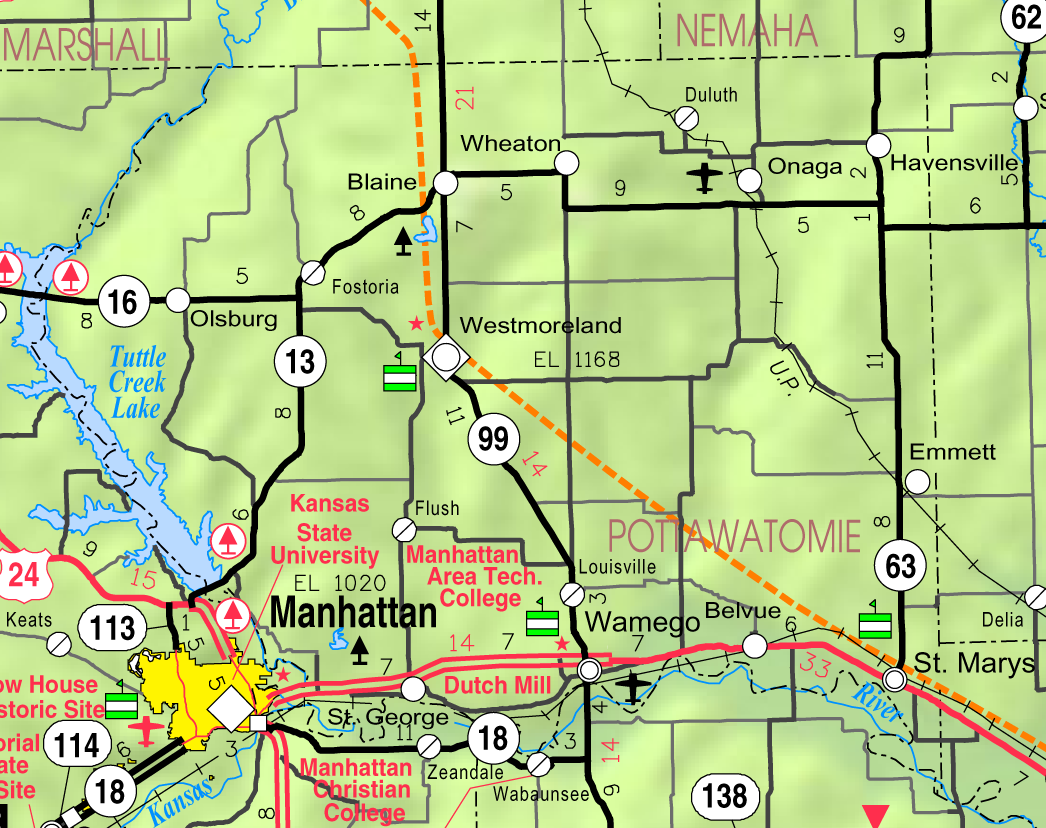

Characteristics and setting
Havensville is characterized by a low population density, a compact town center, and surrounding agricultural land. Homes, a few local businesses and community buildings are typical components of its built environment. The town serves as a local hub for nearby farms and residences, with travel to larger towns for broader services and employment.
History and development
The town developed alongside patterns of settlement in Kansas during the late 19th and early 20th centuries, when many small communities formed to support farming, trade and transportation. Over time Havensville’s size and economic role have reflected broader rural trends such as population shifts to urban areas and changes in farm technology.
Community and economy
Economic activity in and around Havensville typically centers on agriculture and businesses that support local needs. Community life often revolves around shared institutions such as schools, churches, volunteer organizations and civic events. Residents commonly rely on nearby county seats and regional centers for healthcare, higher education and specialized retail.
Demographics and governance
With a population recorded at 133 in 2010, Havensville is among the smaller incorporated places in the county. Local governance follows Kansas municipal structures, with elected officials responsible for services such as road maintenance, utilities and local ordinances. Demographic composition in such towns often includes multigenerational families alongside long-term and newer residents.
Notable facts and distinctions
- Havensville illustrates the pattern of many small Midwestern towns that provide community focal points for surrounding rural areas.
- Its small population and rural setting make it representative of demographic and economic trends affecting similar communities across Kansas and the Plains.
For additional administrative or statistical details, consult county or state resources and census publications linked above.
Related articles
Author
AlegsaOnline.com Havensville, Kansas Leandro Alegsa
URL: https://en.alegsaonline.com/art/42897
Sources
- census.gov : "US Gazetteer files 2010"
- factfinder2.census.gov : "American FactFinder"
- census.gov : "Population and Housing Unit Estimates"
- factfinder2.census.gov : "American FactFinder"
- geonames.usgs.gov : "US Board on Geographic Names"
- factfinder2.census.gov : "2010 City Population and Housing Occupancy Status"
- books.google.com : Kansas: A Cyclopedia of State History, Embracing Events, Institutions, Industries, Counties, Cities, Towns, Prominent Persons, Etc
- books.google.com : The Origin of Certain Place Names in the United States
- books.google.com : Biennial Report of the Board of Directors of the Kansas State Historical Society
- epodunk.com : "Profile for Havensville, Kansas"
- kshs.org : "Kansas Post Offices, 1828-1961" · web.archive.org
- census.gov : "US Gazetteer files: 2010, 2000, and 1990"
- weatherbase.com : Climate Summary for Havensville, Kansas