
Haridwar
Haridwar is a city in the Indian state of Uttarakhand, a major Hindu pilgrimage centre on the banks of the Ganges known for its ghats, temples, rituals and festival gatherings.
Haridwar is a historic city in northern India situated where the river Ganges emerges from the Himalayan foothills into the plains. It lies in the Indian state Uttarakhand and is regarded by many Hindus as one of the sacred Sapta Puri — the seven holy pilgrimage centres. The city combines active religious life with commerce and travel services that support millions of pilgrims and visitors each year.
Image gallery
10 Images


Characteristics and major sites
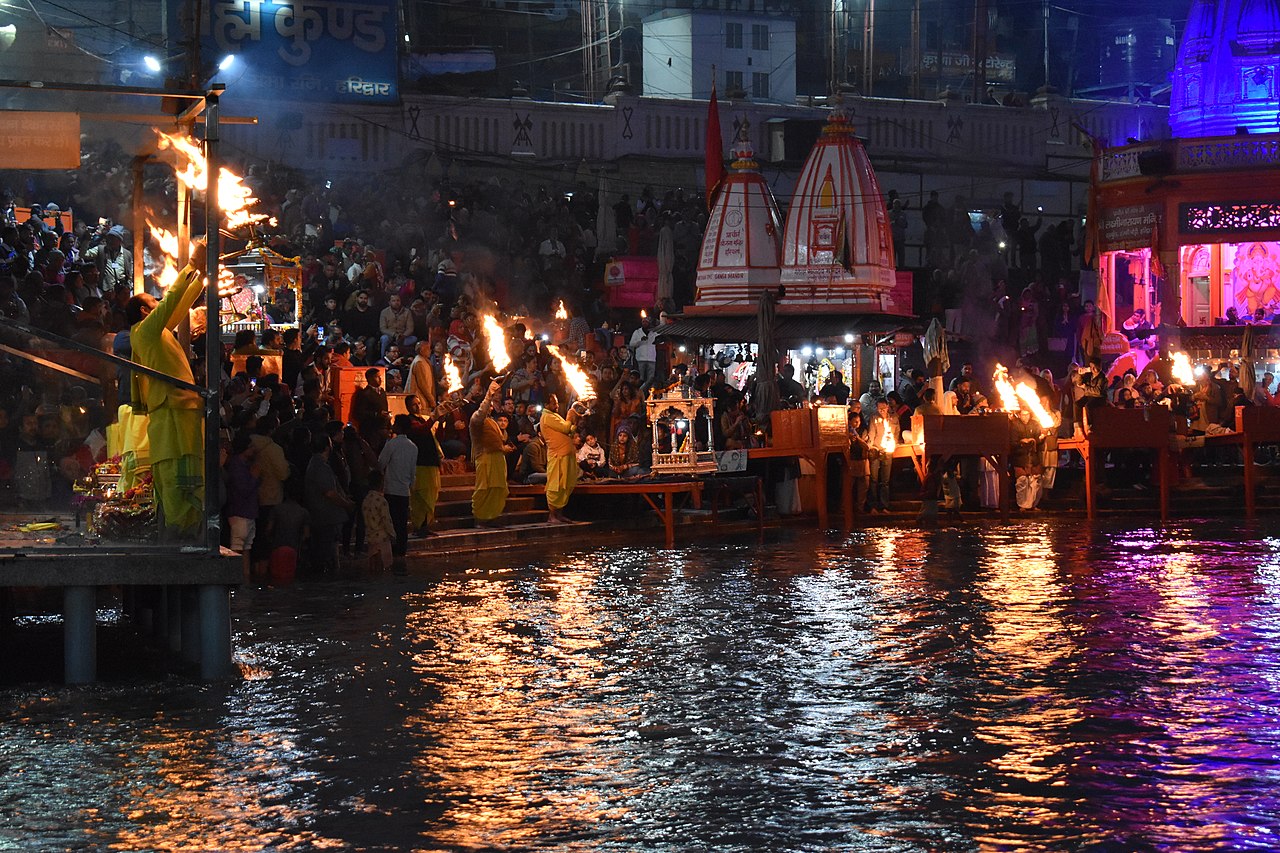
Haridwar's riverfront is lined with ghats, river steps used for ritual bathing and ceremonies. The best known of these is Har Ki Pauri, a landmark ghat where daily evening worship (Ganga Aarti) draws large crowds. The city also contains several important temples and hilltop shrines accessible by short cable car or road trips, including temples dedicated to deities such as Maya Devi, Chandi Devi and Mansa Devi.
History and cultural role
Haridwar has ancient associations in Hindu tradition and appears in epic literature and pilgrimage narratives. As a point where sacred geography meets travel routes from the mountains, it developed into a centre for ashrams, religious teachers and ritual specialists. Over centuries the city grew around its connection to the Ganges and to seasonal fairs that attract devotees from across the subcontinent.
Rituals, festivals and gatherings
The Ganges itself is central to Haridwar's religious life; ritual cleansing, offerings and the evening Aarti are daily practices. Haridwar periodically hosts massive pilgrimage gatherings, including the Kumbh Mela at which ascetics and pilgrims congregate in very large numbers. These events are important both spiritually and socially, shaping the city's calendar and infrastructure.
Economic and social importance
Economically, Haridwar depends largely on pilgrimage-related services: temples, lodging, markets, boat services and guided rituals. The presence of ashrams, schools of spiritual instruction and facilities for visitors supports a steady flow of domestic and international tourists. The city also acts as a regional transit point for people going deeper into the Himalayan region.
Notable distinctions
- Recognised as one of the principal sacred cities in Hinduism and part of the Sapta Puri tradition.
- Famed for its ghats and the nightly Ganga Aarti ceremony that combines music, lamps and chanting.
- Gateway role to the Himalayan pilgrimage circuit and to nearby hill temples reached from Haridwar.
Visitors often combine a riverside experience with visits to local temples and short excursions to nearby sites of religious or natural interest. For administrative matters and regional context, Haridwar is part of the state of Uttarakhand, which administers the surrounding districts and supports pilgrimage infrastructure.
Related articles
Author
AlegsaOnline.com Haridwar Leandro Alegsa
URL: https://en.alegsaonline.com/art/42448