
Guide skier
A guide skier leads and advises visually impaired skiers on snow, using voice, radio or tethers to navigate safely. Guides work in recreation and competition and require specialized skills, communication and training.
Overview
A guide skier is a sighted person who skis with and directs a visually impaired or blind skier, helping them navigate slopes, trails and race courses. Guides act as the eyes of their partner: they choose the line, call turns and hazards, set pace and maintain proximity so the visually impaired skier can follow with confidence. The relationship is a cooperative team effort built on trust and clear communication.
Image gallery
2 Images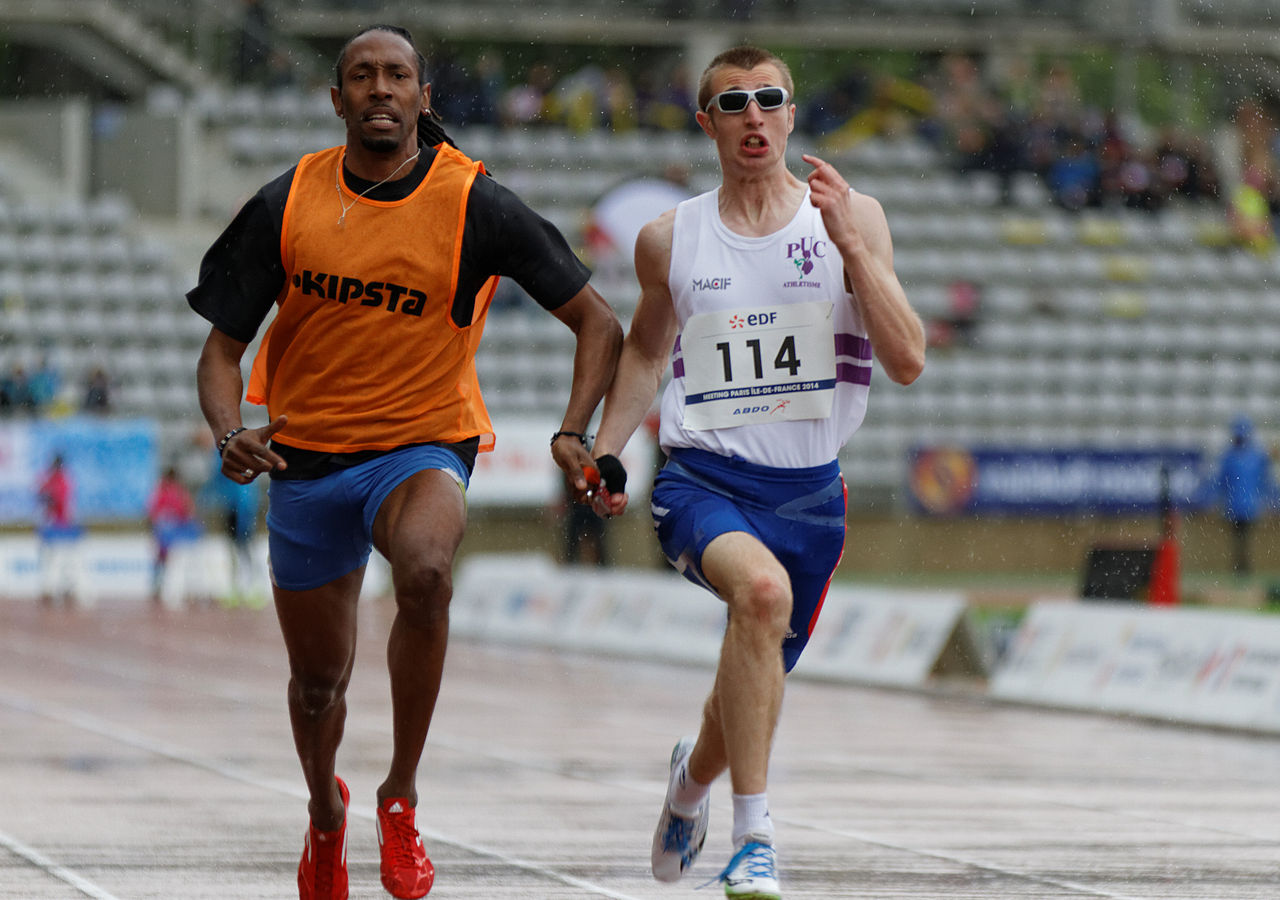

Role and responsibilities
Guides may ski ahead of, beside, or slightly behind the skier depending on technique and preference. Their responsibilities extend beyond simple direction: they plan routes, assess conditions, manage speed, and respond to changing terrain or emergencies. In competitive contexts the guide also memorizes course details and times.
- Lead and describe the line, distance and timing of turns
- Maintain consistent, concise verbal cues and pacing
- Ensure safety, including fall recovery and route choice
- Coordinate equipment and pre-run course inspection
Communication and equipment
Communication is primarily verbal and needs to be precise and rhythmic. Guides use headsets, helmet microphones, short voice cues and sometimes simple hand signals for nearby skiing. For longer distances or noisy environments, wireless systems such as an radio headset are common. Some adaptive setups use a short tether for cross-country or recreational skiing, but tethering is less common on fast downhill runs.
Training, skills and safety
Good guides are experienced skiers who combine technical ability with patience, clear instruction and risk awareness. Training may be informal or provided by adaptive sports organizations and clubs; it covers communication protocols, emergency procedures and ways to coach technique without overwhelming sensory input. Physical fitness, on-hill decision-making and the ability to anticipate changing snow and weather conditions are essential.
Competitive and recreational contexts
Guide skiing appears in both recreational programs and organized competition. In para-alpine and para-Nordic events, guide and athlete function as a unit and are judged together. Recreational guiding promotes access, independence and social inclusion by enabling visually impaired people to enjoy skiing with reassurance and guidance.
Notable distinctions
Guide skiers differ from instructors in that their primary role is to direct a specific visually impaired partner rather than teach general technique. While some guides are volunteers or friends, others are trained professionals who specialize in adaptive skiing. The guide–skier team emphasizes clear, minimal commands and an understanding of each partner's communication needs.
Related articles
Author
AlegsaOnline.com Guide skier Leandro Alegsa
URL: https://en.alegsaonline.com/art/41258
Sources
- ipc-alpineskiing.org : IPC Alpine Skiing Rules and Regulations
- books.google.com : Oxford handbook of sport and exercise medicine