
Grüningen — Historic municipality in the canton of Zürich
Grüningen is a Swiss municipality in the district of Hinwil, canton of Zürich, noted for its well-preserved historic center and for receiving the Wakker Prize for conservation.
Overview
Grüningen is a municipality in the district of Hinwil in the canton of Zürich, Switzerland. It occupies a semi-rural setting within commuting distance of the city of Zürich and combines residential areas with agricultural land and patches of woodland. The place is best known for a compact historic core where traditional building forms and street patterns remain clearly legible.
Image gallery
10 Images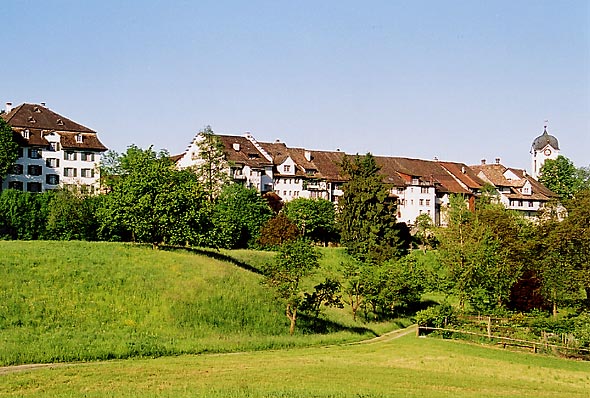


Characteristics and built environment
The village center features a mix of vernacular houses, public buildings and a parish church that together communicate a long continuity of local life. The street layout, rooflines, and use of traditional materials contribute to a coherent townscape. Small public squares and preserved façades are typical elements that visitors and scholars often note when discussing the town's character.
History and development
Grüningen's origins lie in the medieval period, when settlements commonly grew up around a church, market place and local manorial sites. Over centuries the community evolved from an agrarian village into a small municipality balancing local crafts, farming and later commuter housing. Historic traces in buildings and plots show incremental growth rather than wholesale 20th-century redevelopment.
Conservation and recognition
Local planning and conservation measures have aimed to preserve the integrity of the historic center while allowing contemporary use. In recognition of its conservation achievements, the municipality received the Swiss Wakker Prize in 1976. This award highlights noteworthy efforts to protect architectural heritage and to integrate new construction sensitively into older townscapes; information on the award is available through heritage sources such as the organization behind the Wakker Prize.
Importance and contemporary life
Today Grüningen functions as both a living community and a reference for heritage-conscious urban planning. It attracts residents who value a scenic, compact setting and visitors interested in Swiss village architecture. Local administration and residents typically emphasize maintenance of public spaces, reuse of historic structures and thoughtful infill development as ways to keep the place both authentic and functional.
Notable features
- Well-preserved historic core with traditional façades and street patterns.
- Parish church and public buildings that reflect the municipality's long history.
- Recognition for conservation through the Wakker Prize and local planning initiatives.
- Balance of residential life, agriculture and natural surroundings within the canton of Zürich.
For further administrative or tourism details consult municipal and cantonal resources, or local heritage guides that discuss Grüningen's architectural legacy and community-led preservation approaches. Many readers find the municipality a useful case study in combining living communities with careful historic conservation.
Related articles
Author
AlegsaOnline.com Grüningen — Historic municipality in the canton of Zürich Leandro Alegsa
URL: https://en.alegsaonline.com/art/41105
Sources
- bfs.admin.ch : "Arealstatistik Standard - Gemeinden nach 4 Hauptbereichen"
- bfs.admin.ch : "Ständige Wohnbevölkerung nach Staatsangehörigkeitskategorie Geschlecht und Gemeinde; Provisorische Jahresergebnisse; 2018"