
Governorates of Saudi Arabia
An overview of Saudi Arabia's second-level administrative units: their structure, categories, functions, history and notable distinctions, including the count of governorates.
The governorates of Saudi Arabia form the second tier of the country's administrative system, sitting below the 13 regional emirates (provinces). Each province is divided into multiple governorates, which in turn may be subdivided into sub-governorates or centers. Governorates are the principal local units for delivering public services, implementing regional policies and coordinating municipal affairs across urban and rural areas. For an official outline of the administrative framework see related governmental materials.
Image gallery
2 Images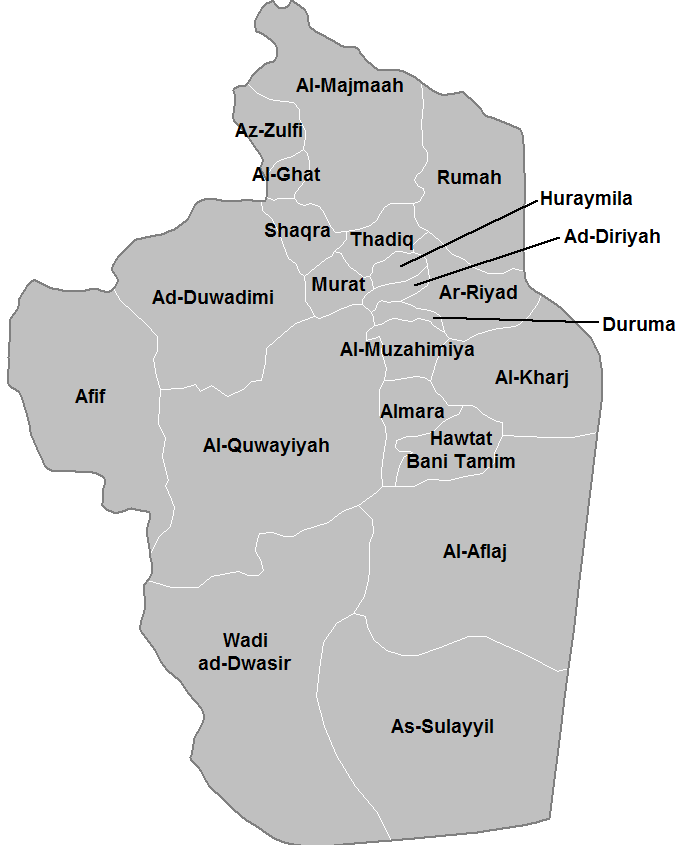

Structure and classification
Governorates vary considerably in size, population and economic role. Administratively they are commonly grouped into two categories:
- Category A — typically more populous or economically active governorates that include major towns and provide a wider range of services.
- Category B — generally smaller or more rural governorates with lower population density and more limited local infrastructure.
Both categories are managed by a local governor (often appointed by provincial authorities) and supported by municipal bodies responsible for planning, sanitation, transportation and local development projects.
Functions and responsibilities
Governorates serve as the primary interface between residents and the state at a local level. Their typical responsibilities include:
- Administration of local services such as municipal utilities, road maintenance and licensing;
- Coordination of health, education and social services delivered by national ministries;
- Implementation of regional development plans and local economic initiatives;
- Maintaining civil registries and public order in conjunction with security agencies.
History and development
The present system evolved as the modern Saudi state consolidated its territories and standardized governance. Over decades, boundaries and the number of governorates have been adjusted to reflect demographic change, urban growth and administrative needs. The system is designed to be flexible so that governorates can be reclassified or reorganized when necessary.
Notable facts and counts
There are 118 officially recognized governorates in Saudi Arabia; some sources also cite a 119th entity when counting a special municipality known as Al-Udayd. The precise tally can change if new administrative adjustments are made. Governorates differ widely—from those centered on large regional towns to sparsely populated desert districts—so the category system helps allocate resources and administrative attention appropriate to local conditions.
Related articles
Author
AlegsaOnline.com Governorates of Saudi Arabia Leandro Alegsa
URL: https://en.alegsaonline.com/art/40015