
Grand Duchy of Oldenburg
A northwestern German state created from the Duchy of Oldenburg at the Congress of Vienna (1814). It existed until the German Revolution of 1918; its capital was the city of Oldenburg.
The Grand Duchy of Oldenburg was a small sovereign state in northwestern Europe whose territory lies within what is now Germany. Formed from the older Duchy of Oldenburg by the decisions of the post‑Napoleonic settlement, it existed as a recognized grand duchy in the 19th and early 20th centuries. The capital city was Oldenburg, where the grand ducal family took residence at Schloss Oldenburg.
Image gallery
6 Images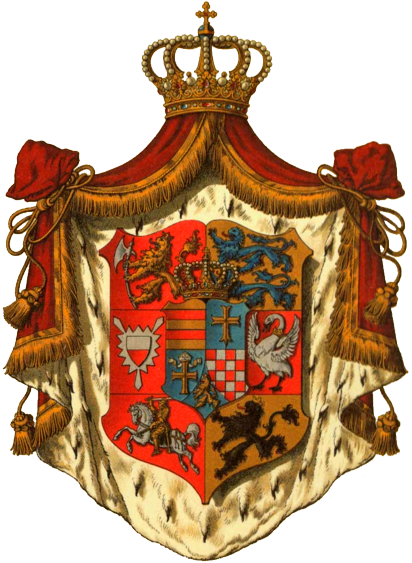


Territory and government
Located in the northwestern German lands, the Grand Duchy covered a predominantly rural region centered on its capital. It was governed as a hereditary monarchy under a grand duke and a ducal household. Over the course of the 19th century the state undertook administrative reforms and adopted laws and institutions consistent with the evolving constitutional practices of German states.
History and political context
The modern Grand Duchy was established in the settlement that followed the Napoleonic period and the Congress of Vienna, which reorganized many German territories (Congress of Vienna). The elevation of Oldenburg formalized its status among the German states in the emerging international order of 1814–1815 (1814). It became a member of the German Confederation and, later in the 19th century, participated in the federal structures that led toward German unification.
Economy, society and culture
The duchy was largely agricultural, with market towns and modest industry supporting local needs. Its location in the north facilitated commercial links with nearby port cities and regional trade networks. Cultural life centered on the capital and its institutions; Schloss Oldenburg served as the symbolic home of the ruling family and as a focal point for regional heritage.
End and legacy
Like many German monarchies, the Grand Duchy of Oldenburg ceased to exist as a sovereign ruling house following the revolutionary upheavals at the end of World War I. The German Revolution of 1918 led to the abdication of the grand duke and the transition of the territory into republican administration (German Revolution). Today the region forms part of the federal state of Lower Saxony in modern Germany (Germany), and the historical structures, palaces and archives remain points of local identity and historical study.
- Capital: Oldenburg; principal residence: Schloss Oldenburg.
- Created at the post‑Napoleonic settlement (Congress of Vienna).
- Dissolved following the German Revolution of 1918 (1918).
- Territory now largely in Lower Saxony, in modern Germany.
Questions and answers
Q: What was the Grand Duchy of Oldenburg?
A: The Grand Duchy of Oldenburg was a state in Europe that existed between 1814 and 1918.
Q: Where was the Grand Duchy of Oldenburg located?
A: The Grand Duchy of Oldenburg was located in the area that is now Germany.
Q: How was the Grand Duchy of Oldenburg created?
A: The Grand Duchy of Oldenburg was created out of the smaller Duchy of Oldenburg at the Congress of Vienna in 1814.
Q: When did the Grand Duchy of Oldenburg cease to exist?
A: The Grand Duchy of Oldenburg ceased to exist after the German Revolution in 1918.
Q: What was the capital of the Grand Duchy of Oldenburg?
A: The capital of the Grand Duchy of Oldenburg was Oldenburg.
Q: Where did the Grand ducal family live?
A: The Grand ducal family lived at the Schloss Oldenburg in the capital.
Q: What type of government did the Grand Duchy of Oldenburg have?
A: The text does not provide information about the government structure of the Grand Duchy of Oldenburg.
Related articles
Author
AlegsaOnline.com Grand Duchy of Oldenburg Leandro Alegsa
URL: https://en.alegsaonline.com/art/40187