
Andrew Carnegie
Scottish‑American industrialist and philanthropist (1835–1919). A leader in the U.S. steel industry who later gave much of his fortune to libraries, education, scientific research and peace causes.
Andrew Carnegie (1835–1919) was a Scottish‑born American industrialist who became one of the most prominent figures of the late 19th and early 20th centuries. Rising from modest beginnings, he built a leading steel enterprise and after retiring devoted his wealth to large‑scale philanthropy. His ideas on the responsibilities of the rich, especially expressed in The Gospel of Wealth, influenced debates about charity and public life.
Image gallery
10 Images
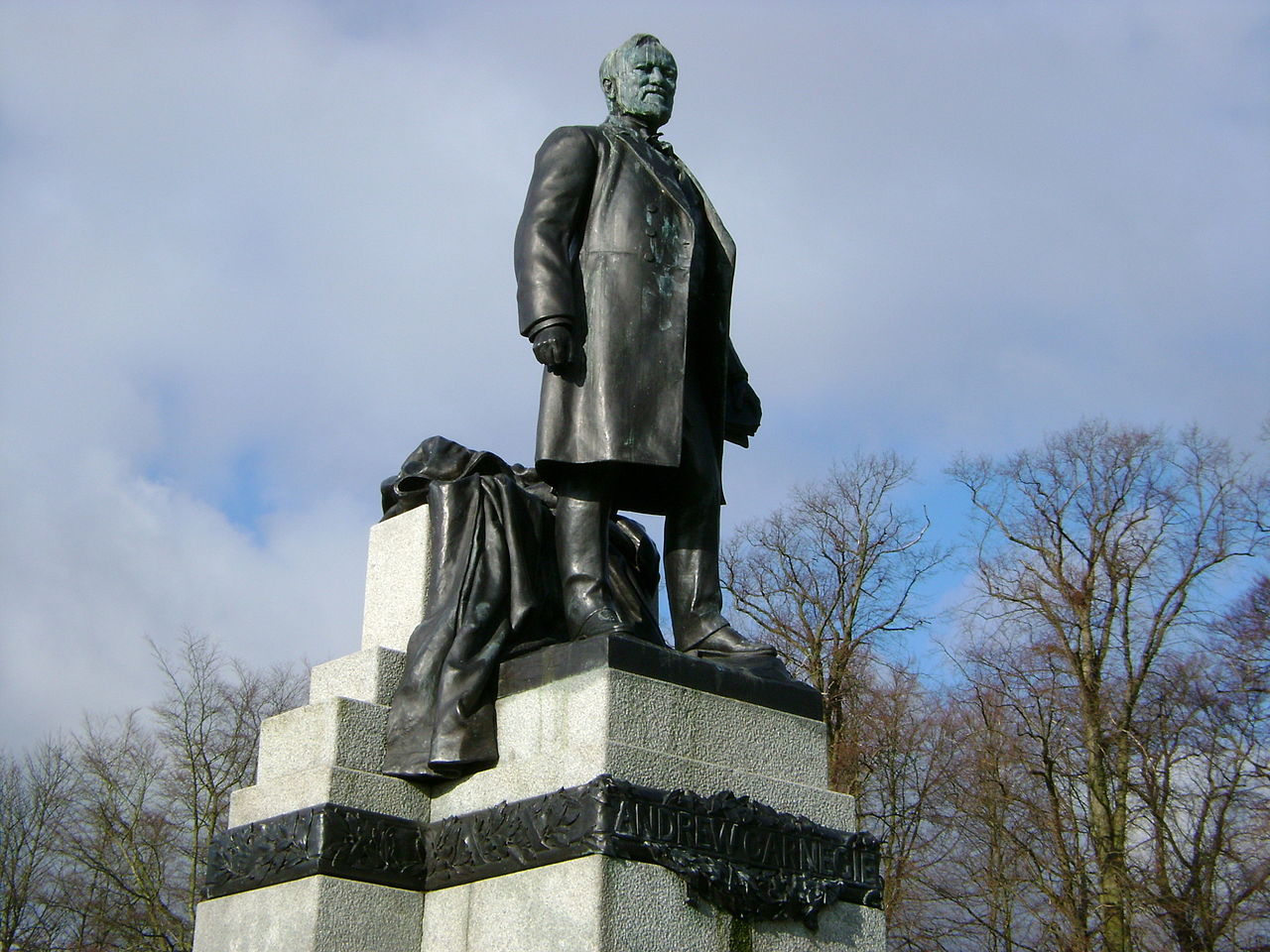


Early life and business career
Carnegie was born in Dunfermline, Scotland, and emigrated with his family to the United States in 1848. He took a succession of jobs—telegraph operator, railroad employee, and investor—that brought him into the emerging iron and steel industries. He founded and expanded a series of iron and steel firms that eventually became Carnegie Steel Company. In 1901 he sold his business in a transaction that led to the formation of U.S. Steel. Carnegie is often described as a leading Scottish‑American industrialist for the blend of his origins and his role in American industry.
Philanthropy and public projects
After retiring from active business Carnegie turned to philanthropy on a national and international scale. He personally funded the construction of performance and educational venues, including the well‑known concert auditorium in New York, and supported the establishment of technical schools that later evolved into universities. One of his most enduring initiatives was the funding of thousands of public libraries around the world—commonly referred to as Carnegie libraries—designed to expand public access to books and learning.
Institutions and lasting legacy
Carnegie created several foundations and institutions to continue philanthropic work after his death. Notable examples include a philanthropic corporation for education and research, trusts for scientific and cultural institutions, and endowments that supported international peace and scholarly inquiry. These organizations continue to fund research, scholarships and cultural programs and remain a visible part of his public legacy.
Controversies and public response
Carnegie's reputation is complex. The rapid industrial expansion he led involved labor disputes and social tensions, the most famous of which was the Homestead Strike of 1892; that conflict and related events tarnished his public image for many contemporaries. He argued that great wealth carried the obligation to distribute resources constructively, but critics pointed to the harsh conditions in parts of industry as evidence of conflict between profit and welfare.
Why he matters
Carnegie stands as a representative figure of the Gilded Age—an era of rapid economic growth, concentrated corporate power and emergent social reform. He exemplifies both the industrial entrepreneur who helped shape modern manufacturing and the philanthropist who sought to use private fortunes for public benefit. His lifetime gifts—totaling hundreds of millions of dollars in his era—supported libraries, education, science and peace efforts and left institutions that are still active today.
- Notable writings: The Gospel of Wealth, essays on wealth and responsibility.
- Major institutions: technical schools and foundations that funded research and education.
- Public works: concert halls and over two thousand public libraries around the world.
- Historical note: a Scottish immigrant who became a leading figure in American industry and public life—sometimes lauded, sometimes criticized.
Further reading on his business ventures and the foundations that bear his name can provide more detail about both his industrial strategies and long‑term philanthropic impact.
Related articles
Author
AlegsaOnline.com Andrew Carnegie Leandro Alegsa
URL: https://en.alegsaonline.com/art/4000
Sources
- query.nytimes.com : "Andrew Carnegie dies of pneumonia in his 84th year"
- biography.com : biography.com/business-leaders/andrew-carnegie