
Glass harmonica (armonica)
A musical instrument of nested glass bowls mounted on a spindle, invented by Benjamin Franklin in the 18th century; produces ethereal tones by rubbing moistened fingers on rotating glass.
The glass harmonica, often called the armonica, is a musical instrument that produces pure, glassy tones when a player rubs moistened fingers on rotating glass bowls. It is a mechanically arranged evolution of the older "glass harp"—the practice of making music by running a finger around the rim of individual wine glasses. For a concise overview see glass harmonica, and for historical context see Benjamin Franklin.
Image gallery
6 Images
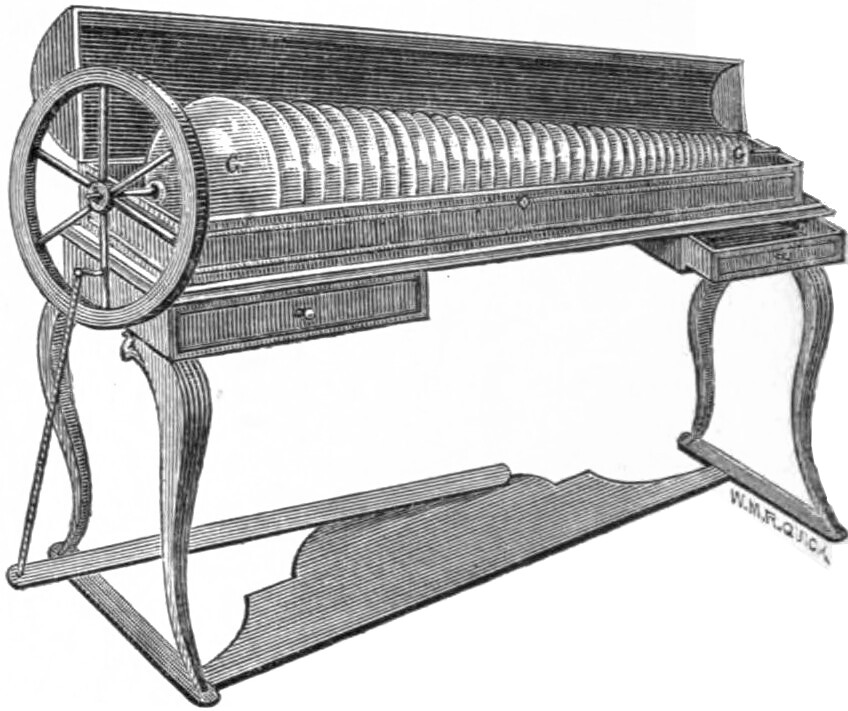

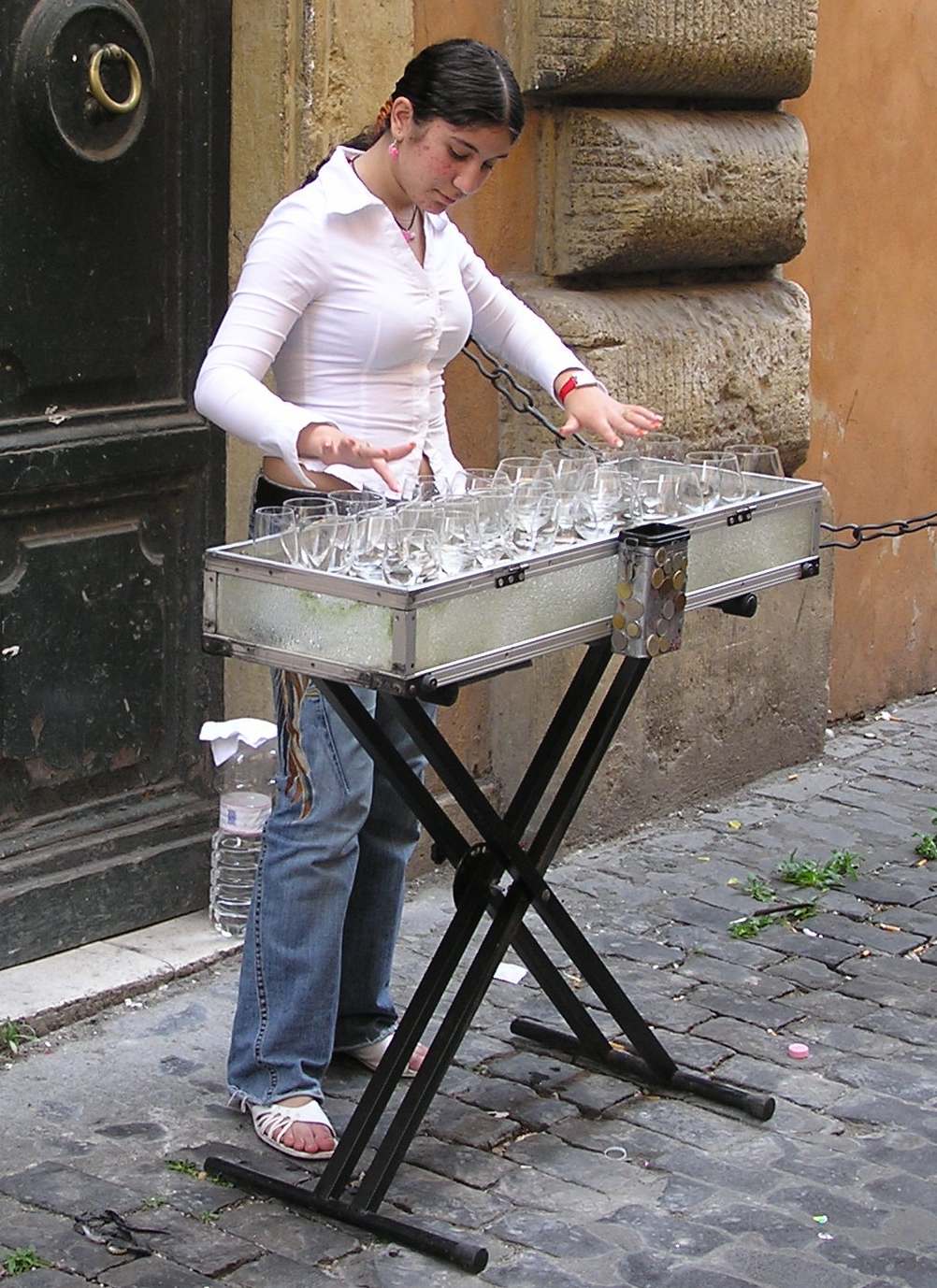


Design and sound
Franklin's version arranges a series of glass cups of graduated diameters on a horizontal spindle so that each bowl corresponds to a different pitch. The spindle is turned (originally by a foot treadle) so the bowls rotate while the player rests one or more wet fingers on the rims to excite vibrations. The resulting timbre is delicate, sustained and bell-like, with a long, clear attack and relatively little percussive noise. Instruments vary in size and tuning; larger bowls yield lower pitches, smaller bowls higher ones.
History and development
Benjamin Franklin devised his concentric-bowl model in the mid-18th century to make the technique more practical and to enable chromatic playing and polyphony. The instrument enjoyed popularity across Europe in the late 1700s and attracted composers and virtuosi. Over the 19th century its use declined as musical fashions changed and mechanical instruments advanced, though it experienced revivals in the 20th century among early-music specialists and experimental musicians.
Repertoire and notable facts
Several composers of the classical era wrote pieces or passages featuring the instrument, most famously Mozart. Performers in the 18th century toured with the armonica, and the instrument was sometimes associated—fairly or not—with uncanny or eerie sounds that gave rise to colorful anecdotes about its effect on listeners. Modern makers and performers have rebuilt instruments with updated materials and hygienic playing aids, and recordings demonstrate its unique color in chamber and solo contexts.
Characteristics and playing technique
- Played by touching wet fingers to rotating glass rims to induce frictional vibration.
- Can sustain notes for long durations, enabling slow dynamic shaping and expressive legato.
- Allows chords and glissandi by using multiple fingers and sliding between bowls.
- Distinct from the glass harp, which uses separate stationary glasses rather than nested, rotating bowls.
Today the glass harmonica remains a distinctive instrument valued for its timbral rarity. It appears in historical performance, contemporary composition, and sound-design contexts where an otherworldly, clear sustained tone is desired.
Related articles
Author
AlegsaOnline.com Glass harmonica (armonica) Leandro Alegsa
URL: https://en.alegsaonline.com/art/39122