
Norwegian campaign (April–June 1940)
Germany's invasion of Norway in spring 1940 that triggered naval and ground battles, Allied intervention, Norwegian exile and a long occupation with an active resistance movement.
Overview
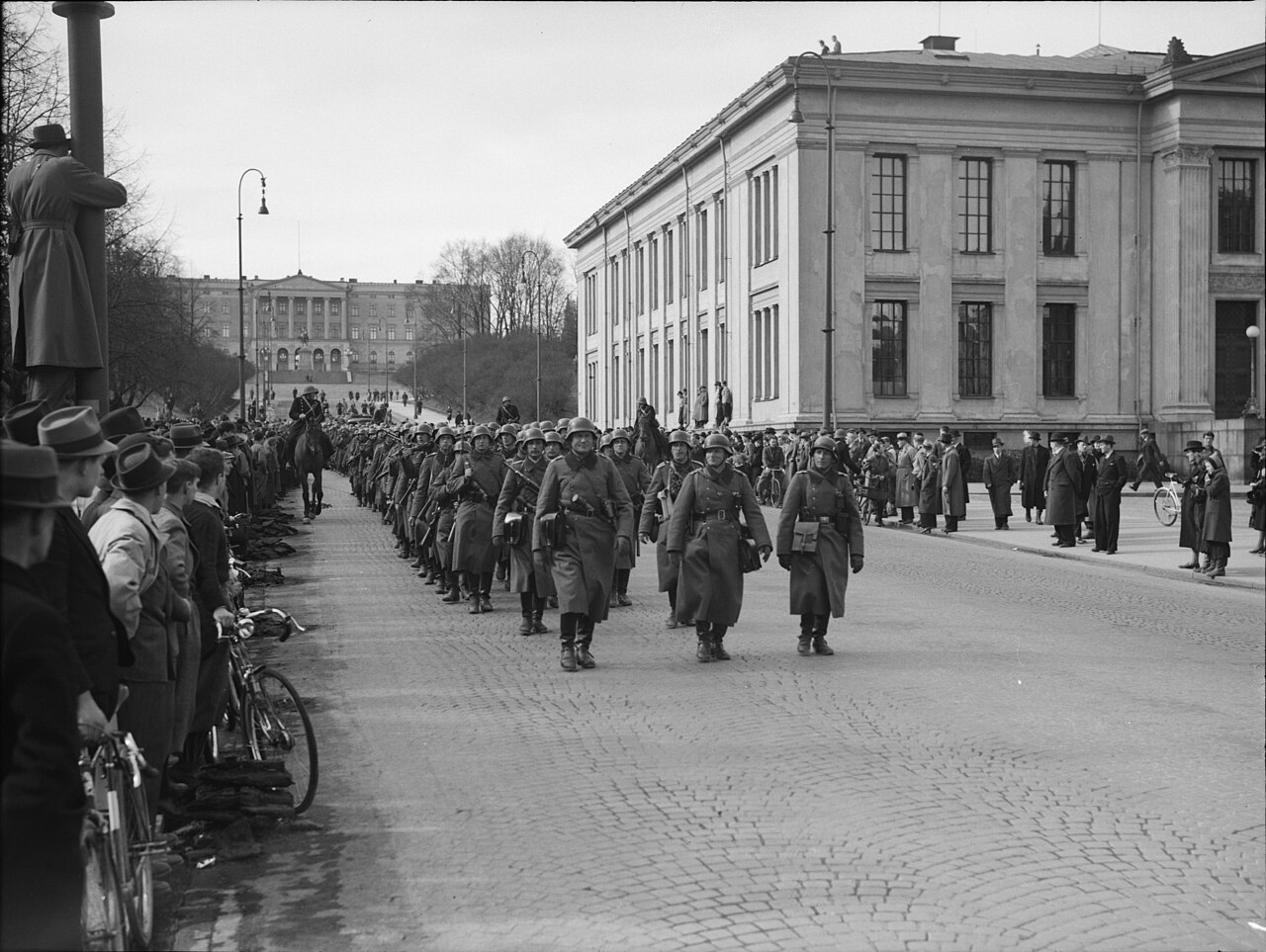
The Norwegian campaign was the German invasion and occupation of Norway in April–June 1940 during World War II. Launched as Operation Weserübung, the assault combined airborne, naval and seaborne landings and aimed to secure strategic bases and shipping routes for Germany. The operation immediately drew in the Allies, particularly the United Kingdom and France, which mounted naval and ground responses to contest German control.
Image gallery
10 Images




Strategic background and objectives
Norway's long coastline, fjords and proximity to northern sea lanes made it strategically important. Control of Norwegian ports affected iron ore shipments from Sweden and provided naval bases for Atlantic operations. Germany sought to deny the Allies these advantages and to protect its own maritime supply lines; the Allies aimed to prevent a German foothold that could threaten Britain and northern shipping.
Course of the campaign
German forces seized key coastal cities and naval bases through rapid amphibious landings and paratroop operations. Major fighting occurred at locations such as Narvik, Trondheim, Bergen and Oslo where infantry, mountain troops and naval squadrons clashed. Allied naval forces intervened, scored several local victories and helped recapture Narvik briefly, but they were unable to sustain large-scale reinforcement and eventually withdrew as the wider situation in western Europe deteriorated.
Government, collaboration and exile
Facing overwhelming German military pressure, the Norwegian royal family and the elected government escaped and established a government-in-exile in London, operating in exile to coordinate diplomacy, merchant shipping and clandestine support to the homeland. Inside Norway, a collaborationist regime attempted to govern under German oversight, creating deep political and social divisions that lasted through the occupation.
Occupation, resistance and outcomes
German forces consolidated control and the country remained occupied for the duration of the war. Many Norwegians refused collaboration and formed organized resistance networks that carried out intelligence work, sabotage and escape assistance for refugees and Allied personnel. Norwegian regular forces and irregular fighters delayed the German advance for several weeks—estimates often cite roughly two months of organized national resistance before full occupation measures were in place—which made the campaign a significant early test of combined operations in the conflict.
Notable engagements and legacy
- Naval clashes and convoy interdiction along the Norwegian coast underscored the importance of sea power.
- Mountain and arctic combat around Narvik emphasized mobility, logistics and cooperation between services.
- The exile government preserved Norwegian sovereignty in international law and maintained armed forces abroad.
The campaign influenced later Allied planning for amphibious and combined-arms operations and left a lasting legacy in Norway's collective memory: a nation occupied but never wholly subdued, with an active underground movement that sustained national identity until liberation. For broader context on the wider conflict and comparisons with other theaters, see further reading and linked overviews on occupation and the Soviet Union campaigns.
Further detailed accounts, unit histories and primary-source materials can be found through specialized histories and archival collections: introductory overviews are available from many general World War II references and national military archives in the countries involved.
Author
AlegsaOnline.com Norwegian campaign (April–June 1940) Leandro Alegsa
URL: https://en.alegsaonline.com/art/38457