
Gerhard Richter: painter of photography, abstraction, and memory
Overview of Gerhard Richter, the German artist known for blurred photo-paintings, large abstractions, glass work and series addressing history and memory.
Overview
Gerhard Richter is a German visual artist whose career spans photography, figurative painting and large-scale abstraction. He was born in Dresden in 1932 and is widely considered one of the most significant contemporary painters to emerge from postwar Germany. Richter moves between modes—creating photo-based paintings, heavily worked abstracts and experimental glass works—and his output has been central to debates about realism, reproduction and the nature of painting. Museums and collectors around the world prize his work, and several pieces have fetched record sums at auction.
Image gallery
8 Images



Style and techniques
Richter is best known for two contrasting approaches. In his so-called photo-paintings he reproduces photographic images in paint, often softening them with a characteristic blur to question the relation between photograph and recollection. In his abstract paintings he employs tools such as large squeegees to drag, layer and scrape pigments, producing dense surfaces that emphasize process and chance. He has also produced works in glass and mixed media, and has used photographic compilations and collages as source material for painted series.
Major themes and works
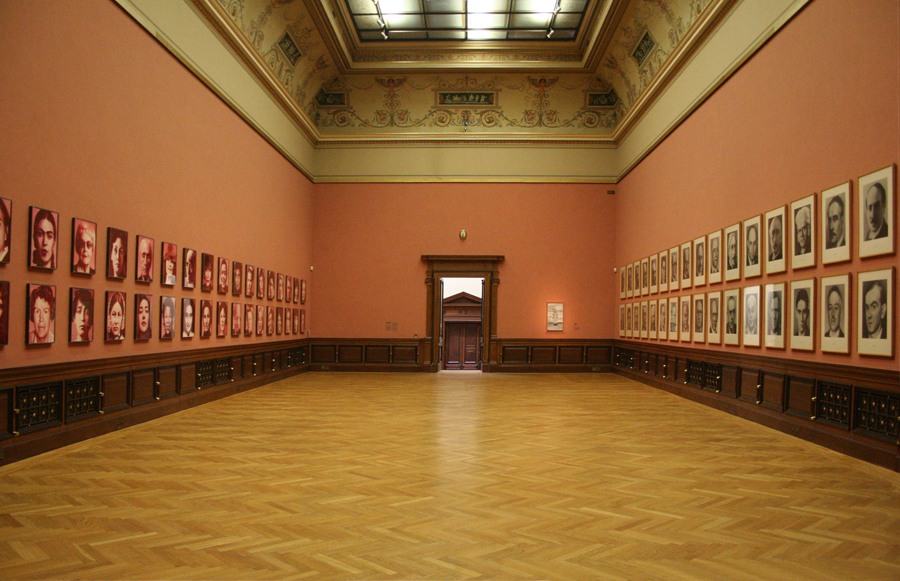
Recurring themes include memory, history and the uneasy relationship between image and reality. Richter’s important projects include a long-running visual archive known as the Atlas, which gathers photographs, sketches and studies, and the series responding to political violence in 1970s Germany. His range encompasses intimate portraits and sweeping abstract canvases, with a persistent concern for how images carry and distort meaning.
Career and influence
Born in Dresden in the era of the Weimar Republic, Richter studied at the Dresden art school and later at the Kunstakademie Düsseldorf, where he also taught and exerted substantial influence on younger artists. His biography includes both East and West German phases; he left Dresden for the West in the early 1960s and established an international reputation through exhibitions in Europe and the United States. The trajectory of his work—moving freely between representation and abstraction—has made him a pivotal figure in late 20th- and early 21st-century art.
Public commissions and legacy
Richter has accepted notable public commissions and his work is held in leading museums. One prominent example is a large colored-glass window commission for a major cathedral, reflecting his engagement with public and sacred spaces. His practice continues to stimulate discussion about artistic technique, historical memory and the market for modern art.
Further reading and links
Related articles
Author
AlegsaOnline.com Gerhard Richter: painter of photography, abstraction, and memory Leandro Alegsa
URL: https://en.alegsaonline.com/art/38432
Sources
- gerhard-richter.com : "Early Years » Biography » Gerhard Richter"