
General Cepeda Municipality
General Cepeda is a municipality in the state of Coahuila, northeastern Mexico, covering 3,517 km² with a small, mostly rural population; the town of General Cepeda is the municipal seat.
General Cepeda is one of the 38 municipalities of the state of Coahuila, located in northeastern Mexico. The municipal seat shares the same name, General Cepeda, and the territory administered by the local government covers an area of 3,517 km². Like many municipalities in the region, it combines a central town with outlying villages and rural land.
Image gallery
1 Image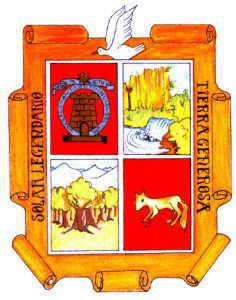
Characteristics
The municipality is characterized by a sparse population and wide expanses of plateau and semi-arid landscapes typical of much of northern Mexico. Based on the 2005 count, the total population was 11,284, yielding a low population density (roughly 3 inhabitants per square kilometre using those figures). Local administration handles public services, land-use planning and community programs for the town and smaller settlements.
Economy and land use
Economic activity in General Cepeda is primarily local and rural in nature. Agriculture and livestock raising are important for subsistence and regional markets, while small-scale commerce and services concentrate in the municipal seat. The natural environment supports grazing and hardy crops adapted to dry conditions; some communities also rely on remittances and seasonal labor.
History and development
The municipality takes its name from a military figure known as General Cepeda. Settlement in the area grew around ranching and local trade; municipal boundaries and institutions evolved through the 19th and 20th centuries in line with state-level administrative organization. The town and surrounding communities preserve local traditions and civic institutions typical of rural Coahuila.
Notable facts and governance
- Administrative role: the municipal government is responsible for basic services, public works and local regulations within its territory.
- Size and population: covers 3,517 km², with a small, dispersed population (11,284 in 2005).
- Environment: semi-arid plateau conditions influence agriculture and settlement patterns.
Visitors and researchers looking for detailed, current statistics or municipal plans should consult official state and municipal publications or the corresponding government websites for up-to-date demographic and economic data. The municipality remains an example of rural administration in northern Mexico, combining a central administrative town with wide areas of agricultural and grazing land.
Related articles
Author
AlegsaOnline.com General Cepeda Municipality Leandro Alegsa
URL: https://en.alegsaonline.com/art/37937
Sources
- benneforcolorado.com : "General Cepeda"