
Analog television broadcasting
Overview of analog television: how it transmits moving pictures and sound using continuous signals, its technical features and standards, historical development, and the global shift to digital.
Analog television is a method of distributing moving images and sound by encoding picture brightness, color and audio into continuous electrical signals. Traditional broadcasts carried these signals over the air or through cable systems. Early descriptions of the transmitted waveform are often called analog signals. Before the widespread adoption of digital television, broadcasters worldwide relied on analog methods delivered either wirelessly via terrestrial transmitters (over-the-air) or through wired networks such as cable television.
Image gallery
10 Images


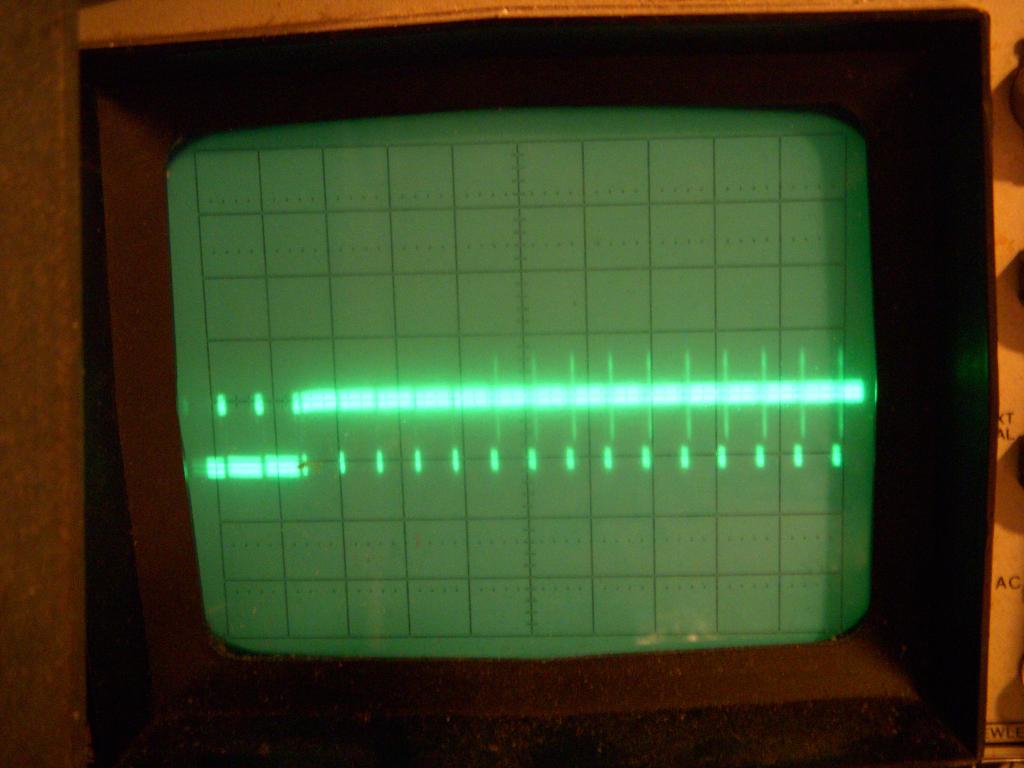


Technical characteristics
Analog television encodes video and audio differently: video information is typically carried by amplitude modulation of a video carrier, while the accompanying audio uses frequency modulation. Many systems use interlaced scanning—displaying alternating lines in successive fields—to reduce flicker with limited bandwidth. Several regional standards evolved to define frame rates, resolution, and color encoding; the most widely known are NTSC, PAL, and SECAM. These standards determined compatibility between transmitters and receivers and influenced picture quality and color reproduction.
History and development
The technology of analog television grew from experimental mechanical scanning systems in the early 20th century to fully electronic systems based on cathode-ray tube (CRT) displays. Over decades broadcasters introduced wider coverage, higher fidelity audio, and color. Public and commercial broadcasting networks established national standards, and consumer television sets standardized around those formats. While CRTs and analog tuners dominated the 20th century, later decades saw gradual improvements in transmission and reception techniques.
Uses, examples, and importance
Analog television served as the primary medium for mass news, entertainment, and education for most of the 20th century. It enabled national networks, local stations, and community broadcasters to reach audiences with live programming. Even after the advent of digital systems, analog infrastructure remained in use for specialty services, backup links, and in regions where digital migration lagged. Consumer devices such as vintage televisions, analog video cameras, and RF modulated video sources remain in use for hobbyist and archival purposes.
Transition to digital and regulatory milestones
Starting in the late 20th and early 21st centuries, many countries planned and executed analog switch-offs to free spectrum and provide higher-quality digital services. Digital systems offer more efficient use of spectrum, better picture and sound quality, and support for high-definition and additional channels. For example, in several jurisdictions full-power analog broadcasting was largely discontinued in the 2000s; in the United States, full-power stations completed their transition to digital service in 2009. Low-power and specialized stations followed later, with regulatory deadlines such as the one set for low-power stations on July 13, 2021.
Differences from digital broadcasting and notable facts
Analog signals degrade gracefully with noise: viewers see increasing static, ghosting, or "snow" as reception worsens. Digital transmissions, by contrast, tend to provide a clear picture until reception falls below a threshold and the signal drops out completely. Analog broadcasts also require proportionally more radio-spectrum per channel and are less flexible for multicasting and data services. The global migration to digital has enabled spectrum reallocation for mobile broadband and emergency communications, but it has also required consumers to update receivers or use converter boxes.
- Common modulation: AM for video, FM for audio.
- Typical standards: NTSC, PAL, SECAM.
- Delivery modes: terrestrial (wireless) and cable (wired).
- Key resources and further reading: technical references and regulatory sites (signal basics, digital transition).
Analog television remains an important subject in broadcast history and technology studies. Its legacy influences modern video standards, signal-processing concepts, and the regulatory decisions that shaped the contemporary media landscape.
Related articles
Author
AlegsaOnline.com Analog television broadcasting Leandro Alegsa
URL: https://en.alegsaonline.com/art/3754
Sources
- stakeholders.ofcom.org.uk : "Television technical performance code"