
Frederick Franklin (1840–1873), U.S. Navy sailor and Medal of Honor recipient
Frederick Franklin was a United States Navy sailor who received the Medal of Honor for his actions during the 1871 American expedition to Korea. His life and service are sparsely documented.
Frederick Franklin (1840–1873) served in the United States Navy during the mid‑19th century. Surviving records identify him principally for his role in the 1871 American expedition to Korea, commonly called the Korean Campaign of 1871, and for receiving the Medal of Honor, the United States' highest military decoration.
Image gallery
3 Images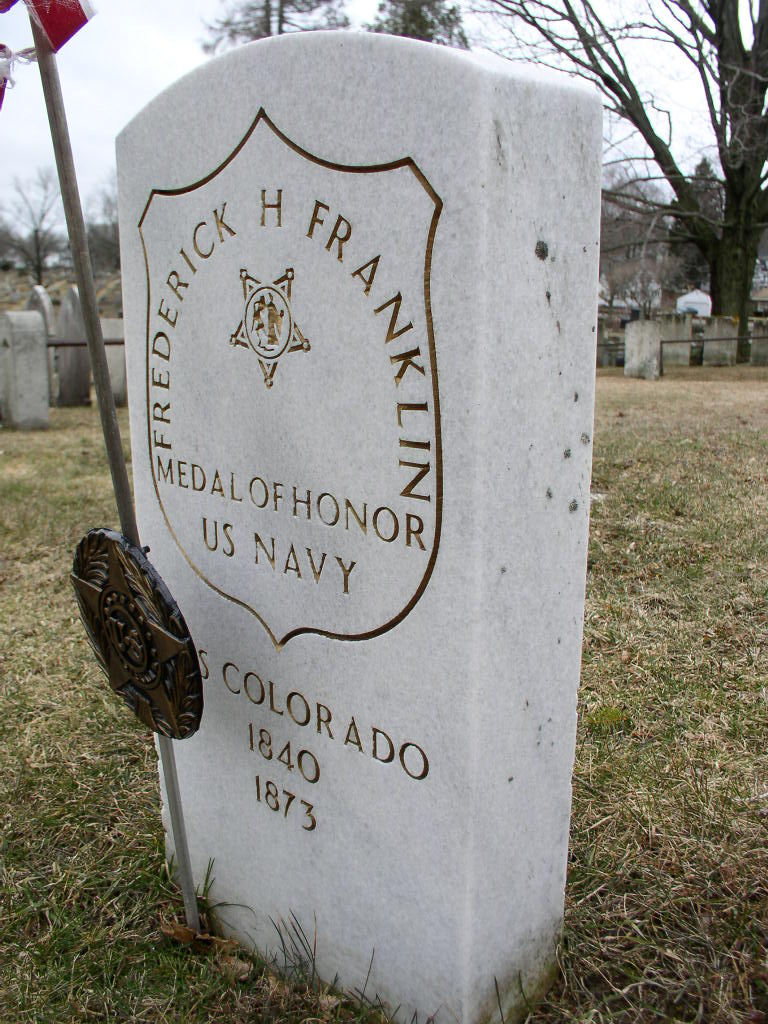


Overview
Details about Franklin’s early life, enlistment, and post‑service years are limited. What is documented is his participation in a naval operation off the Korean peninsula in June 1871, when U.S. forces engaged Korean fortifications and troops in a show of force intended to protect American personnel and assert diplomatic demands.
The 1871 Korean Campaign
The expedition—sent by the U.S. Asiatic Squadron—conducted surveys and later landed a force to attack defensive batteries on Ganghwa Island after hostile incidents. The engagement produced acts of conspicuous bravery by sailors and Marines; several participants were awarded the Medal of Honor for their conduct during the assault.
Medal of Honor and recognition
Franklin’s decoration places him among the small group of 19th‑century servicemen recognized for that operation. Contemporary citations for recipients commonly noted "gallant and meritorious conduct" under fire. The award to Franklin is an enduring record of his actions even though many personal particulars are not preserved in surviving accounts.
Significance and legacy
The 1871 expedition marked one of the first direct military contacts between the United States and Korea and is remembered for both its immediate tactical outcomes and its diplomatic implications. Recipients like Franklin are often cited in studies of early U.S. naval operations in East Asia and the history of American military decorations.
Notable facts
- Franklin lived from 1840 to 1873; biographical material beyond his service record is scarce.
- The campaign resulted in multiple Medals of Honor awarded to sailors and Marines for bravery.
- Primary sources about many participants are fragmentary; institutional records preserve the basic facts of award and service.
Related articles
Author
AlegsaOnline.com Frederick Franklin (1840–1873), U.S. Navy sailor and Medal of Honor recipient Leandro Alegsa
URL: https://en.alegsaonline.com/art/36413
Sources
- history.army.mil : "Medal of Honor recipients"
- findagrave.com : "Frederick Franklin"
- homeofheroes.com : "Home of Heroes"