
Former subdivisions of Pakistan
Overview of political and administrative units that once existed within Pakistan, including princely states, provinces and territories, major reforms like the One Unit scheme, and later reorganizations.
Overview
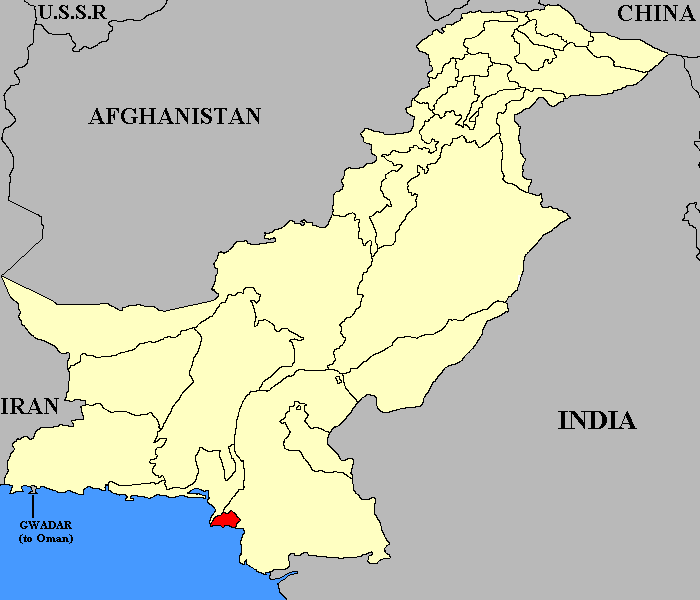
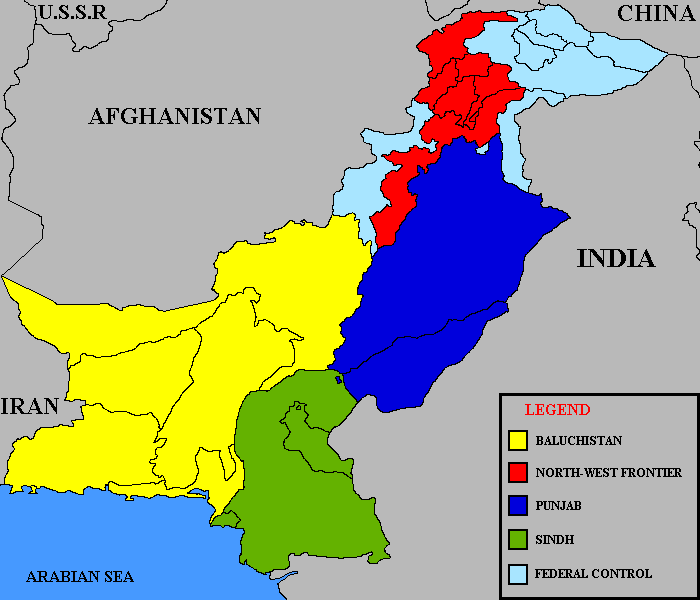
From its creation in 1947 Pakistan inherited a mix of provinces, princely states and loosely administered territories. Over the next decades the map was repeatedly redrawn: some units merged, others were renamed or abolished, and new administrative categories were created. Many of the better-known "former" subdivisions were most relevant between 1947 and the mid-1970s, although changes continued into the 21st century.
Image gallery
10 Images






Typical types of former units
- Princely states — autonomous monarchies that acceded to Pakistan after independence and were gradually integrated into provincial structures (examples include Bahawalpur, Khairpur, Kalat and a number of smaller hill states).
- Provinces and merged units — the most notable created entity was "West Pakistan", formed by a One Unit policy that combined the provinces and princely territories of the western wing into a single province.
- Territories — special areas administered directly by the federal government, such as the Federally Administered Tribal Areas (FATA) and the former Northern Areas, which later received new status.
History and major reforms
After independence the country had provincial governments alongside many acceding princely states. In 1955 a centralizing reform known as the One Unit scheme merged the western provinces and some princely territories into a single province called West Pakistan; the eastern wing was styled East Pakistan. The One Unit arrangement was later reversed and the earlier provinces were restored. The secession of East Pakistan in 1971 produced the independent state of Bangladesh and left Pakistan with a revised internal map.
Later reorganizations and legacy
Subsequent decades saw further adjustments: the Northern Areas were reconstituted with different administrative arrangements, and the Federally Administered Tribal Areas were merged into a neighbouring province in the 2010s. Many former subdivisions remain important in politics and identity because historical boundaries, former princely rulerships and administrative decisions have shaped local loyalties and development patterns.
Notable examples and distinctions
- East Pakistan — the eastern wing that became Bangladesh after 1971.
- West Pakistan — the One Unit province that briefly replaced multiple western provinces.
- Princely states such as Bahawalpur, Khairpur and Kalat — integrated into provincial systems in the years after independence.
- FATA and the Northern Areas — formerly separate federal territories later given new status.
For a concise official listing and historical outline see further reading. Understanding these former subdivisions helps explain contemporary administrative arrangements and regional identities within Pakistan.
Related articles
Author
AlegsaOnline.com Former subdivisions of Pakistan Leandro Alegsa
URL: https://en.alegsaonline.com/art/35686