
Ford Flex — full-size crossover with distinctive, boxy design
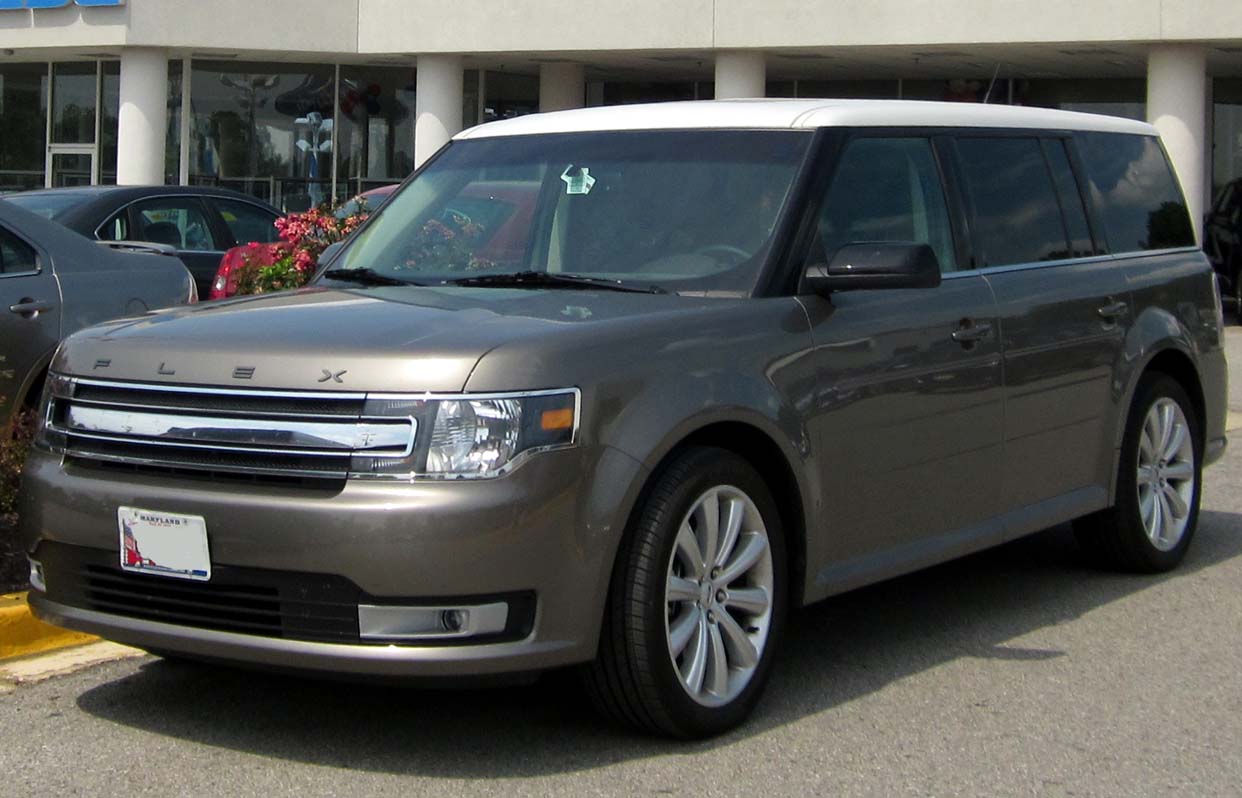
The Ford Flex is a full-size, three‑row crossover produced by Ford from the 2009 model year through 2019, noted for its boxy styling, roomy interior, and optional all‑wheel drive and turbocharged engines.
The Ford Flex is a full‑size crossover SUV introduced by Ford Motor Company and sold in North America as a three‑row family vehicle. Launched publicly at the 2007 New York International Auto Show, the Flex went on sale for the 2009 model year. It is best known for its slab‑sided, low‑roof profile and horizontal design cues that set it apart from more rounded rivals.
Image gallery
7 Images




Design and characteristics
Externally the Flex emphasizes straight lines, a long roof, and a broad stance, producing near‑station‑wagon proportions with SUV practicality. The interior is organized around passenger comfort and cargo flexibility: typical configurations include seating for six or seven with second‑row captain's chairs or a bench, generous headroom, and a flat load floor when the third row is folded. The Flex used a unibody chassis rather than a body‑on‑frame layout common to full‑size SUVs.
Powertrain, trim and features
- Engine and drive: gasoline V6 engines were typical, with later availability of turbocharged variants and optional all‑wheel drive for improved traction.
- Transmission: automatic transmissions were standard, tuned for smooth everyday driving and towing when equipped.
- Trim levels: the Flex was offered in a range of trims over its life, with progressive levels of comfort, technology and exterior detailing.
History and production
Styled from the Fairlane concept and revealed at a major auto show, the Flex replaced several earlier Ford/mercury minivan and crossover entries and took over much of their showroom space. It began dealer deliveries in mid‑2008 as a 2009 model and received a mid‑cycle refresh for the 2013 model year that refined its front and rear fascias, interiors and technology. Production of the Flex ended after the 2019 model year as Ford streamlined its passenger car and crossover lineup.
During its run the Flex sat alongside other Ford models and filled a niche for buyers seeking three‑row seating without a tall SUV profile. Its packaging and ride quality appealed to families and those who prioritized interior space and a highway‑oriented ride over off‑road capability. It was sometimes chosen as an alternative to traditional minivans and boxy SUVs.
Legacy and notable facts
- The Flex is often remembered for its distinctive, retro‑modern appearance and horizontally banded grille and roof accents.
- It replaced the Freestar, Mercury Monterey and Ford Taurus X in Ford's lineup and provided a different approach to full‑size family transport.
- Although never a high‑volume seller, the Flex developed a loyal following and is recognized for its practicality and roomy interior.
For further reading about the model’s debut and timeline see contemporary coverage of the New York show and manufacturer information: 2007 debut coverage, lineage and replacements, market positioning, and model year updates.
Related articles
Author
AlegsaOnline.com Ford Flex — full-size crossover with distinctive, boxy design Leandro Alegsa
URL: https://en.alegsaonline.com/art/35566