
Flagler Beach, Florida
A compact Atlantic coastal city on Florida's east coast, spanning Flagler and Volusia counties; known for its beaches, fishing, small downtown and seaside community character.
Overview
Flagler Beach is a small coastal city on the Atlantic shore of Florida in the United States. It occupies a barrier island and a short stretch of mainland, and its municipal area extends into both Flagler County and Volusia County. The city is widely regarded for its relaxed, small-town atmosphere, public beaches, and a seafront pier that serves as a local landmark.
Image gallery
1 Image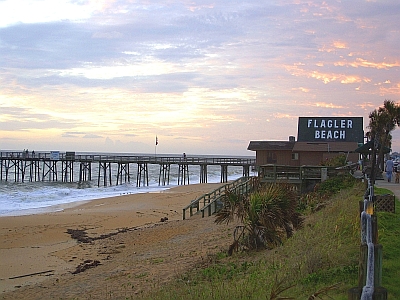
Characteristics and layout
The community centers along a narrow coastal strip dominated by sand dunes, beach access points and a low-rise commercial corridor. Residential neighborhoods, local shops, galleries and restaurants sit a short walk or drive from the shore. The Atlantic shoreline provides surfing and fishing opportunities, while inland areas include marshes and residential developments. State road A1A and a few arterial streets provide the principal access from neighboring cities.
History and development
Flagler Beach grew from early 20th-century coastal development influenced by Florida's railroad-driven expansion. Its name reflects the broader regional legacy of Henry M. Flagler and the Florida East Coast Railway, which spurred tourism and settlement along the Atlantic coast. Over time the town evolved from a modest fishing and resort community into a year-round municipality with a focus on preserving its seaside character.
Attractions and activities
- Public beaches and a beachfront pier popular with anglers and visitors
- Surfing, paddle sports and shore fishing
- Small downtown shops, cafés, art galleries and seasonal events
- Nearby state parks and natural areas for birdwatching and hiking
Environment and conservation
Like many Atlantic coast communities, Flagler Beach balances recreation and development with coastal conservation. Dune restoration, beach nourishment and measures to protect sea turtle nesting sites are part of local environmental efforts. The city also plans for storm resilience and shoreline management in response to hurricanes and chronic erosion pressures.
Community and significance
Flagler Beach retains a reputation as a quieter alternative to larger resort cities, attracting residents and visitors who value outdoor recreation, small businesses and a community-oriented lifestyle. Its position between larger urban centers means it serves both local needs and seasonal tourism, while maintaining a distinct coastal identity rooted in fishing, surfing and conservation.
For official or practical information, local government pages and tourism resources provide schedules, ordinances and visitor guidance: consult municipal or county links for up-to-date services and notices.
Related articles
Author
AlegsaOnline.com Flagler Beach, Florida Leandro Alegsa
URL: https://en.alegsaonline.com/art/34973