
Flag of Washington (U.S. state)
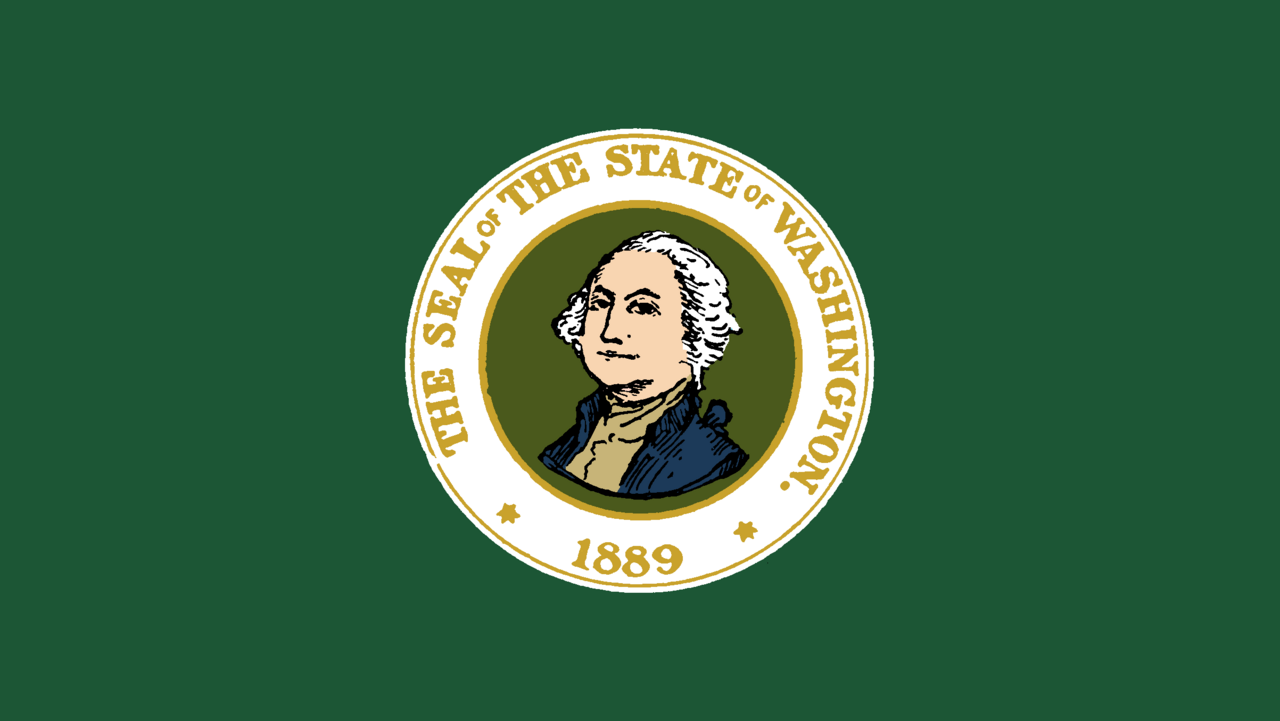
The flag of Washington displays the state seal—with a portrait of George Washington—on a dark green field. A gold fringe is sometimes used for ceremonial display; it is the only U.S. state flag to depict a president.
Overview
The flag of Washington is the official banner of the U.S. state of Washington. Its most distinctive element is the state seal, which bears a portrait of George Washington, placed on a deep green field. The design is unique among the flags of U.S. states: it is the only state flag to feature the likeness of a U.S. president and the only one whose primary background color is green. A gold fringe is often added when the flag is used indoors or in ceremonial contexts.
Image gallery
6 Images




Design and characteristics
The flag features a circular state seal near the center. The seal shows a likeness of George Washington surrounded by wording that identifies the state. The field color is commonly described as dark or evergreen green, a color associated with the state’s forests and its nickname, the Evergreen State. The exact shade of green and the size of the seal can vary slightly among produced flags; some are made for outdoor display, others for indoor ceremonial use with a fringe.
- Central motif: state seal with portrait of George Washington.
- Field color: dark or evergreen green.
- Fringe: optional gold fringe for ceremonial indoor use.
- Variations: slight differences in seal detail, color shade and proportions.
History and legal status
The seal pictured on the flag dates to the period when Washington achieved statehood in the late 19th century. The flag itself was adopted in the early 20th century to represent the state at public buildings and official events. The flag’s basic composition — the seal on a green field — has remained consistent, though manufactured examples differ in precise colors and in the level of detail reproduced on the seal. The design and use of the flag are defined by state law and administrative guidelines that govern official displays.
Symbolism, use and protocol
The green field commonly symbolizes the state’s abundant evergreens and lush landscape; the portrait of George Washington honors the state’s namesake. The flag is displayed at the state capitol, at many government buildings, and during civic ceremonies. In joint displays with the national flag, federal flag etiquette gives precedence to the United States flag. The gold fringe is traditionally reserved for indoor and ceremonial flags and is not required for ordinary outdoor display.
Reception and discussion
Among vexillologists and design critics, the Washington flag is notable for its distinctiveness but also for relying on a detailed seal, which can be difficult to read at a distance. Some commentators prefer simpler, bolder flag designs that are more legible and recognizable from afar, while others value the historical and civic symbolism embodied in the seal and portrait. Occasional discussions about alternative or simplified designs have appeared in public discourse, though the traditional flag remains in official use.
Related articles
Author
AlegsaOnline.com Flag of Washington (U.S. state) Leandro Alegsa
URL: https://en.alegsaonline.com/art/34962