
Flag of Angola
The national flag of Angola: design, symbolism, history since independence in 1975, official use, and debates over its emblem and meaning.
The national flag of Angola was officially adopted on November 11, 1975, at the moment of independence from Portugal. Its basic design is a simple horizontal bicolor: an upper red half and a lower black half. Centered across the dividing line is a yellow emblem composed of a half gear, a machete and a star, rendered in a single color and positioned like a crest.
Image gallery
2 Images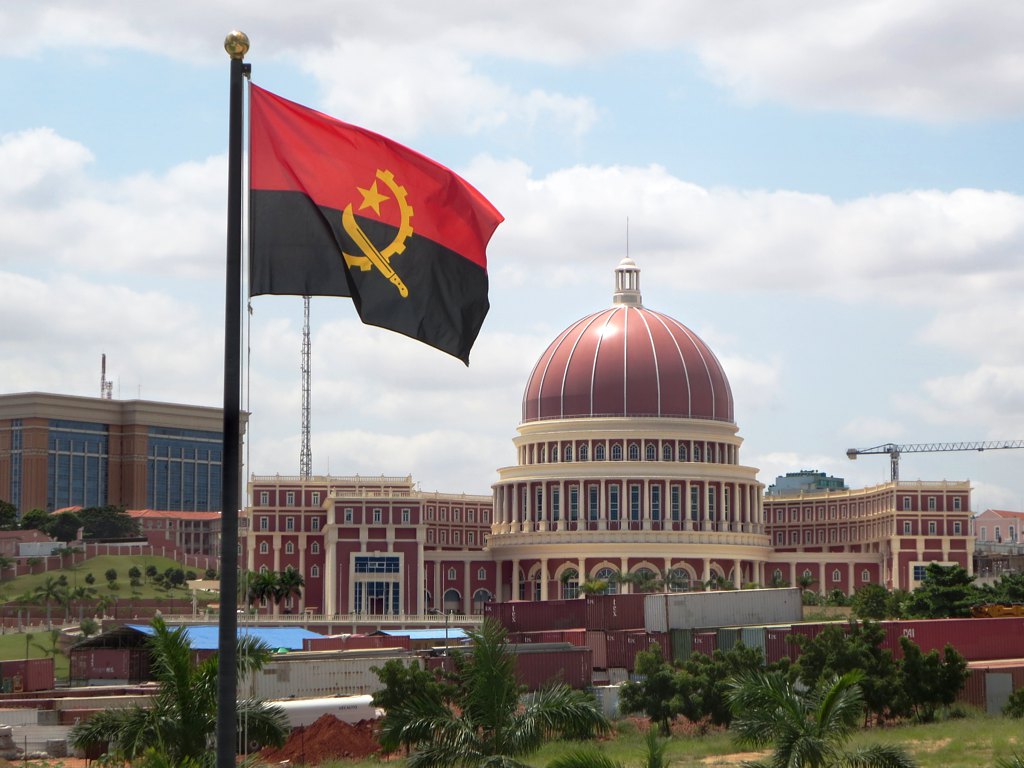

Design and symbolism
The red and black fields are commonly interpreted in political and historical terms: red represents the blood shed during the struggle for independence, and black denotes the African continent or the Angolan people. The yellow emblem draws on industrial and revolutionary imagery. The half gear is associated with industrial workers, the machete (or cutlass) with agricultural labor and the armed struggle, and the star echoes international socialist iconography. Together the elements are intended to signify unity between workers and peasants and a revolutionary heritage.
Historical context
The flag’s look reflects the political landscape at independence. The ruling movement at the time adopted symbolism that resonated with socialist and anti-colonial movements worldwide. While the horizontal red-and-black bicolor was already associated with the leading liberation party, the added emblem was chosen to represent the new state’s aspirations and social foundations as it emerged from colonial rule in 1975.
Use, protocol and variations
The flag is used at government buildings, public ceremonies and national holidays and serves as the principal national emblem abroad. As with many countries, there are alternative standards and ensigns for military, naval or presidential use, but the red-black flag with the yellow emblem is the widely recognized national banner. For official publications and government statements see official information.
Discussion and notable facts
The flag has been the subject of occasional public debate. Some critics point to its overtly revolutionary imagery and the association with one political movement, and there have been proposals to modify the design to emphasize national unity or different themes such as natural wealth or cultural motifs. Supporters argue that its imagery captures a formative period of Angolan history and identity. Visually, the flag stands out among national flags for combining industrial, agricultural and star motifs in a single, stylized emblem.
- Colors: red (upper), black (lower).
- Emblem: yellow half gear, machete, and star.
- Adopted: November 11, 1975 (independence).
Author
AlegsaOnline.com Flag of Angola Leandro Alegsa
URL: https://en.alegsaonline.com/art/34725