
American Graffiti (1973 film)
1973 coming-of-age film directed by George Lucas, set on one night in 1962 Modesto. Follows teenagers cruising and listening to Wolfman Jack; famous for its period soundtrack and ensemble cast.
American Graffiti is a 1973 American coming-of-age film directed by George Lucas. The story takes place over a single summer night in August 1962 in Modesto, California, and centers on several teenagers as they drive through town, listen to the radio DJ Wolfman Jack, and face decisions about their futures. The movie captures the habits, music and car culture of the early 1960s while dramatizing the moment when adolescence gives way to adult life.
Image gallery
2 Images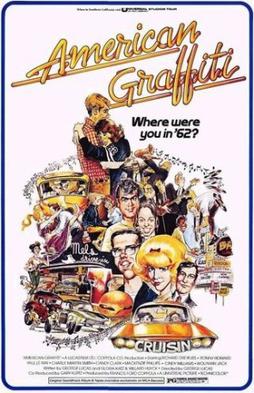

Production and cinematic style
The film was Lucas's second feature following an earlier science-fiction project, and it was produced on a modest budget with an emphasis on naturalistic performances and location shooting. Lucas and his collaborators used largely diegetic music—songs that the characters actually hear on the radio—to create a continuous period atmosphere. The straightforward, episodic structure interweaves several character arcs rather than following a single protagonist, giving the film an ensemble feel and a slice-of-life quality. For more on the film's production, see production details.
Cast and characters
The ensemble cast includes young actors who later became better known. Key players are Richard Dreyfuss, Ron Howard, Paul Le Mat and Cindy Williams; Harrison Ford appears in a supporting role. Each character represents a different response to the end of adolescence—some choose to leave town, others stay, and a few are uncertain—so the narrative reads as a set of linked vignettes about choice and identity. The group dynamics and small personal crises are central to the film's emotional impact and realism; see notes on the film's teen characters.
Themes, soundtrack and atmosphere
At its core, American Graffiti is about transition: the closing of one era and the beginning of another. The period soundtrack—rock and pop hits from the late 1950s and early 1960s—does much of the storytelling work, evoking cultural memory and giving the film an unmistakable sense of time and place. The constantly present radio voice and pack of cruising cars make music and automobiles almost characters in their own right. Critics and viewers often describe the film as both nostalgic and surprisingly clear-eyed about the anxieties of growing up; for its placement in the coming-of-age tradition, it remains frequently cited.
Legacy and notable facts
American Graffiti was a commercial and critical success that raised George Lucas's profile and helped launch or accelerate the careers of several actors. Its portrayal of youth culture and its use of an era-specific soundtrack influenced later films that aim to recreate a past decade through music and detail. The presence of radio personality Wolfman Jack as a guiding off-screen figure and the film's affectionate but unsentimental tone are frequently remarked upon.
- Setting: one night in August 1962 in Modesto.
- Style: ensemble storytelling, emphasis on diegetic period music.
- Notable cameo: voice/radio presence by Wolfman Jack that frames scenes.
- Director: early major work from George Lucas; see also production history.
Because of its cultural resonance and approachable focus on everyday choices, American Graffiti continues to be discussed in surveys of American cinema as an influential example of nostalgia-driven filmmaking and as a landmark in the careers of its director and cast.
Tags
Related articles
Author
AlegsaOnline.com American Graffiti (1973 film) Leandro Alegsa
URL: https://en.alegsaonline.com/art/3413