
Ferruccio Valcareggi
Italian football midfielder and coach (1919–2005), manager of Italy 1966–1974; Euro 1968 winner and 1970 World Cup finalist known for the 'staffetta' tactic and long influence on Italian football.
Ferruccio Valcareggi (12 February 1919 — 2 November 2005) was an Italian footballer and coach whose career spanned playing and management roles across Italian football. He is best known as the head coach of the Italy national team from 1966 to 1974, when his side won the 1968 European Championship and reached the final of the 1970 FIFA World Cup.
Image gallery
3 Images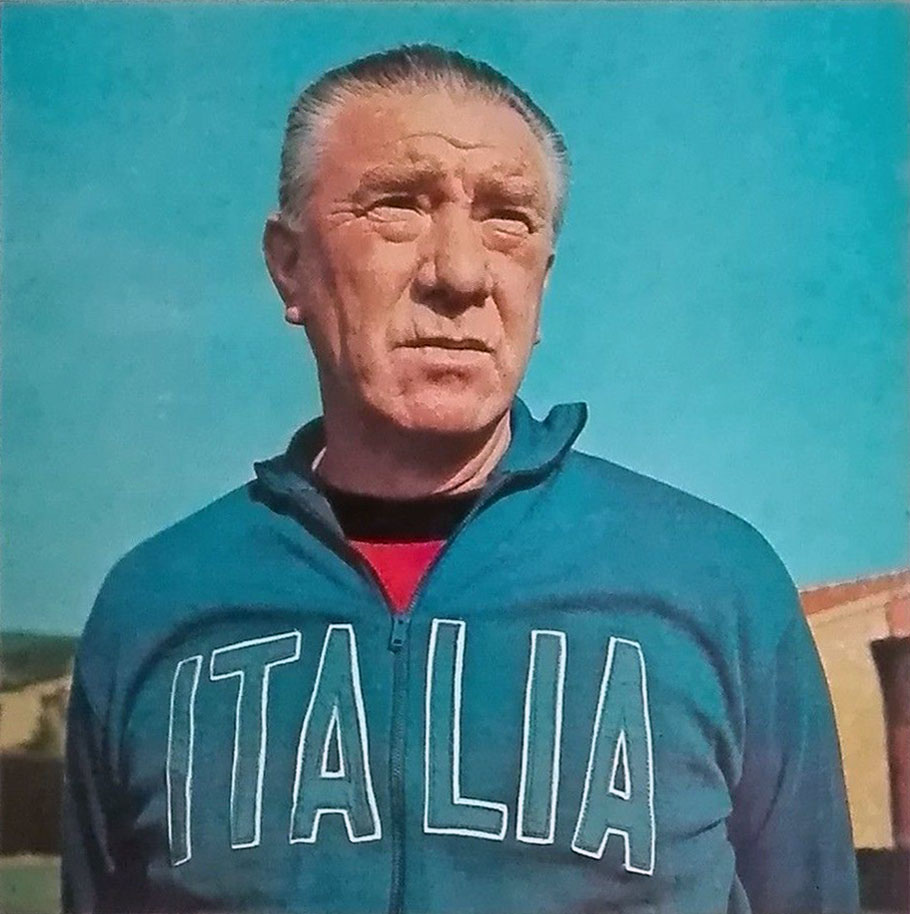


Playing career
Valcareggi began his football life as a midfielder, playing professionally in Italy before and after the Second World War. As a player he was regarded for his reading of the game and technical understanding, qualities that later shaped his work as a coach. His on-field experience in Italy's top divisions provided a foundation for a lengthy transition into management.
Managerial career and achievements
After retiring as a player Valcareggi took up coaching and worked with several Italian clubs before being appointed manager of the national team in 1966. Under his leadership Italy won the 1968 UEFA European Championship — the country's first major international title — and progressed to the final of the 1970 World Cup, where they were defeated by a legendary Brazil side.
- Head coach of Italy (1966–1974)
- UEFA European Championship: 1968 (winner)
- FIFA World Cup: 1970 (runner-up)
Style, controversies and legacy
Valcareggi is often remembered for his tactical pragmatism and for the controversial "staffetta" (relay) approach in which he alternated two elite playmakers to try to balance team needs. This choice, and later failure to qualify for the 1974 World Cup, attracted criticism and eventually ended his national-team tenure. Nevertheless, his successes in 1968 and 1970 left a lasting mark on Italian football, influencing subsequent coaches and earning him recognition as an important figure in Italy's football history.
For more on his life and career see a contemporary profile: birth and early years, an obituary and retrospective: death notice, and general background on Italian football during his era: period overview.
Related articles
Author
AlegsaOnline.com Ferruccio Valcareggi Leandro Alegsa
URL: https://en.alegsaonline.com/art/34095
Sources
- espnfc.com : "Former Italy coach Valcareggi dies"