
Fast chess: rapid, blitz and other short time controls
Fast chess refers to games played with significantly shorter time controls than classical chess, including rapid, blitz and bullet; it emphasizes speed, intuition and time management.
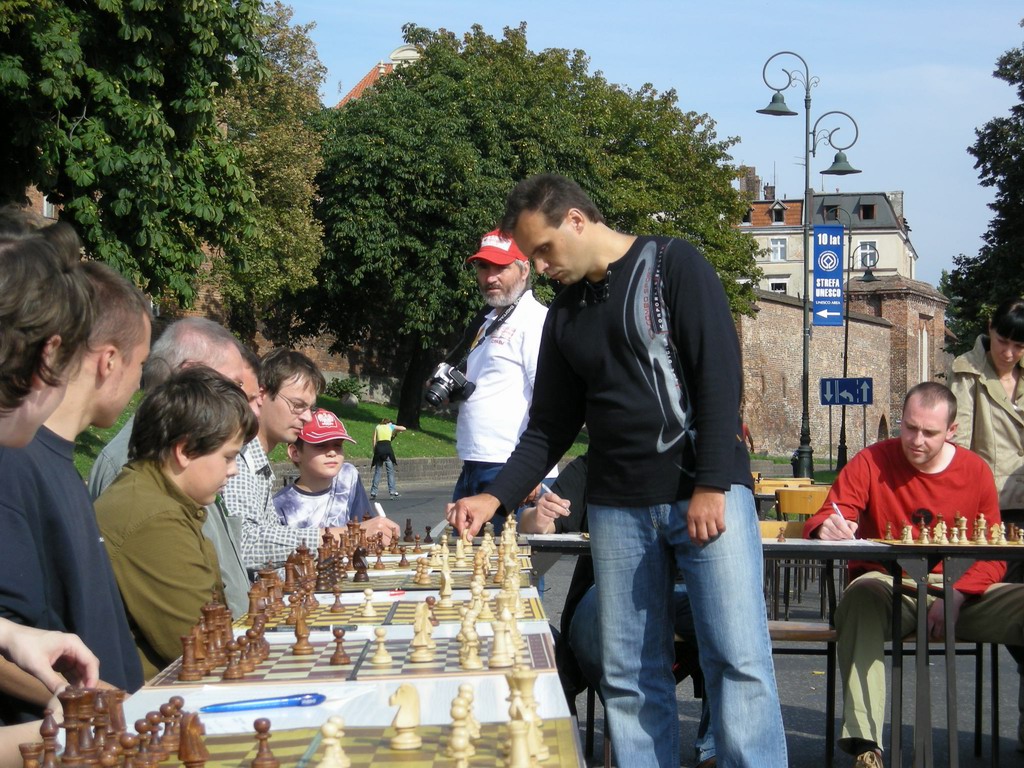
Fast chess describes forms of the game in which each player has far less thinking time than in classical chess. Games are governed by a chess clock and are decided either by checkmate or by one player running out of time. Because play is quicker, decisions rely more on pattern recognition and practical judgment than on extensive calculation.
Image gallery
10 Images





Common categories and time controls
Organizers and federations distinguish several categories. Under international rules, "rapid" denotes games longer than very short blitz sessions but shorter than classical events, while "blitz" refers to quicker games. Outside official definitions, "bullet" and "lightning" are informal labels for extremely fast games. Typical modern examples include 15+10 (fifteen minutes per side with a ten-second increment), 5+0 (five minutes, no increment), 3+2 and 1+0.
Clock formats and timing rules
Fast chess uses a variety of timing mechanisms. A fixed time control gives each player a single countdown. An increment (often called Fischer increment) adds a small amount after each move; a delay (Bronstein delay) postpones the countdown for a short interval at each move. Less common formats include hourglass clocks and special tie-break timings such as armageddon, where one side has more time but must win.
Rules and adjudication
Most standard chess rules still apply: legal moves, checkmate, stalemate, threefold repetition and the fifty-move rule. A player whose clock reaches zero ordinarily loses on time, unless the opponent lacks any possible mating material. Rapid and blitz events may use additional arbitration rules for illegal moves or flag fall; online platforms add procedures for disconnections and forfeits.
History and context
Speed chess evolved from casual play in clubs and cafés into organized competition as mechanical and later digital clocks allowed reliable timing. The increased popularity of the internet and dedicated chess servers has accelerated interest, making very fast formats a staple of training, broadcasts and social play. Formal world and national championships now include rapid and blitz titles.
Why players and audiences like it
- It produces decisive, dynamic games with frequent tactical fireworks.
- It is well suited to online play, spectator streaming and quick tournaments.
- Players use it to sharpen intuition, opening recall and time management skills.
For an introduction to rules, event organization and official definitions, see further information.
Related articles
Author
AlegsaOnline.com Fast chess: rapid, blitz and other short time controls Leandro Alegsa
URL: https://en.alegsaonline.com/art/33601