
Et cetera: meaning, forms, usage and common errors
Explanation of the Latin phrase et cetera (etc.), its forms (&c, etcetera), punctuation and stylistic guidance, history, common mistakes and examples of correct usage.
Overview
Et cetera is a Latin expression meaning "and the rest" or "and other things." In English it is commonly abbreviated as etc. and is used to indicate that a list continues beyond the items named. The full Latin phrase is et cētera (et cētera), though in English writing the most familiar forms are the abbreviation "etc." and the fused spelling "etcetera." For background on the Latin origin see etymological sources.
Image gallery
1 Image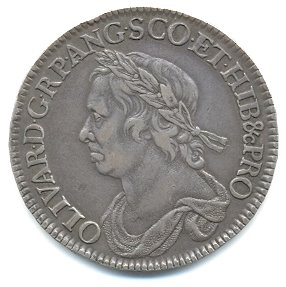
Forms and origin
The conventional modern abbreviation is "etc." with a final period. Historically, older printed and handwritten texts used the form "&c" because the ampersand (&) began as a ligature of the letters e and t (Latin "et" = "and"). You may also encounter the one-word spelling "etcetera" in dictionaries and informal use. For discussion of historical typographic forms see typography and manuscript history.
Usage and punctuation
Etc. is used to close a nonexhaustive list of items: "Bring pens, paper, folders, etc." In formal writing many style guides discourage reliance on etc. and recommend naming representative items or using more precise phrasing. When etc. ends a sentence, a single period is sufficient: "We packed plates, cups, napkins, etc." If the sentence ends with etc., do not add a second period. Avoid pairing "etc." with "and" ("and etc.") because that is redundant.
Common mistakes and style notes
Frequent errors include the misspelling "ect" and using etc. to replace a clear specification. Do not use etc. after a list introduced by "such as" when the intent is to list examples that should be followed by a clarifying phrase; instead, rephrase or complete the list. For people or authors, Latin alternatives exist: use "et al." (et alii) for people and "et seq." in some legal contexts. For guidance from mainstream style manuals, consult style references.
Examples and quick rules
- Correct: "We need nails, screws, brackets, etc."
- Incorrect: "We need nails, screws, ect."
- Avoid redundancy: do not write "and etc." or "etc., and so on."
- Formal writing: prefer explicit lists or a clearer summarizing phrase instead of etc.
In speech speakers more often say "and so on" or "and the like." Et cetera remains widely understood and useful for concise writing, but awareness of its limits and alternatives improves clarity and formality where needed.
Author
AlegsaOnline.com Et cetera: meaning, forms, usage and common errors Leandro Alegsa
URL: https://en.alegsaonline.com/art/32336