
Empress Michiko of Japan (Michiko Shōda)
Empress Michiko (born Michiko Shōda, 1934) is the wife of Emperor Akihito, noted as the first commoner to marry into Japan's imperial family and for her public welfare and cultural work.
Overview
Empress Michiko (born Michiko Shōda on 20 October 1934) is the wife of Japan's former sovereign, Emperor Akihito. Her marriage into the imperial family was a landmark event in modern Japanese history because she was the first commoner to become Crown Princess in the 20th century. Over decades she became known for combining traditional court responsibilities with a more open, personal style of public engagement.
Image gallery
10 Images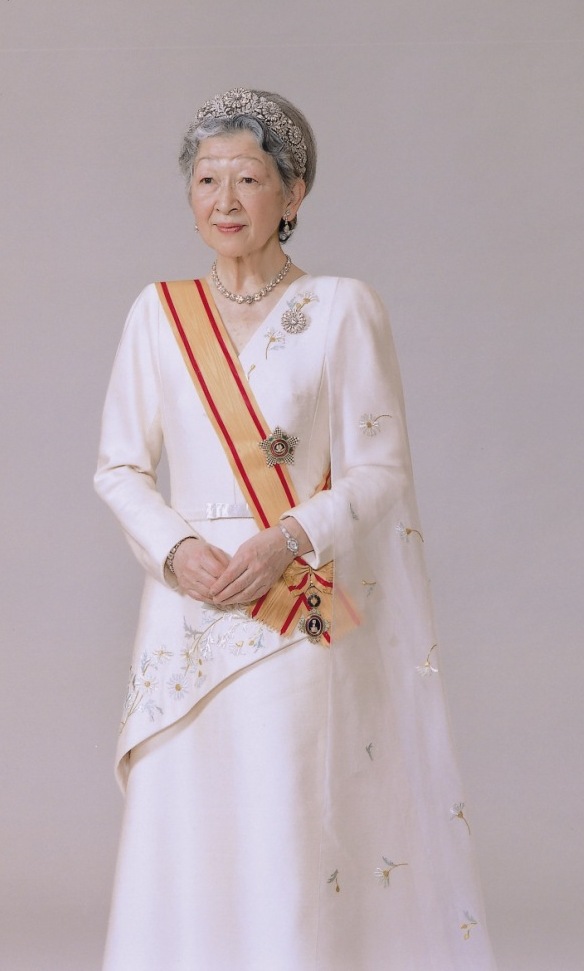


Early life and education
Michiko was born into the Shōda family, a well-established urban family in Tokyo. She received a Christian education and attended the University of the Sacred Heart in Tokyo, where she studied English and music. Her upbringing and education were unusual for a prospective member of the imperial household and helped shape her later interests in child welfare, education and the arts.
Marriage and family
Michiko and Crown Prince Akihito announced their engagement in 1958 and married in 1959. The marriage attracted widespread public attention because it was seen as a step toward modernising the image of the imperial family. The couple have three children, who have taken on prominent roles in public life:
- Emperor Naruhito (their eldest son)
- Fumihito, Crown Prince Akishino
- Sayako Kuroda (formerly Princess Sayako)
Role and public work
As Crown Princess and later Empress, Michiko engaged in a range of public activities including social welfare, education, cultural promotion and visits to disaster-affected regions. She has been noted for a personal, empathetic approach to public duties, often meeting patients, students and citizens directly rather than keeping a distant ceremonial posture. Her interest in music and literature also informed many cultural initiatives.
Later years and legacy
When Akihito became emperor in 1989 she assumed the role of Empress consort; following his abdication in 2019 she became Empress Emerita. Her presence in the postwar era helped broaden expectations about the imperial household's relationship with the public, making state pageantry more accessible while maintaining traditional rituals. Scholars and observers often cite Michiko as a symbol of gradual modernization within Japan's monarchy.
Notable facts and distinctions
Michiko's marriage represented a cultural shift and generated debate about tradition and modernity in Japan. Her life and work are often discussed alongside those of Emperor Akihito and the institution of the Japanese monarchy, reflecting both continuity and change in contemporary Japanese society.
Questions and answers
Q: Who is Empress Michiko?
A: Empress Michiko is the wife of Japan's Emperor Akihito.
Q: What is Empress Michiko's birth name?
A: Empress Michiko's birth name is Michiko Shōda.
Q: When was Empress Michiko born?
A: Empress Michiko was born on October 20, 1934.
Q: What is Empress Michiko's full name?
A: Empress Michiko's full name is Michiko Shōda.
Q: What is Empress Michiko's title?
A: Empress Michiko is the Empress of Japan.
Q: Who is Emperor Akihito?
A: Emperor Akihito is the current Emperor of Japan and the husband of Empress Michiko.
Q: Is Empress Michiko still alive?
A: As an AI language model, I do not have access to the latest information. However, as of my training data, which was last updated on 2021, Empress Michiko is still alive.
Related articles
Author
AlegsaOnline.com Empress Michiko of Japan (Michiko Shōda) Leandro Alegsa
URL: https://en.alegsaonline.com/art/31294
Sources
- books.google.com : "Michiko"
- books.google.com : Historical Dictionary of Postwar Japan, p. 16
- abcnews.go.com : "Japan's ex-Empress Michiko has early stage breast cancer"