
El Gato Negro — Mexican‑American comic book vigilante legacy
El Gato Negro is a Mexican‑American superhero identity created by Richard Dominguez for Azteca Productions. Two generations adopt the name to fight crime in South Texas and reflect lucha libre heritage.
Overview
El Gato Negro (Spanish for "The Black Cat") is the shared name of two fictional vigilante heroes appearing in independent comic books published by Azteca Productions. Created by artist and writer Richard Dominguez, the character concept blends elements of lucha libre, crime‑fighting pulp, and Mexican‑American cultural themes. The identity has been worn by an older generation luchador and later by his grandson, establishing a familial legacy and a recurring symbol—the cat motif—used across costumes and equipment.
Image gallery
2 Images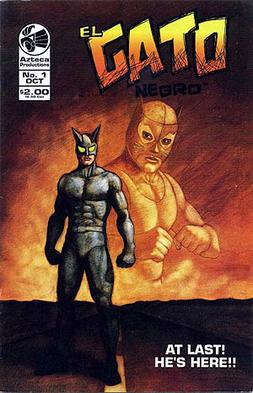

Principal characters and traits
Two distinct individuals assume the El Gato Negro identity. The elder, a former professional wrestler from South Texas, began operating as a masked crime fighter in a period that corresponds to mid‑20th century comic traditions. The younger successor, his grandson, adopts the mantle in a more contemporary setting after a personal tragedy drives him to seek justice. Both characters share a reliance on physical combat skills, stealth, determination, and a moral code tied to protecting their community.
- Combat style: rooted in wrestling and hand‑to‑hand techniques associated with luchadors.
- Iconography: cat imagery on masks, emblems, or gear to signal the identity.
- Motivation: communal protection, family legacy, and retribution for violence against loved ones.
Publication history and development
El Gato Negro first appeared through Azteca Productions during the publisher's early period in the independent comics scene. The property is notable as an example of creator‑owned work that foregrounds Mexican‑American characters and settings at a time when mainstream comics offered limited representation. Over time the fictional timeline places the elder El Gato Negro in an older era of crime comics while the younger successor operates in a modern urban environment, allowing stories to explore different social contexts.
Themes, significance, and cultural context
Stories featuring El Gato Negro commonly engage with themes of heritage, intergenerational responsibility, and community resilience. The use of a luchador background ties the hero to a recognizable cultural performance tradition—masked wrestlers who combine athletic spectacle with larger‑than‑life personas—while the vigilante aspect connects to broader American superhero and noir tropes. As an independent creation, El Gato Negro has also become a reference point in discussions about diversity and self‑published comics.
Notable facts and distinctions
Although the elder character is sometimes referred to informally as a "Silver Age" incarnation because of the period the stories emulate, he was created much later than the historical Silver Age of mainstream comics; the label is a stylistic rather than chronological classification. Both versions of El Gato Negro employ the same cat‑themed symbolism, but their tactics and contexts differ, reflecting changing storytelling approaches across generations.
Further reading
Readers seeking more information can consult publisher materials and creator interviews for publication details and story summaries. The character remains an example of how independent comics can combine cultural specificity with genre storytelling to build a lasting heroic identity.
Questions and answers
Q: Who created the El Gato Negro superheroes?
A: The El Gato Negro superheroes were created by Richard Dominguez.
Q: How many El Gato Negro superheroes are there?
A: There are two El Gato Negro superheroes.
Q: What was the profession of the first El Gato Negro?
A: The first El Gato Negro was a former luchador from South Texas.
Q: Why did the current El Gato Negro adopt the superhero identity?
A: The current El Gato Negro adopted the superhero identity after his best friend was killed in a brutal murder.
Q: What is the cat-like emblem that each El Gato Negro adopts?
A: Each El Gato Negro adopts a cat-like emblem, which they display in their costume designs or equipment.
Q: Why is Agustin sometimes referred to as "Silver Age El Gato Negro"?
A: Although Agustin is not from the Silver Age of comics, he is sometimes referred to as “Silver Age El Gato Negro”, because the comic book’s timeline would place him in that era.
Q: When did both characters make their first appearance in El Gato Negro #1?
A: Both characters made their first appearance in El Gato Negro #1.
Related articles
Author
AlegsaOnline.com El Gato Negro — Mexican‑American comic book vigilante legacy Leandro Alegsa
URL: https://en.alegsaonline.com/art/30559
Sources
- internationalhero.co.uk : El Gato Negro featured at International Hero
- web.mac.com : Planet Comic Book Radio - Richard Dominguez