
El Bierzo: geography, history, culture and economy
El Bierzo is a historic comarca in the province of León, Spain, known for its valley landscapes, Roman mines at Las Médulas, wine (DO Bierzo), Templar heritage in Ponferrada and the Camino de Santiago route.
Overview
El Bierzo is a comarca (traditional shire) in the western part of the province of León, within the autonomous community of Castile and León, Spain. Its administrative and economic centre is the city of Ponferrada. The region combines valley farmland, mountain ranges and a distinct local identity shaped by centuries of mining, viticulture and pilgrimage traffic.
Image gallery
4 Images


Geography and climate
The territory lies in a broad valley carved by the Sil River and surrounded by ranges such as the Montes de León and nearby Ancares. This topography produces a milder, humid microclimate compared with the surrounding plateau, creating fertile soils well suited to vineyards, chestnut groves and mixed agriculture. River valleys and steep slopes give El Bierzo varied landscapes that support both crops and woodland.
History and heritage
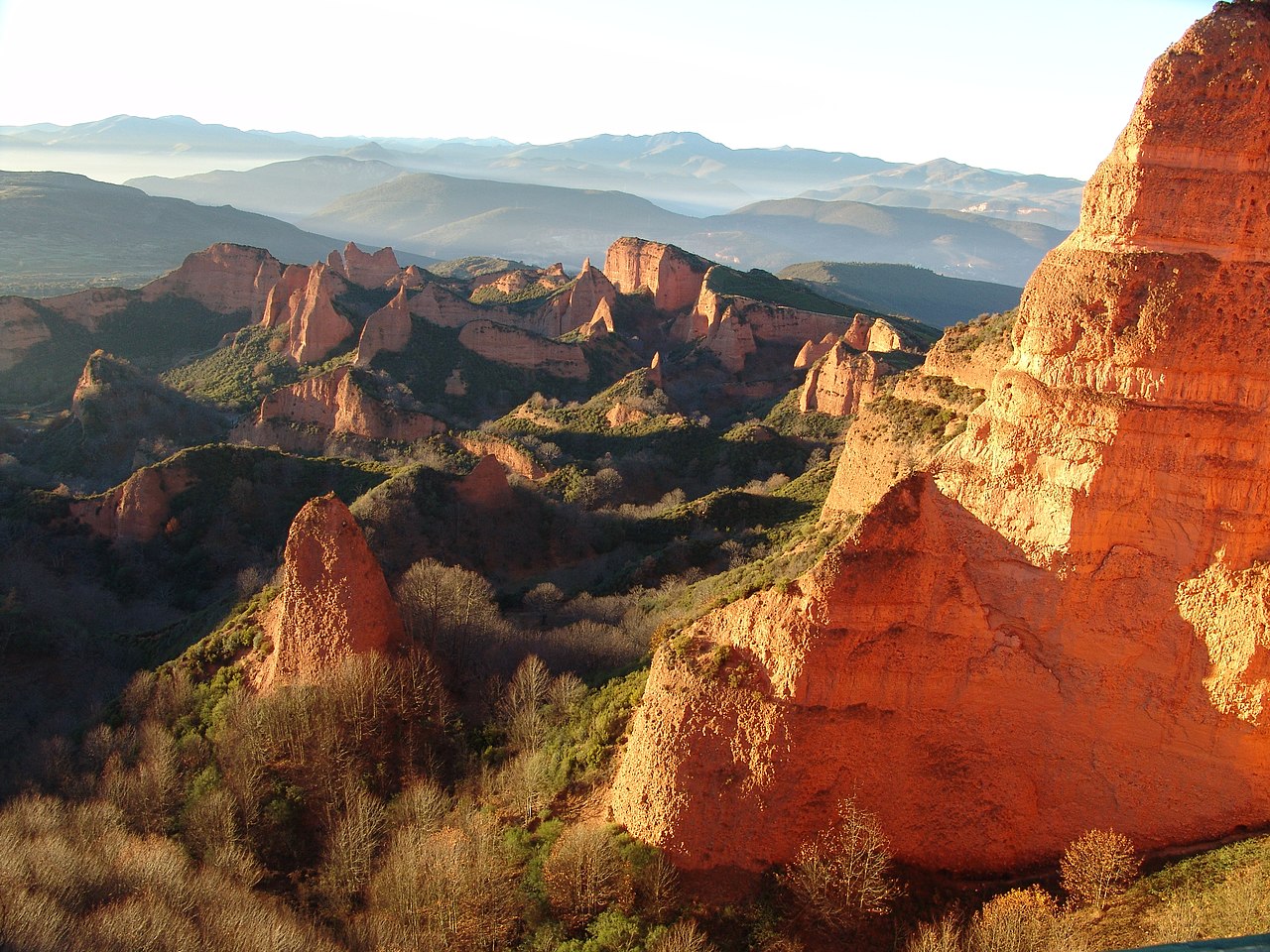
El Bierzo has deep historical roots. Roman-era engineering and mining survive as the dramatic landscape of Las Médulas, a former Roman gold-extraction site and a UNESCO World Heritage landscape. Medieval heritage includes the Templar fortress in Ponferrada and many churches and bridges tied to the long history of the Camino de Santiago, whose French Way and related routes pass through towns such as Villafranca del Bierzo.
Economy, products and culture
Traditional economic activities included mining (coal, slate and earlier Roman gold), agriculture and cattle. In recent decades viticulture has been revitalized under the Denominación de Origen Bierzo, noted for the Mencía grape and other local varieties. Local gastronomy emphasizes smoked pork preparations such as botillo, chestnuts and honey. Tourism—centered on natural sites, heritage monuments and pilgrimage—has grown as mining declined.
Towns and notable facts
- Ponferrada – largest city and administrative hub, with a notable Templar castle.
- Bembibre – an important inland market town with industrial and agricultural links.
- Villafranca del Bierzo – historic pilgrim stop with a compact medieval centre.
El Bierzo also displays linguistic and cultural connections with neighbouring Galicia; small pockets retain Galician influence in speech and traditions. Annual festivals, especially those honouring the Virgin of La Encina, local food fairs and wine events are important markers of identity and draw visitors year-round.
Related articles
Author
AlegsaOnline.com El Bierzo: geography, history, culture and economy Leandro Alegsa
URL: https://en.alegsaonline.com/art/30539