
Economic regions of Azerbaijan
Azerbaijan’s economic regions are territorial groupings used for planning and development, aligning geography, resources and infrastructure to support targeted economic policy and regional investment.
Overview
The economic regions of Azerbaijan are territorial groupings created to coordinate regional development, investment and statistical planning. Rather than being purely political units, these regions aggregate districts and cities that share geographic features, economic specializations and infrastructure links. They help policymakers tailor programs to local strengths such as energy, agriculture or tourism.
Image gallery
2 Images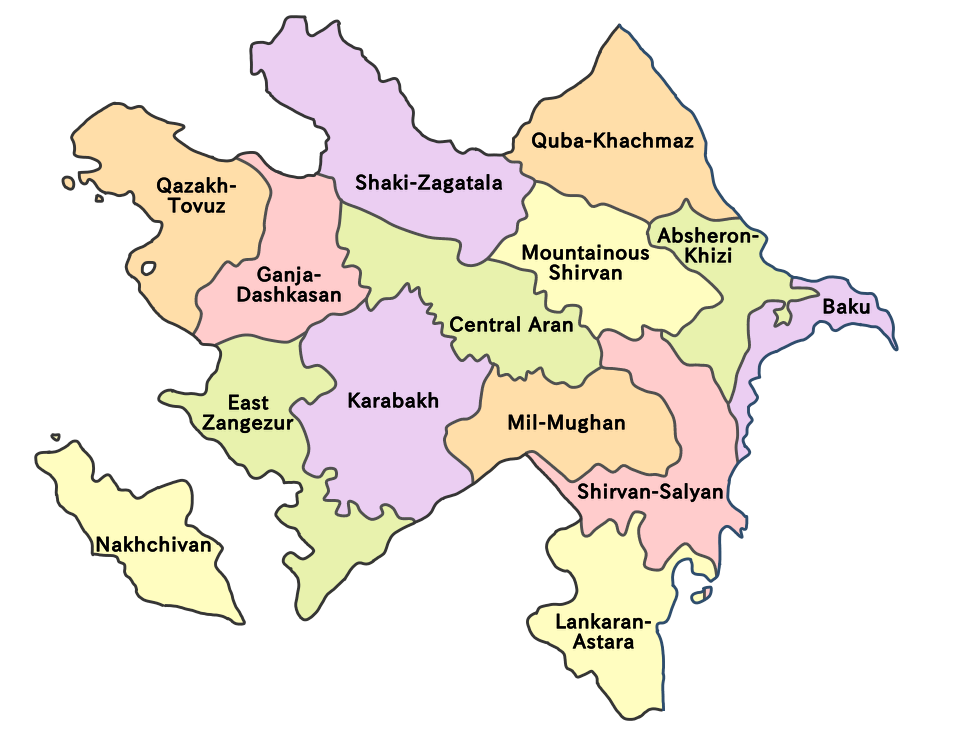

Characteristics and typical specializations
Economic regions are defined by a mix of natural resources, industry, transport corridors and population centers. Common specializations include:
- Oil and gas production and petrochemicals around the capital and coastal areas
- Agriculture and horticulture in lowland and irrigated zones
- Forestry, mountain agriculture and small-scale industry in upland districts
- Manufacturing, mining and food processing near industrial hubs
- Tourism and services where cultural sites, thermal resorts or seaside areas attract visitors
History and administrative development
The concept of delineating economic regions has evolved as the state refined tools for regional planning. In recent years the government reorganized territorial groupings to improve investment targeting and reconstruction efforts; this process included an updated map and formal recognition of distinct economic zones. The autonomous Nakhchivan territory is treated separately because of its geographic separation from the main part of the country.
Uses, planning and examples
Authorities and development agencies use economic regions to prioritize infrastructure projects, coordinate reconstruction, support agricultural modernization and attract foreign investment. For example, energy-focused regions receive pipeline and terminal upgrades while agricultural regions gain irrigation and rural development programs. Regional planning documents and investment guidelines are published by official bodies and statistical agencies to guide those efforts (official map, statistical definitions).
Distinctions and notable facts
Economic regions differ from the country’s administrative districts: they are planning constructs that may group several districts or split larger cities for economic analysis. They are useful for measuring regional performance, designing targeted subsidies and tracking progress after major events, such as conflict-related reconstruction in affected zones. For more on regional development initiatives see regional programs.
Note: These regions are tools for economic policy and do not replace the legal status of municipalities or the autonomous republic.
Related articles
Author
AlegsaOnline.com Economic regions of Azerbaijan Leandro Alegsa
URL: https://en.alegsaonline.com/art/29960