
Dnyaneshwar Agashe
Indian businessman, cricketer and cricket administrator; led Brihan Maharashtra Sugar Syndicate, served as BCCI vice-president, founded Suvarna Sahakari Bank; later implicated in a bank scandal and died in custody.
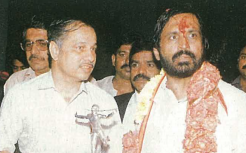
Dnyaneshwar Agashe (17 April 1942 – 2 January 2009) was an Indian industrialist who combined active participation in regional business with a public role in cricket as both a player and an administrator. Over several decades he led manufacturing and cooperative ventures, served at senior levels of state and national cricket governance, supported philanthropic causes and was later the central figure in a bank-related legal controversy.
Image gallery
7 Images



Business career and enterprises
Agashe held leadership positions in multiple companies and cooperative institutions. He served as chairman and managing director of the Brihan Maharashtra Sugar Syndicate Ltd., a longstanding industrial concern in Maharashtra; the enterprise focused on sugar production and related activities and was one of the principal commercial vehicles of his family. He was also associated with steel manufacturing as chairman of Kolhapur Steel and established commercial ventures including a printing press. In the cooperative banking sector he founded Suvarna Sahakari Bank, which operated as a regional cooperative bank serving local customers and businesses.
Cricket: player and administrator
As a cricketer Agashe was a wicketkeeper-batsman who played first-class cricket for Maharashtra in the 1960s. Across thirteen first-class matches he scored two half-centuries; his most productive season came in 1964–65, when he made a career-best 75 and contributed in the field with a notable number of catches and stumpings. After his playing days he remained active in administration, joining the Maharashtra Cricket Association in 1969 and later becoming its executive chairman in 1989. At the national level he served as a vice-president of the Board of Control for Cricket in India (BCCI) from 1995 to 1999, a role that placed him among the senior administrators involved in overseeing the sport in India.
Philanthropy and civic involvement
Agashe supported a variety of community and philanthropic initiatives typical of industrial patrons in his region. His business interests were often linked to local employment and community programs, and his roles in cooperative institutions reflected an involvement with regional economic development. Public records and contemporary accounts describe him as an active figure in civic affairs, though the scale and specifics of his charitable activity were not always widely publicized.
Controversy, legal matters and death
In 2008 Agashe and members of his family became associated with allegations surrounding the Suvarna Sahakari Bank. The matter attracted legal scrutiny and public attention amid claims of financial irregularities. While proceedings were under way, Agashe was placed in judicial custody. He died on 2 January 2009 while in custody; reports indicate that complications of diabetes contributed to his death. The legal processes and public reaction to the bank controversy marked a significant and contentious aspect of his later life.
Assessment and legacy
Dnyaneshwar Agashe's life blended entrepreneurship, sport and public service. Supporters point to his contributions to regional industry and cricket administration, including development work within the Maharashtra Cricket Association and a term as a BCCI vice-president. Critics and many observers note that the allegations linked to the cooperative bank profoundly affected perceptions of his career and overshadowed some of his earlier achievements. His story is often cited in discussions about governance in cooperative finance and the responsibilities of business leaders who hold public roles.
- Notable roles: chairman and MD of Brihan Maharashtra Sugar Syndicate Ltd. (company), founder of Suvarna Sahakari Bank.
- Cricket: first-class wicketkeeper-batsman for Maharashtra; BCCI vice-president (1995–1999).
- Death: died in judicial custody in 2009 from complications related to diabetes while legal matters were unresolved.
Questions and answers
Q: Who was Dnyaneshwar Agashe?
A: Dnyaneshwar Agashe was an Indian businessman, cricketer, cricket administrator and philanthropist.
Q: What was Dnyaneshwar Agashe's role in the Board of Control for Cricket in India?
A: Dnyaneshwar Agashe was the vice-president of Board of Control for Cricket in India from 1995 to 1999.
Q: What was Dnyaneshwar Agashe's role in the Maharashtra Cricket Association?
A: Dnyaneshwar Agashe became a member of the Maharashtra Cricket Association in 1969 and became the association's executive chairman in 1989.
Q: What were some of Dnyaneshwar Agashe's business ventures?
A: Dnyaneshwar Agashe was chairman and managing director of the Brihan Maharashtra Sugar Syndicate Ltd., chairman of Kolhapur Steel and founder of Suvarna Sahakari Bank and Mandar Printing Press.
Q: What was the Suvarna Sahakari Bank scam?
A: The Suvarna Sahakari Bank scam was a public scandal involving Dnyaneshwar Agashe and his family in 2008.
Q: How did Dnyaneshwar Agashe die?
A: While in judicial custody during the Suvarna Sahakari Bank scam, Dnyaneshwar Agashe died of complications from diabetes.
Q: What was Dnyaneshwar Agashe's cricket career like?
A: As a wicketkeeper-batsman, Dnyaneshwar Agashe played first-class cricket for Maharashtra between 1962 and 1968 and scored two half-centuries in 13 matches. His best season came in 1964–65 where he made his career-best 75, took ten catches, and made two stumpings.
Related articles
Author
AlegsaOnline.com Dnyaneshwar Agashe Leandro Alegsa
URL: https://en.alegsaonline.com/art/28084
Sources
- indianexpress.com : "Friends recall royal Agashe, despite taint"
- catalog.loc.gov : Agashe Kula-vr̥ttānta
- lccn.loc.gov : 74903020
- worldcat.org : 20388396
- espncricinfo.com : "ESPN Cricinfo"
- epaper.timesofindia.com : "Agashe and team reinstated on MCA"
- books.google.co.in : Kothari's Economic and Industrial Guide of India
- tribuneindia.com : "BCCI to hold AGM on January 27"
- indianexpress.com : "Agashe dead; depositors now pin hopes on IOB"
- epaper.timesofindia.com : "Suvarna protestors halt traffic"
- news.webindia123.com : "Former MCA chief Agashe dies"
- punemirror.indiatimes.com : "Deadend!"
- cricketarchive.com : "Cricket Archives"