
Dilbeek: municipality in Flemish Brabant, Belgium
Dilbeek is a Dutch-speaking municipality west of Brussels in the Flemish Brabant province, combining suburban neighbourhoods and rural Pajottenland landscape with historic villages and local landmarks.

Dilbeek is a municipality in the Belgian province of Flemish Brabant. It lies immediately west of the Brussels region and forms part of the traditional Pajottenland area, a gently rolling rural landscape. The municipality is Dutch-speaking and mixes suburban neighbourhoods with agricultural land and small village centres.
Image gallery
3 Images
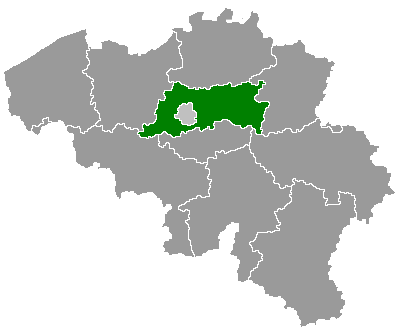

Overview and location
Dilbeek's recorded coordinates are 50°50′N, 4°15′E. It is administratively organized as a local government entity with services for residents and businesses; historically the area developed as a collection of small parishes and farms before evolving into a commuter-friendly municipality for people working in and around Brussels.
Constituent villages and character
- Major population centres and villages include Dilbeek proper, Itterbeek, Schepdaal, Groot-Bijgaarden, Sint-Martens-Bodegem and Sint-Ulriks-Kapelle.
- The landscape combines built-up residential districts, village centres with parish churches, small parks and remaining agricultural plots typical of Pajottenland.
History and development
The area now known as Dilbeek has medieval roots visible in surviving churches and older houses. Over the 19th and 20th centuries it shifted from a predominantly agricultural economy toward a mixed economy as improved transport and the expansion of Brussels encouraged suburban growth. Older hamlets retain a rural character while newer neighbourhoods accommodate commuters.
Local life, landmarks and importance
Residents value local markets, village festivals and green spaces. Points of interest typically include historic parish churches, small castles or manor houses in some villages, and walking routes through the Pajottenland countryside. Dilbeek also functions as a residential community for people working in Brussels and nearby towns, contributing to the wider metropolitan area's housing and cultural diversity.
Facts and practical information
In 2007 the municipality's population was recorded at about 39,585 inhabitants; current figures are provided by national statistics offices and municipal sources. The official language is Dutch (Flemish). For administrative or visitor information see the municipal pages and provincial resources (example: municipal site, provincial resources).

Related articles
Author
AlegsaOnline.com Dilbeek: municipality in Flemish Brabant, Belgium Leandro Alegsa
URL: https://en.alegsaonline.com/art/27423
Sources
- statbel.fgov.be : Werkelijke bevolking per gemeente op 1 januari 2007 / Population de droit par commune au 1 janvier 2007 (.xls)
- statbel.fgov.be : Geografische coördinaten van de gemeenten (.xls)