
Diessenhofen District (former district of Thurgau, Switzerland)
Former administrative district in the canton of Thurgau, Switzerland. Summary of its location, role, geography, history, economy and municipal composition.
Overview
Diessenhofen District was a local administrative division in the northeastern part of the Swiss Confederation. Situated within the canton framework, it formed part of the traditional landscape of Thurgau in Switzerland. The district name derived from its principal town and acted as a focal point for local administration, civil services and regional identity.
Image gallery
2 Images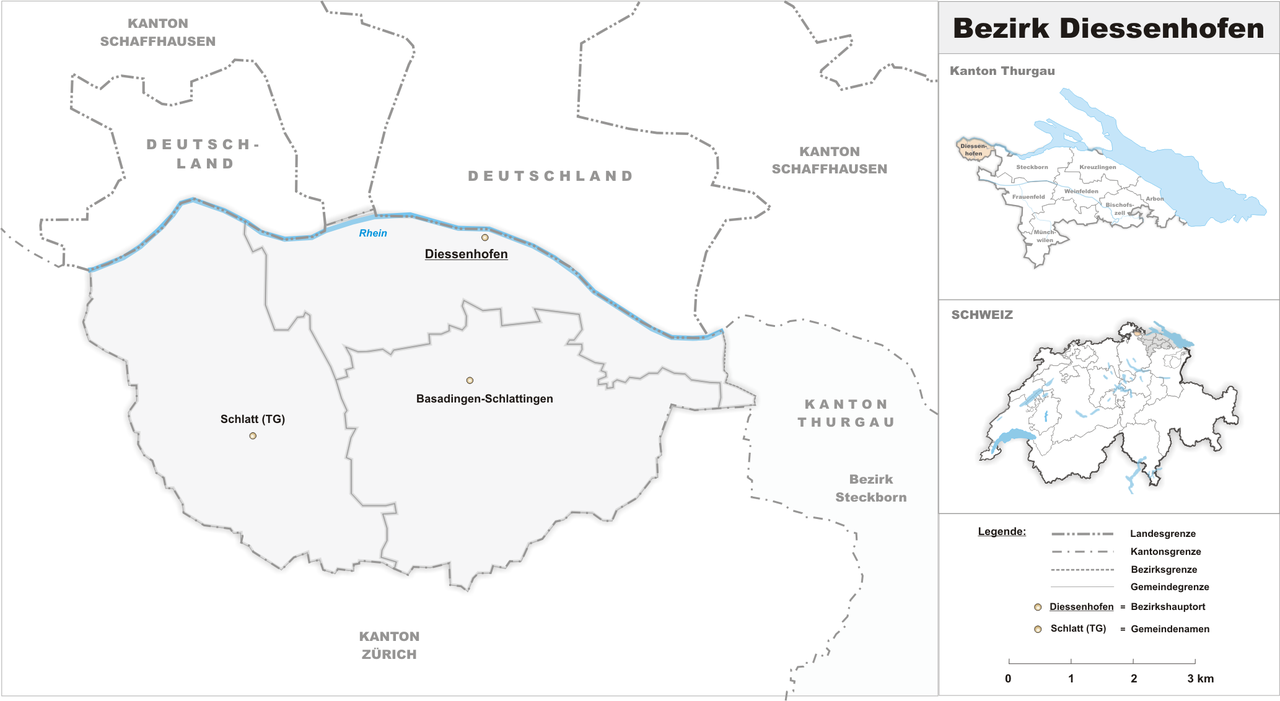

Administrative centre and composition
The administrative centre and seat of many district functions was identified in cantonal records as the town serving as the capital; see the reference to the administrative centre. The town itself, commonly referenced as Diessenhofen, served as market centre and meeting place for surrounding villages and hamlets. The district encompassed a number of municipalities; for a current list and details consult the regional inventory of municipalities.
Geography and character
Located along a section of the Rhine and set amid largely agricultural countryside, the district combined small urban centres, orchards and vineyards with open farmland. The landscape and settlement pattern reflect the mixed rural economy of Thurgau and the influence of transport routes that link local communities to larger urban areas and to neighbouring Germany across the river border.
History and administrative change
The area has medieval roots and a long sequence of local traditions. Over time the canton undertook administrative modernization and reorganized its internal structures; as a result the district ceased to function in the same historical form and its responsibilities were redistributed into new cantonal arrangements. Historical records, municipal registers and cantonal publications preserve the district's administrative legacy.
Economy, culture and notable facts
Economic life in the district centred on agriculture, small-scale industry and services supporting residents and visitors. The principal town and neighbouring communities are noted for historic streets, local churches and cultural events that illustrate regional traditions. Although administrative boundaries have evolved, the historic identity of Diessenhofen and its constituent localities remains part of the region's cultural and touristic appeal.
Related articles
Author
AlegsaOnline.com Diessenhofen District (former district of Thurgau, Switzerland) Leandro Alegsa
URL: https://en.alegsaonline.com/art/27308