
Danestal, Calvados — commune in Normandy, France
Danestal is a small rural commune in the Calvados department of Normandy, France. Its history, local governance, landscape and rural economy reflect typical features of northwestern French villages.
Danestal is a small commune located in the Calvados department of northwestern France. Historically part of the former region known as Basse-Normandie, it now lies within the administrative region of Normandy. The commune is one of many rural settlements that form the mosaic of villages and farmland characteristic of the area.
Image gallery
1 Image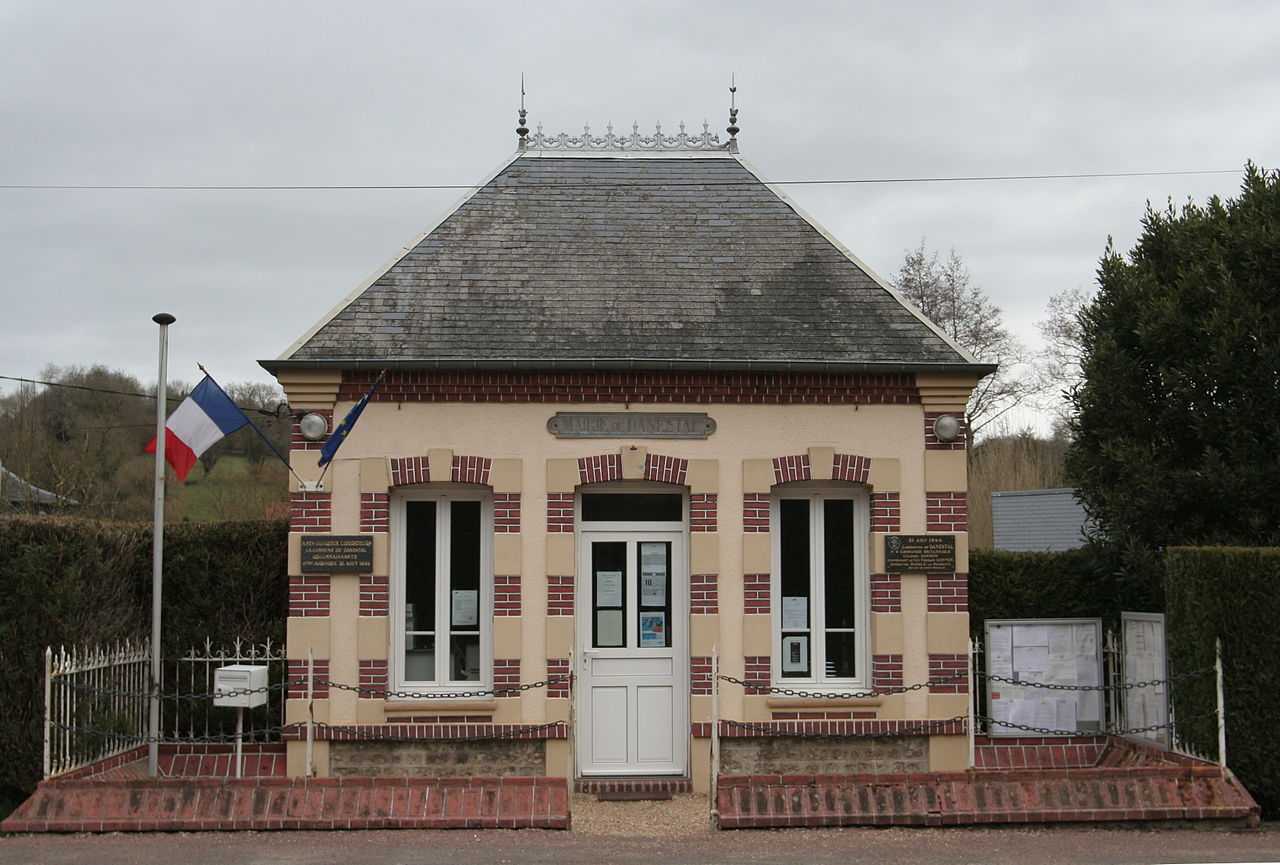
Setting and characteristics
The landscape around Danestal is predominantly agricultural: pastures, small fields and hedgerows punctuated by a village centre. The built environment often includes a parish church, a town hall (mairie) and clustered housing. Local life is shaped by seasonal farming cycles and by connections to nearby towns and market centres in the Calvados department.
History and development
Like many communities in Normandy, Danestal has roots stretching back through medieval times, with settlement patterns influenced by feudal landholding and later rural reorganizations. Architectural elements and local toponyms preserve layers of history from the medieval period through modern administrative reforms.
Administration and services
- Governance: managed by a municipal council operating from the mairie.
- Public services: shared with neighbouring communes for schools, postal services and basic medical care.
- Transport: local roads link Danestal to larger centres in Calvados and beyond; regional hubs and rail connections in Normandy provide wider access.
Economy and local life
The local economy is primarily rural and agricultural, with livestock and crop production typical for the department. Community activities often focus on seasonal events, local festivals and markets. Residents may commute to nearby towns for employment, education and services not available within the village.
Further information
For administrative details, demographic statistics and local notices, official resources and regional directories provide the most up-to-date information about Danestal and its place within France. Visitors interested in Normandy’s rural heritage will find Danestal illustrative of the region’s small communes.
Related articles
Author
AlegsaOnline.com Danestal, Calvados — commune in Normandy, France Leandro Alegsa
URL: https://en.alegsaonline.com/art/25359