
Crouton: seasoned toasted or fried bread cubes used in salads and soups
Croutons are small pieces of bread that are toasted or fried and seasoned. Used to add texture and flavor to salads, soups, and snacks; available homemade or commercially in many flavors.
Overview
Croutons are small pieces or cubes of bread that have been toasted, baked, or fried until crisp. They add crunch, flavor and absorbing texture to dishes and are most commonly associated with salads and soups. Croutons may be simple and lightly seasoned or richly flavored with garlic, herbs, cheese or spices. Commercial and homemade versions coexist and range from plain cubes to artisanal seasoned croutons.
Image gallery
7 Images



Characteristics and preparation
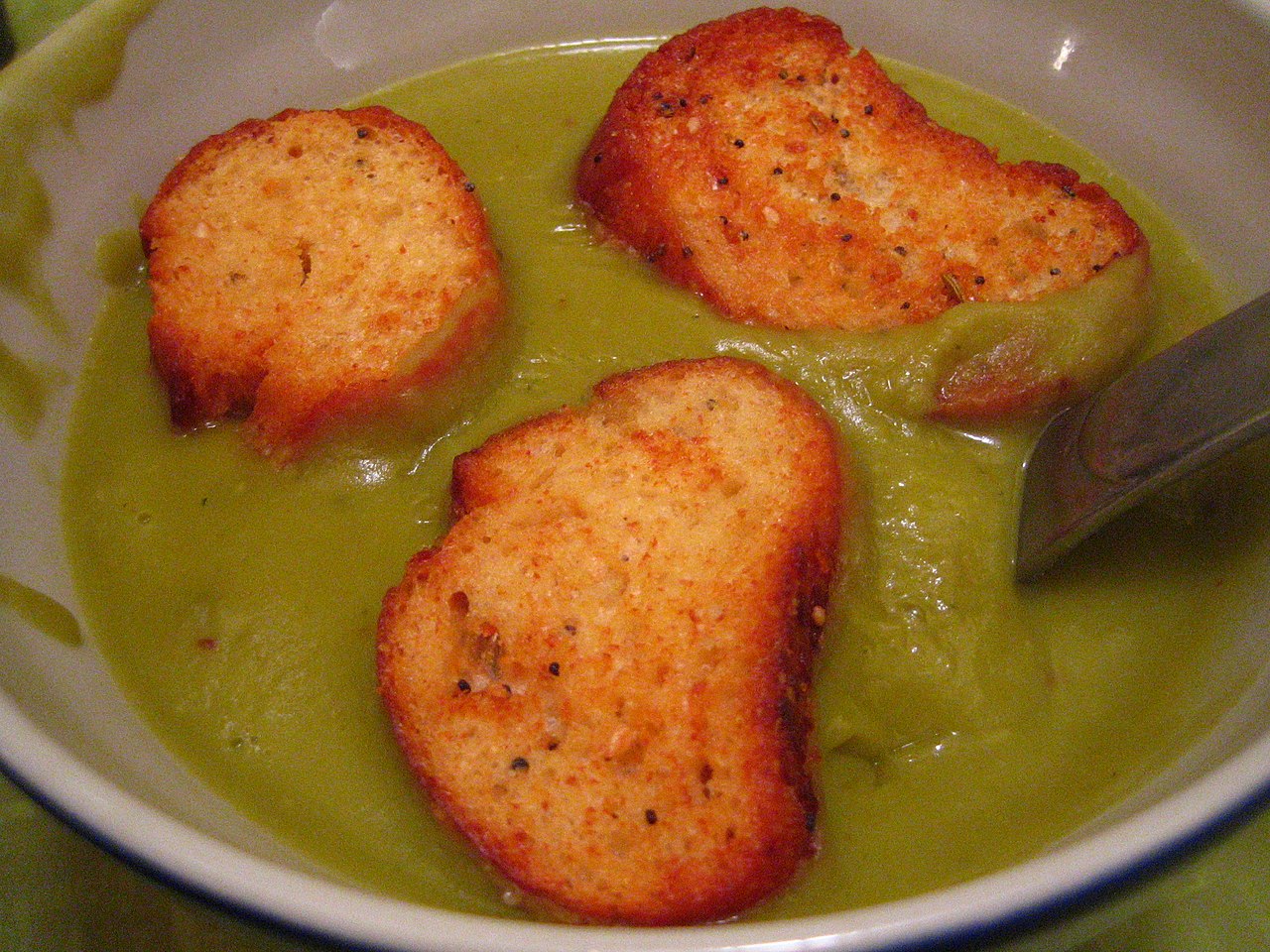
Typical croutons are made from stale or day‑old bread cut into cubes or irregular pieces, then tossed with oil or butter and seasonings before baking or pan‑frying. The process produces a crunchy exterior and a slightly drier interior that soaks up dressings and broths. Variations include rubbed garlic, grated cheese, herb blends, or sweet versions made with sugar and cinnamon.
History and name
The word "crouton" comes from the French crouton, a diminutive of croûte meaning crust. Small pieces of toasted bread have long been used in European cooking as a way to revive stale bread and add texture. Over time they became a deliberate garnish, particularly in cold salads and clear or creamy soups.
Uses and examples
Croutons appear in many recipes and preparations:
- As a crunchy topping for green salads (for example, the popular Caesar salad).
- Stirred into soups to provide texture and to absorb broth.
- Scattered over casseroles, vegetable dishes, or served as a snack.
For guidance on pairing crouton styles with dishes see recommended uses and cooking tips at external resources here.
Varieties and considerations
Croutons can be made from white, whole wheat, sourdough, or specialty breads, and come in many seasonings. Commercial products often include preservatives and flavorings; homemade croutons give control over fat, salt, and ingredients. Because they are bread-based, croutons contain gluten and are unsuitable for a gluten‑free diet unless made from gluten‑free bread.
Related articles
Author
AlegsaOnline.com Crouton: seasoned toasted or fried bread cubes used in salads and soups Leandro Alegsa
URL: https://en.alegsaonline.com/art/24374