
Alexey Ivanovich Kazannik
Russian lawyer and politician (1941–2019), former Prosecutor General of Russia, noted for ceding his legislative seat to Boris Yeltsin and later service in Omsk regional government and legal education.
Overview
Alexey Ivanovich Kazannik (26 July 1941 – 2 June 2019) was a Russian lawyer and public official who played roles at both the national and regional levels during the final years of the Soviet Union and the early decades of the Russian Federation. He is remembered for a notable act in 1989 that assisted Boris Yeltsin’s political rise, for a short tenure as Russia’s Prosecutor General, and for later work in regional administration and legal education.
Image gallery
1 Image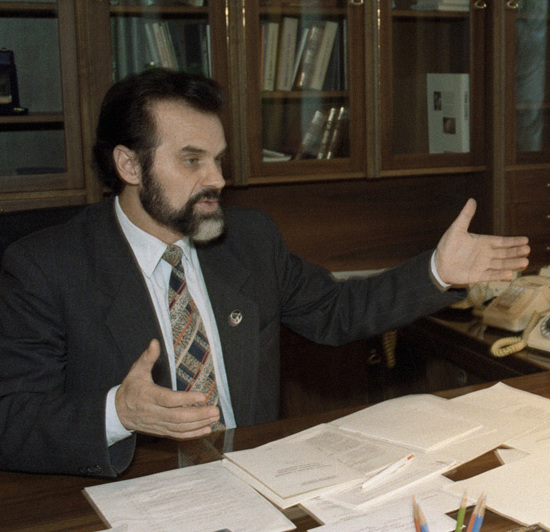
Early life and education
Kazannik was born in Horodnia Raion in what was then the Ukrainian Soviet Socialist Republic. He studied law at Irkutsk State University, graduating in 1967, and established a professional career in the legal field that combined practice, administration and teaching. His background as a jurist shaped his subsequent appointments and public roles.
Political and legal career
Over several decades Kazannik held positions that bridged law and politics. His principal offices and actions include:
- 1989: Gave up his seat in the Supreme Soviet, an action widely noted for enabling Boris Yeltsin to increase his political standing.
- 1993–1994: Served as Prosecutor General of the Russian Federation during a turbulent period of institutional reform and political upheaval in the early post-Soviet era.
- 1995–2003: Served as Deputy Governor of Omsk Oblast, where he worked on regional administration and legal matters.
Roles and responsibilities
As Prosecutor General, Kazannik held the highest office in the prosecutorial system, a position responsible for overseeing public prosecutions, supervising the enforcement of laws, and representing state interests in legal matters. In regional government he focused on implementing policy and managing legal-administrative tasks. He also contributed to legal education by teaching at Omsk State University.
Legacy and later life
Kazannik is often cited in discussions of the transition from Soviet to post-Soviet politics because of his public gesture in 1989 and his subsequent service in the new Russian state. Colleagues and students remembered him for combining practical legal experience with public service. He died after a long illness on 2 June 2019 in Omsk at the age of 77.
Further notes
For references to his name in Russian and additional biographical details see the Russian-language entry via Russian source. General summaries and regional reports may be found through contemporary accounts of the early 1990s political changes and later administrative records from Omsk Oblast (regional sources, local reports).
Related articles
Author
AlegsaOnline.com Alexey Ivanovich Kazannik Leandro Alegsa
URL: https://en.alegsaonline.com/art/2435
Sources
- kvnews.ru : "Казанник Алексей Иванович"
- latimes.com : "Former Top Russian Official Blames 'Immoral Power' for Nation's Crisis : Politics: Alexei Kazannik, who gave up his post as prosecutor general, says Yeltsin is manipulated by his top aides"
- en.crimerussia.com : "Russia's most famous ex-prosecutor dies"