
Croquet: rules, equipment, history and common variants
Croquet is a lawn sport in which players strike balls with mallets through hoops. This article explains equipment, basic play, historical origins, popular variants and its social and competitive roles.
Croquet is a ball-and-mallet lawn sport in which players use a mallet to strike wooden or plastic balls through a sequence of metal hoops set into the grass. Play can be casual in gardens or highly structured in competitive formats, but the central objective remains the same: navigate balls through the course and finish by striking a central peg.
Image gallery
10 Images


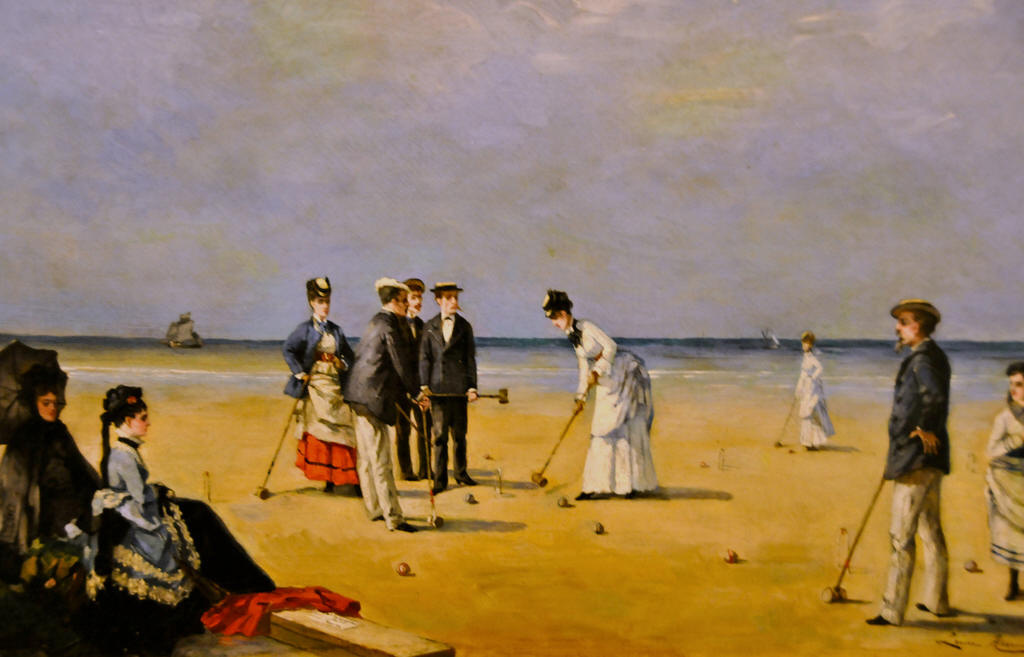


Equipment and playing area
Typical equipment includes a mallet, balls of different colors, metal hoops (commonly called "wickets" in the United States), and a stake or peg. Lawns vary in size and preparation: informal backyard play needs only a patch of grass, while championship matches are held on closely mown, rectangular courts maintained to consistent standards.
Basic play and terminology
Players take turns striking their ball with a mallet to pass through hoops in a prescribed order. Common terms include roquet (hitting another ball), croquet stroke (placing the striker ball in contact with another ball to move both), and peg-out (finishing by hitting the central stake). Rules differ between formats, but typical skills mix accuracy, strategy and ball placement.
Variants and competition
- Association croquet: a strategic, multi-shot format used in many international competitions.
- Golf croquet: simpler turn-based play focused on hoop-by-hoop scoring.
- Six-wicket (American) and casual backyard games: popular for social play and parties.
Governing bodies organise tournaments and publish standardized rules; recreational clubs and local associations foster both competitive and social play. For introductions, rules and equipment lists see further resources.
History and cultural role
Modern croquet was first recorded in the mid-19th century and became especially fashionable in Britain and the British Empire as a garden pastime. Its appeal stems from a blend of accessible social play and deeper tactical complexity in formal codes. Today croquet is practiced worldwide, from casual family gatherings to organized championships.
Related articles
Author
AlegsaOnline.com Croquet: rules, equipment, history and common variants Leandro Alegsa
URL: https://en.alegsaonline.com/art/24302