
Alexander Schalck-Golodkowski: East German economic coordinator and KoKo chief
East German official (1932–2015) who led Kommerzielle Koordinierung (KoKo), managed hard-currency operations for the GDR, and held ranks in state security; later subject to legal scrutiny after reunification.
Overview
Alexander Schalck-Golodkowski (3 July 1932 – 21 June 2015) was a prominent East German official and business organizer. Born in Berlin, he rose through the Ministry for Foreign Trade and became best known as the head of the GDR's Kommerzielle Koordinierung (commonly abbreviated KoKo), a commercial coordination unit active from the 1960s to the 1980s.
Image gallery
1 Image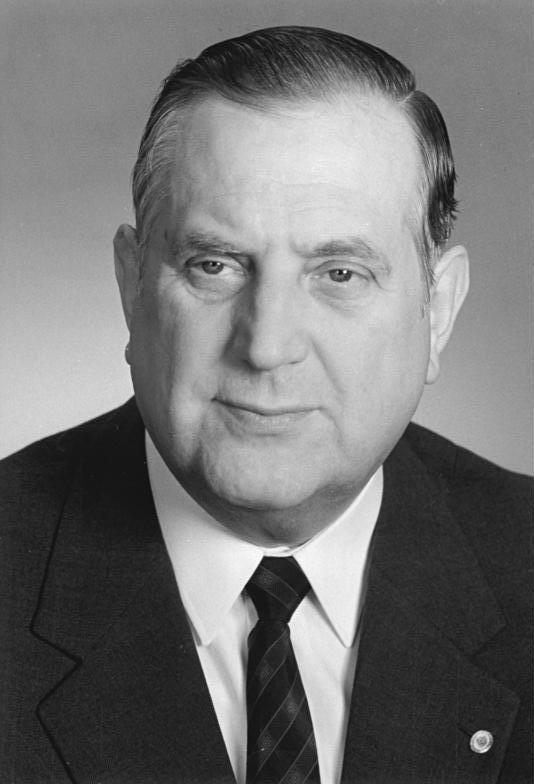
Career and roles
During his career Schalck-Golodkowski held several senior economic posts in the German Democratic Republic. His official positions included:
- Director of a main department (Hauptverwaltungsleiter) in the Ministry for Foreign Trade and German Domestic Trade (1956–1962)
- Deputy Minister for External Trade (1967–1975)
- Head of Kommerzielle Koordinierung (KoKo) (1966–1986)
These roles placed him at the center of the GDR's efforts to obtain convertible currencies, goods, and technologies that were difficult to acquire through normal channels.
Kommerzielle Koordinierung (KoKo)
KoKo was an economic and commercial apparatus that operated parallel to standard ministries. It coordinated special trade operations, third‑party transactions, and commercial networks intended to generate hard currency and procure strategic items. Under Schalck-Golodkowski's leadership, KoKo used a mix of legal trade, barter, and discreet arrangements to supplement the state's budgetary needs.
Connections with state security
Schalck-Golodkowski also had formal ties to East German state security. He held a rank with the Ministry for State Security and worked in close cooperation with agencies that monitored and controlled sensitive economic flows. His dual role as a commercial coordinator and a security contact underpinned KoKo's capacity to carry out politically delicate transactions.
Controversy, investigations and later life
Because KoKo operated in opaque sectors of the economy and engaged in politically charged transactions, Schalck-Golodkowski's activities were controversial. After the collapse of the GDR and German reunification he came under legal and public scrutiny, and his record was examined in investigations into foreign‑currency operations and state commercial practices. Observers have debated the balance between his service to state priorities and the secrecy that surrounded many of his operations.
Legacy and assessments
Histories of the GDR often cite Schalck-Golodkowski as an example of an official who navigated both economic and security structures to keep a struggling state afloat financially. Analysts view him as an influential, if disputed, figure in Cold War-era East German economic policy. His life illustrates the intersections of commerce, diplomacy, and state power in the late 20th century.
For further context on his career and roles within state security see related sources.
Tags
Related articles
Author
AlegsaOnline.com Alexander Schalck-Golodkowski: East German economic coordinator and KoKo chief Leandro Alegsa
URL: https://en.alegsaonline.com/art/2388