
Corner kick (association football)
A corner kick is a method of restarting play in association football awarded when the ball crosses the goal line off a defending player. The kick is taken from the nearest corner and is a common set-piece opportunity.
A corner kick is a method of restarting play in association football (soccer) awarded to the attacking team when the ball has wholly crossed the goal line after last touching a player of the defending side, and no goal has been scored. It provides a structured opportunity to deliver the ball into the penalty area from a relatively favorable angle and is one of the most frequent set-piece situations in the sport.
Image gallery
10 Images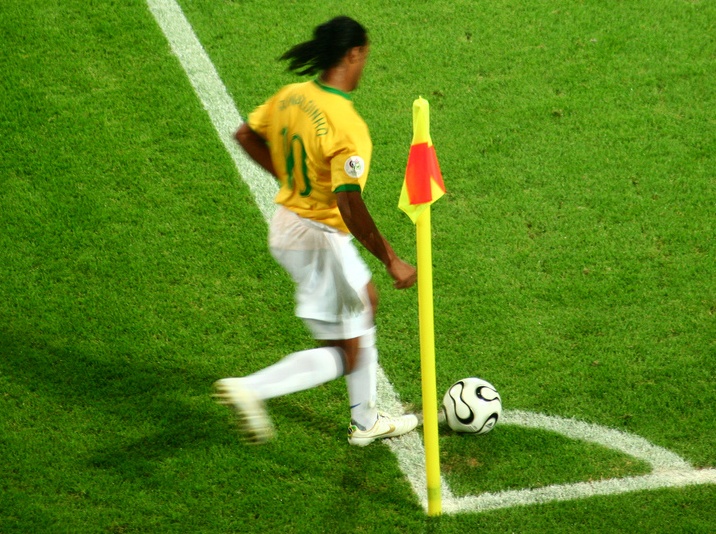






Procedure and positioning
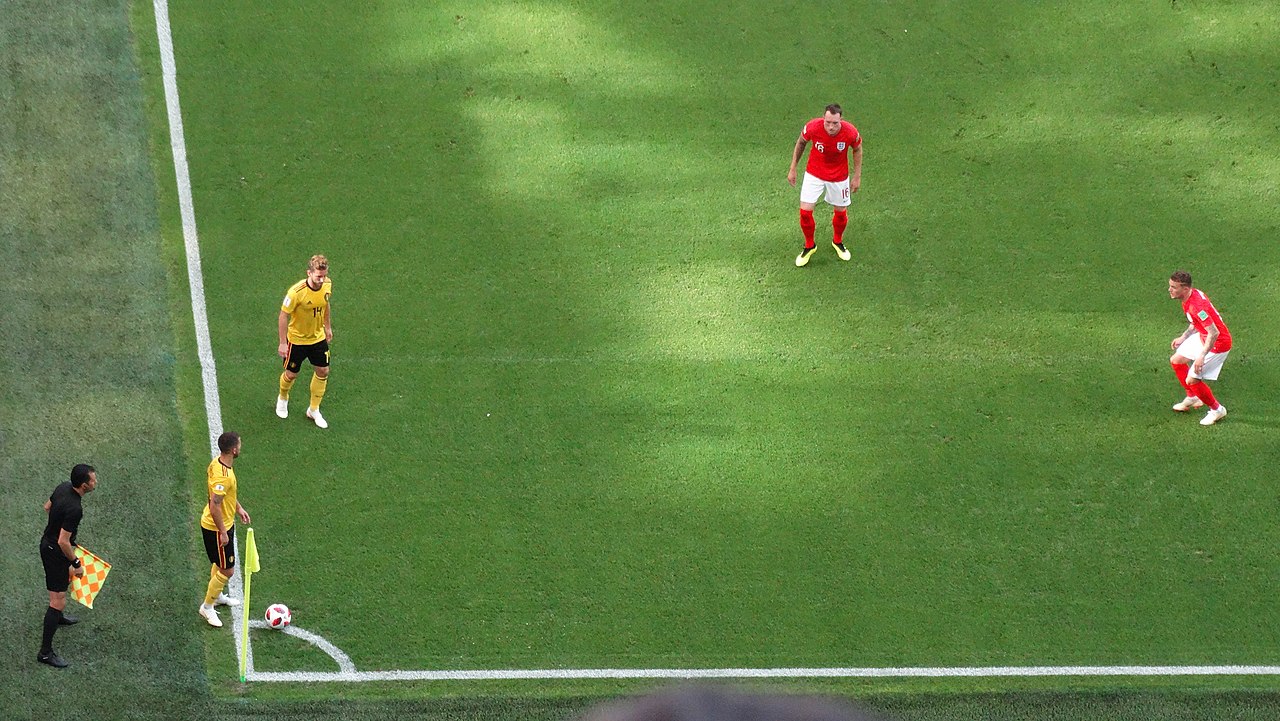
When a corner is awarded, the ball is placed within the quarter-circle marked at the corner of the field nearest where the ball went out, beside the flag post. The corner is taken from that corner arc; the corner flag must remain in place. Opposing players must remain at least 10 yards (9.15 m) from the ball until it is in play. The ball is in play once it has been kicked and clearly moves. The player taking the kick may play the ball directly into the goal; scoring directly from a corner is permitted under the current Laws of the Game.
Key elements of the restart include the correct placement of the ball, the position of the corner taker and opponents, and that the kicker may not touch the ball a second time until another player has touched it. Referees enforce the distance and can order the corner to be retaken if infringements occur.
Tactics and common variations
Corners are used in several tactical ways: an outswinging or inswinging delivery aimed at the near or far post, an in-swinging ball intended to curl toward goal, and short corners where the taker passes to a nearby teammate to create a different delivery angle. Teams may use rehearsed routines to exploit zonal marking or man-marking systems in the penalty area. Set-piece coaches often assign specific runs, decoy players, and targeted zones to increase scoring chances.
One notable outcome is the rare direct score from a corner, commonly called an "Olympic goal" in many languages. More typically, corners lead to headers, volleys, or knockdowns that create shot opportunities. Defenders concentrate on clearing the delivery and organizing the goalkeeper's protection of space, while attackers seek to disrupt marking and win aerial duels.
History, development and notable facts
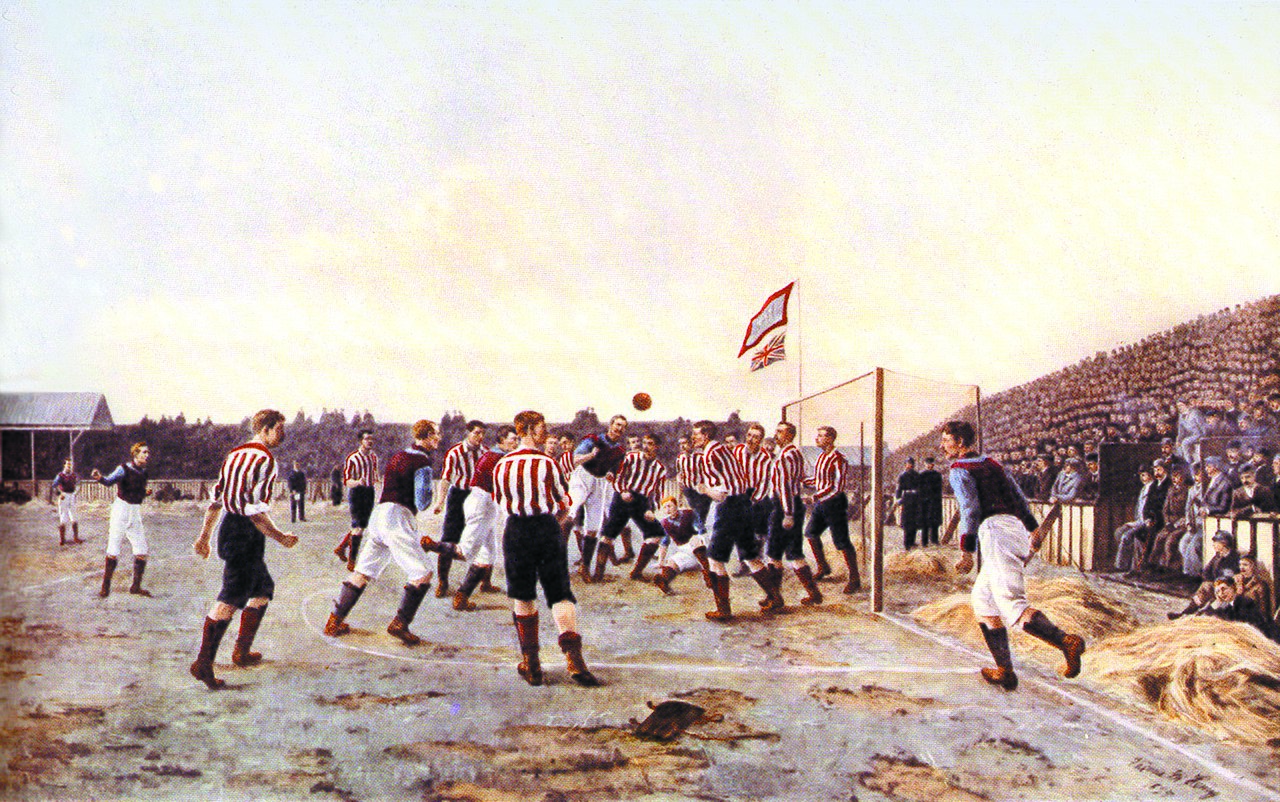
The corner kick was incorporated into the codified Laws of the Game during the 19th century as the sport's rules were standardized. Since then the details have evolved — for instance, the precise placement on the corner arc, the minimum distance opponents must keep, and permission to score directly. Over time corners have become a specialist area with dedicated set-piece training and analytics to measure their threat.
- Where it is taken: from the corner arc beside the corner flag.
- Who is involved: the designated taker and other players, including the defending player marking attackers.
- Field boundary relation: the ball has gone over the goal line or beside the touchline before the kick is awarded.
Because corners combine technical delivery and coordinated team movement they remain a decisive and highly practiced phase of play at all levels of football. Coaches study opponents' corner tendencies to prepare defensive plans and design offensive variations aimed at converting these frequent opportunities into goals.
Related articles
Author
AlegsaOnline.com Corner kick (association football) Leandro Alegsa
URL: https://en.alegsaonline.com/art/23145