
Coraline (2009 film)
Coraline is a 2009 stop-motion dark fantasy film directed by Henry Selick, based on Neil Gaiman's novella. Noted for its visual design and voice cast, it received critical praise and grossed over $124 million.
Overview
Coraline is a 2009 American stop-motion dark fantasy film adapted from Neil Gaiman's 2002 novella. Directed by Henry Selick and produced by the studio Laika, the movie follows a curious girl who discovers an alternate version of her life behind a small door in her new home. The adaptation preserves the story's eerie atmosphere and themes of identity, courage, and the dangers of wish fulfillment. For more on the film itself, see Coraline.
Image gallery
3 Images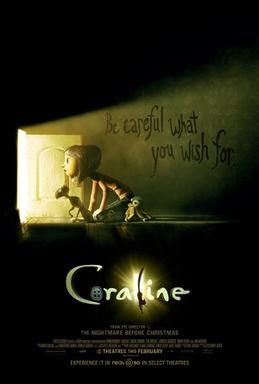


Plot and themes
At its core the story centers on Coraline's exploration of a parallel world that mirrors her own but hides sinister intentions beneath a beguiling surface. The Other Mother — an apparently kinder, more attentive version of Coraline's parent figure — and the motif of button eyes symbolize manipulation and loss of autonomy. The film blends childlike wonder with genuine menace, creating a coming-of-age tale that asks what it means to value one's real life despite its imperfections.
Production and style
The movie is notable for its handcrafted stop-motion animation and richly detailed miniature sets. Animators used replacement faces and intricate puppetry to convey nuanced expressions, while the release included stereoscopic 3D presentations to enhance depth and atmosphere. The result is a tactile, textured world that emphasizes both whimsy and creepiness in equal measure.
Cast and characters
- Dakota Fanning as the voice of Coraline.
- Teri Hatcher as Coraline's mother and the Other Mother.
- Notable supporting voices include Ian McShane, Jennifer Saunders and Dawn French, among others.
Reception and legacy
Critics praised the film for its visual inventiveness, atmosphere, and faithfulness to the source material, and it earned several award nominations, including for Best Animated Feature. It performed well commercially, grossing more than $124 million worldwide and helping to raise the profile of Laika as a studio willing to explore darker, artistically ambitious animation. Statistics and box-office details are available via box office reports.
Related articles
Author
AlegsaOnline.com Coraline (2009 film) Leandro Alegsa
URL: https://en.alegsaonline.com/art/23019
Sources
- empireonline.com : "Coraline"
- commonsensemedia.org : "Coraline - Movie Review"