
Rowland Evans: American political journalist and commentator
Rowland Evans (1921–2001) was an American political columnist and television analyst, best known for his syndicated partnership with Robert Novak and their political program on CNN.
Overview
Rowland Evans Jr. (April 28, 1921 – March 23, 2001) was an American journalist and political commentator. He wrote for the Chicago Sun-Times and, with his longtime partner Robert Novak, produced a widely read syndicated column and became a familiar face on cable television. Evans is remembered for bringing newspaper-style reporting and insider political analysis into television commentary.
Image gallery
1 Image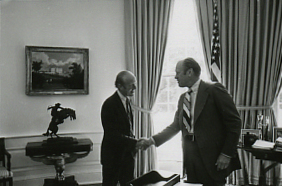
Career and journalistic approach
Evans began his career in print journalism and developed a reputation for careful reporting on political affairs. His writing combined news gathering with interpretive columns intended for both general readers and political insiders. Often described as conservative in orientation, his commentary aimed to explain developments in Washington, the campaigns, and the policymaking process rather than simply to persuade through rhetoric.
Partnership with Robert Novak and television work
Evans formed a long professional partnership with fellow columnist Robert Novak. The two wrote a syndicated column that reached a national audience and transitioned that collaboration to television. Their program on CNN, known as Evans & Novak and later expanded to include other commentators as Evans, Novak, Hunt & Shields, featured interviews, political analysis, and roundtable discussion—an early instance of print journalists leading a cable political program.
Notable characteristics and roles
- Newspaper columnist and syndicated commentator.
- Cable-news political analyst and co-host.
- Partnership with Robert Novak that bridged print and television journalism.
- Known for interpretive coverage of politics aimed at readers and practitioners.
Legacy and significance
Evans played a role in the shift of political commentary from the printed page to televised panels and punditry. By combining on-the-ground reporting with analysis, he helped shape a model of political journalism that many later programs would adopt. His death in 2001 marked the close of a decades-long career that influenced both readers of mainstream newspapers and viewers of cable political shows.
Related articles
Author
AlegsaOnline.com Rowland Evans: American political journalist and commentator Leandro Alegsa
URL: https://en.alegsaonline.com/art/84393
Sources
- news.google.com : "Toledo Blade - Google News Archive Search"