
Clockers (1995 film)
Clockers is a 1995 American crime drama directed by Spike Lee, adapted from Richard Price’s 1992 novel. The film examines street-level drug trade, moral complexity, and life in public housing projects.
Overview
Clockers is a 1995 American hood film and crime drama that examines life in an urban housing project. Directed by Spike Lee, it was adapted from Richard Price's 1992 novel. The story centers on the daily rhythms of low-level drug dealers, their families, and the detectives who investigate the violence that touches the neighborhood.
Image gallery
2 Images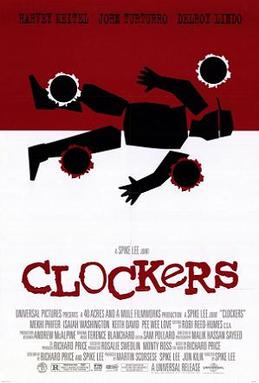

Themes and characters
The film focuses on moral ambiguity and the human costs of the drug economy rather than action-packed thrills. Characters are portrayed with nuance: young men who sell drugs to survive, older figures who control the trade, and law-enforcement officers whose efforts interact uneasily with community life. The title refers to the street-level dealers whose routines structure the local trade.
Production and style
Shot with an emphasis on gritty realism, the film blends location photography with character-driven scenes to evoke the environment of the projects. The adaptation keeps the novel's attention to dialogue and motive, using conversations and confrontations to reveal social pressures, systemic neglect, and individual choices.
Reception and legacy
Upon release, Clockers prompted discussion about cinematic portrayals of inner-city life. Critics noted its unflinching look at poverty, ambition, and violence and often praised the film's atmosphere and performances. It remains a reference point in debates about representation, policing, and the ethics of storytelling in crime cinema.
Notable aspects
- Emphasis on character complexity over sensationalism.
- Exploration of how economic and social forces shape choices.
- Part of a 1990s wave of films that addressed urban crime from inside communities rather than as distant spectacle.
Clockers is studied today both as a work within Spike Lee's filmography and as an adaptation that translates literary realism into a cinematic form. Its interest lies less in plot mechanics than in the moral and social questions it raises about survival, responsibility, and systemic failure.
Related articles
Author
AlegsaOnline.com Clockers (1995 film) Leandro Alegsa
URL: https://en.alegsaonline.com/art/21063
Sources
- rogerebert.com : "Clockers"
- rottentomatoes.com : "Clockers"