
Albania national football team
Official national football team of Albania; overview of history, identity, competitions, notable players, supporters and key achievements such as qualification for UEFA Euro 2016.
The Albania national football team represents the Republic of Albania in international men's association football. Governed by the Football Association of Albania, the side is commonly known by its red-and-black colours and eagle emblem. Over the twentieth and twenty-first centuries Albania has evolved from occasional early fixtures to a regular competitor in European and world qualification campaigns, with its most significant milestone being qualification for a major international tournament in recent decades.
Image gallery
2 Images
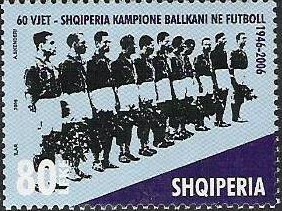
Origins and early development
Organised football in Albania predates the formal establishment of a national association. The Football Association of Albania was established as the national governing body and later registered the country with global bodies. Albania made its official international debut in the mid-1940s against regional opponents, beginning a pattern of friendly and competitive fixtures across the Balkans and wider Europe. The association joined the international football community in the early 1930s and became part of the continental governance structures during the twentieth century, aligning Albania with FIFA and European competitions.
For information about the domestic federation see the Football Association of Albania: FSHF. The national team’s first recognised international opponent after World War II was the Yugoslavia side: Yugoslavia. Albania’s membership in the global governing body is recorded in historical FIFA registers: FIFA.
Colours, stadium and identity
The team’s kit traditionally features red shirts and black trim, reflecting the national flag. Home matches have been staged at several venues in Tirana and around the country; in recent years the modern national stadium has become the primary venue for major qualifiers and friendlies. The squad badge commonly includes the double-headed eagle motif and the side is often referred to by fans and media using Albanian-language nicknames that evoke national colours.
Competitive record and milestones
Albania has consistently entered FIFA World Cup and UEFA European Championship qualifying cycles since becoming integrated into international competition. While the World Cup finals have remained elusive, the team reached a major breakthrough by qualifying for the UEFA European Championship finals for the first time in the 2010s, marking a historic achievement for players, coaches and supporters alike. Albania also participates in UEFA’s Nations League competitions and regional tournaments, using these fixtures to build experience and to test emerging players.
Players, coaching and style
Across generations the national team has featured a mix of home-based talent and players developed abroad in European leagues. Notable figures include long-serving captains and prolific forwards who have shaped Albania’s modern identity. Managers from inside and outside the country have led the side at different times; a period under foreign management coincided with the team’s first qualification for a major tournament. Tactically, Albania has often been pragmatically organised, focusing on defensive discipline, set-piece efficiency and counter-attacking opportunities when facing higher-ranked opponents.
Supporters and significance
Support for the national team extends beyond Albania’s borders to diaspora communities in Europe and beyond. Home fixtures typically attract passionate crowds and the international presence of Albanian supporters is notable at major qualifying matches. The team’s successes and visible progress have had cultural as well as sporting impact, boosting the profile of football domestically and inspiring youth participation.
Notable facts and distinctions
- Traditional colours: red and black, reflecting the national flag.
- First major tournament finals appearance came in the 2010s at the UEFA European Championship.
- The team draws players from both domestic leagues and Albanian communities abroad.
- Participation in both FIFA and UEFA competitions has shaped long-term development.
Tags
Related articles
Author
AlegsaOnline.com Albania national football team Leandro Alegsa
URL: https://en.alegsaonline.com/art/2034
Sources
- fifa.com : "The FIFA/Coca-Cola World Ranking"
- fifa.com : FIFA World Ranking 8.2015
- fifa.com : FIFA World Ranking 8.1997
- eloratings.net : "World Football Elo Ratings"
- eu-football.info : "Albania (5–0) Montenegro"
- eloratings.net : "Albania matches" · web.archive.org